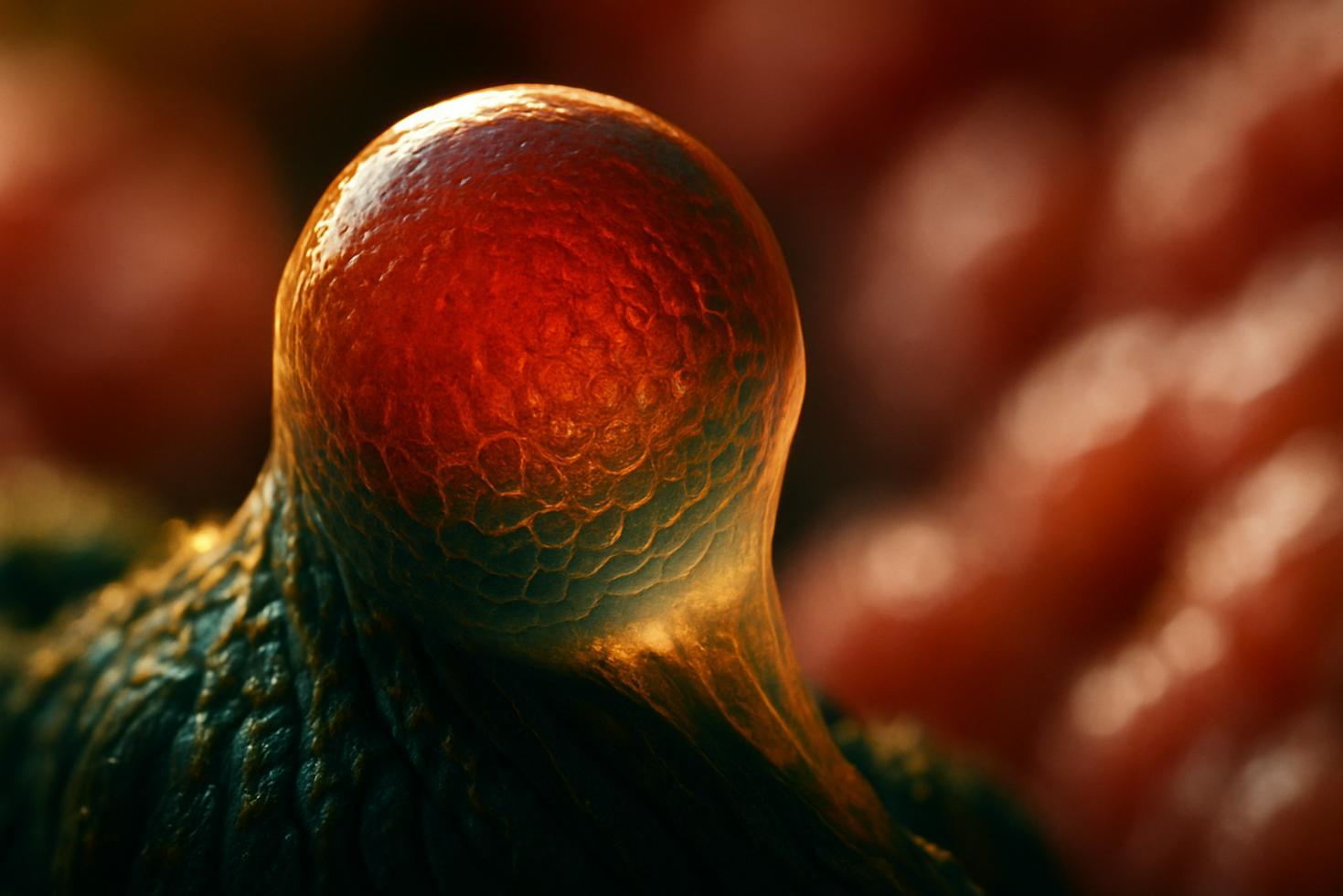
A dry water bead enters the gut at 2–4 mm — then keeps absorbing intestinal fluid, swelling up to 1,500 times its original volume. That growth does not stop when space runs out.
A swallowed water bead does not pass harmlessly through the digestive tract. The same superabsorbent polymer matrix that pulls water from a bowl pulls intestinal fluid continuously, and a bead entering dry at 2–4 mm can expand beyond 25 mm inside the bowel. That is roughly the diameter of a grape — large enough to wedge completely into a narrow segment and cause a mechanical blockage.
What makes this chemistry remarkable is that it has no off switch. The bead does not soften or dissolve. It simply keeps swelling until something stops it, and the bowel’s narrow pinch points — the pylorus, the duodenum, the ileocecal valve — are exactly the kind of geometry that stops it.
How Water Bead Swelling Causes Bowel Obstruction
The polymer matrix absorbs water osmotically — it draws fluid in across a concentration gradient and holds it within a cross-linked gel network. Gastric and intestinal fluid supplies that water just as effectively as a bowl on a shelf.
A bead lodged at a narrow segment keeps expanding against the surrounding tissue. Osmotic uptake continues regardless of surrounding pressure. The tissue presses inward; the bead pushes back. Neither yields. Documented outcomes include complete obstruction, mucosal damage, hemorrhage, and necrosis.
Why Detection Is Often Delayed
Ingested water beads are frequently radiolucent on standard imaging. A bead swallowed hours earlier may not appear on an X-ray, even as it continues to grow inside the bowel.
That imaging gap is clinically significant because continued expansion occurs during the diagnostic delay. Symptoms — abdominal pain, vomiting, bloating, constipation, refusal to eat — can look like many other conditions, and the window for simpler interventions narrows as the bead enlarges.
Documented Outcomes Across Reported Cases
A published pediatric case series found 88% of ingestions produced no clinical effects, just over 11% caused mild to moderate symptoms, and 0.11% resulted in severe outcomes including complete obstruction, necrosis, and surgical intervention. Those numbers reflect a real but small fraction of a large exposure pool — and the severe cases required laparotomy or repeated surgeries.
Poison Control has recorded at least three deaths. The U.S. Consumer Product Safety Commission has confirmed at least one child fatality and at least one child who underwent months of surgeries. The primary hazard is mechanical, not chemical — obstruction from swelling dominates the case literature, though acrylamide toxicity has been noted in some products as a secondary concern.
Forty years of watching plants absorb water makes the polymer chemistry intuitive. What is harder to internalize is how the same elegant mechanism behaves inside a confined, fluid-filled tube. The bead does not negotiate. It just grows.
Frequently Asked Questions
Can a water bead dissolve in stomach acid?
No. The superabsorbent polymer matrix does not dissolve in gastric or intestinal fluid — it absorbs it and continues to expand.
How large can a swallowed water bead get?
Beads larger than 3 mm dry have been documented expanding to greater than 25 mm in diameter, enough to obstruct the bowel completely.
Are water bead ingestions always dangerous?
A published case series found 88% of ingestions caused no clinical effects, but severe outcomes including surgery and death have been documented in a small fraction of cases.
Why don’t X-rays always find swallowed water beads?
Water beads are often radiolucent, meaning they do not reliably appear on standard X-ray imaging, which can significantly delay diagnosis.