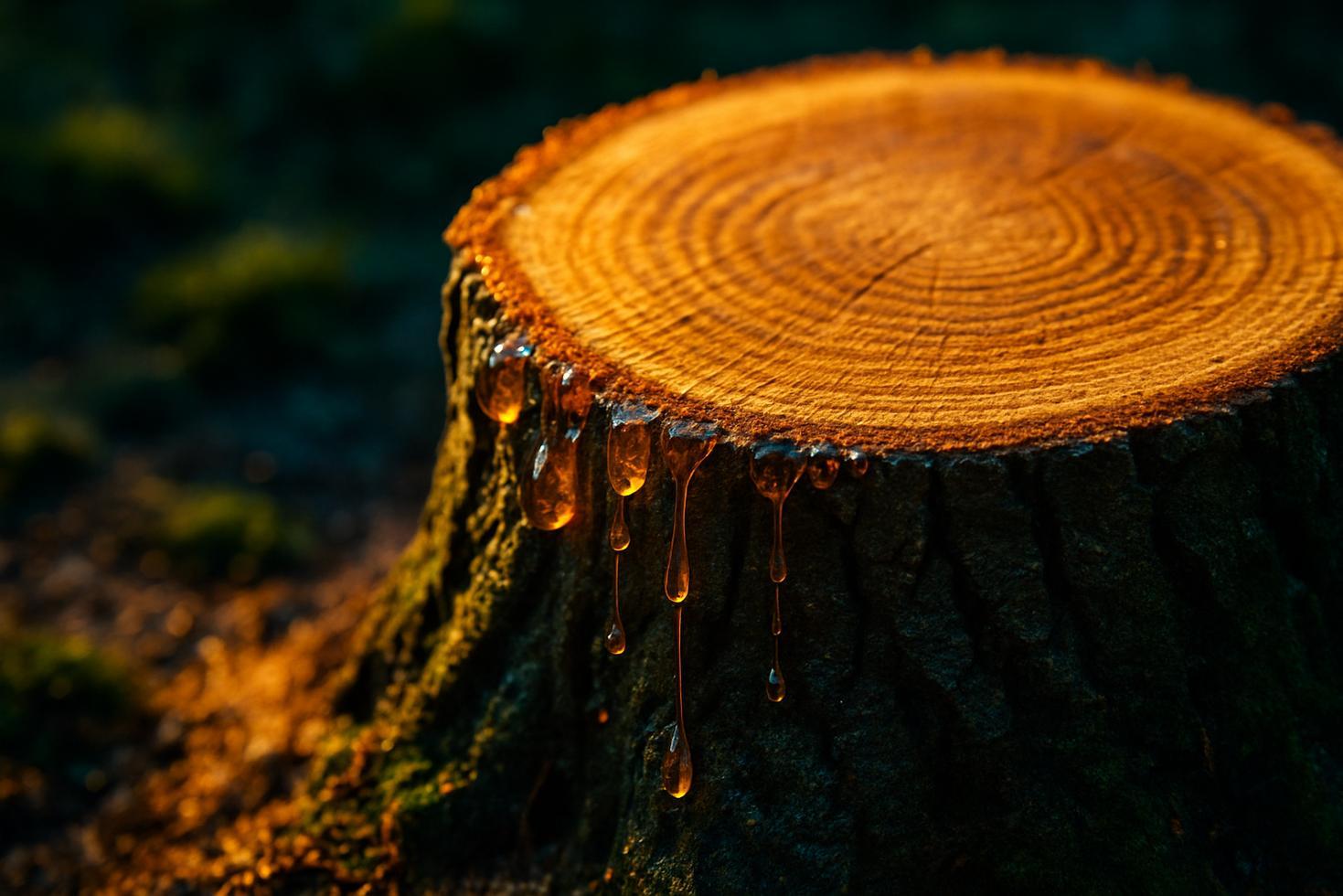
A cut stump’s living roots keep defending the wood for months — once that tissue exhausts its fuel, fungi and insects move in within weeks. Nature’s cleanup crew doesn’t wait long.
A freshly cut stump is not dead the moment the chainsaw stops. Underground, living root tissue continues producing the same chemical defenses the standing tree relied on for decades. Fungal spores land on the cut surface immediately, but the wood holds them off as long as that tissue stays alive.
The defense is real, but it runs on a finite fuel supply. Once the roots exhaust their stored energy, the biological armor collapses — and decomposers that were already waiting at the edges begin moving inward.
Quick Answer:
– Living root tissue actively defends cut wood against fungi, bacteria, and insects.
– That defense collapses when root tissue dries out or exhausts its stored fuel.
– Fungi invade first, threading strands through the wood grain and weakening the fiber structure.
– Wood-boring insects follow, tunneling galleries that expose more surface area for bacteria.
– Visible breakdown takes 6 months to 2 years, depending on stump size and wood type.
How Living Root Tissue Delays Stump Decomposition
The stump’s first line of defense is the same system the living tree used: chemical signals produced by living root cells that make the wood hostile to fungal colonization. Fungal spores require a foothold in weakened or dead tissue. Living, hydrated wood denies them that entry point.
Softwood stumps lose this defense faster than hardwoods. Hardwood cells are denser and store more energy, so the root tissue remains viable longer after felling.
The Sequence Decomposers Follow Once the Defense Collapses
Fungi arrive first. Their mycelium — fine white strands — thread through the wood grain, breaking down cellulose and lignin. This softens the fiber structure and creates the conditions beetles and wood-boring insects need to tunnel efficiently.
Those tunnels matter. Galleries drilled by boring insects open the interior to bacteria and accelerate moisture exchange. What looks like simple rot from the outside is a layered process where each organism makes conditions better for the next.
This sequence explains the wide decomposition timeline. A small softwood stump on moist ground may show visible breakdown in 6 months. A large hardwood stump in dry conditions can hold its structure for closer to 2 years after the living tissue is gone.
Closing
The same density that made an old oak worth felling is what slows the decomposers down. But the sequence always runs in one direction.
The tree spent years building that wood. The cleanup crew dismantles it in a fraction of the time.
Frequently Asked Questions
How long does a tree stump take to decompose naturally?
Visible breakdown typically takes 6 months to 2 years after the living root tissue dies, depending on stump size, wood type, and moisture conditions.
Why won’t fungi just grow on a freshly cut stump immediately?
Living root tissue produces chemical defenses that make the wood resistant to fungal colonization. Fungi need a foothold in dead or weakened tissue, which isn’t available until that defense collapses.
Do wood-boring insects help decompose a stump?
Yes. Beetles and borers tunnel galleries through the softened wood, opening the interior to bacteria and increasing the surface area available for further decomposition.
Does wood type affect how fast a stump breaks down?
Yes. Hardwood stumps are denser and store more energy in root tissue, so their defense lasts longer and decomposition proceeds more slowly than in softwood stumps.