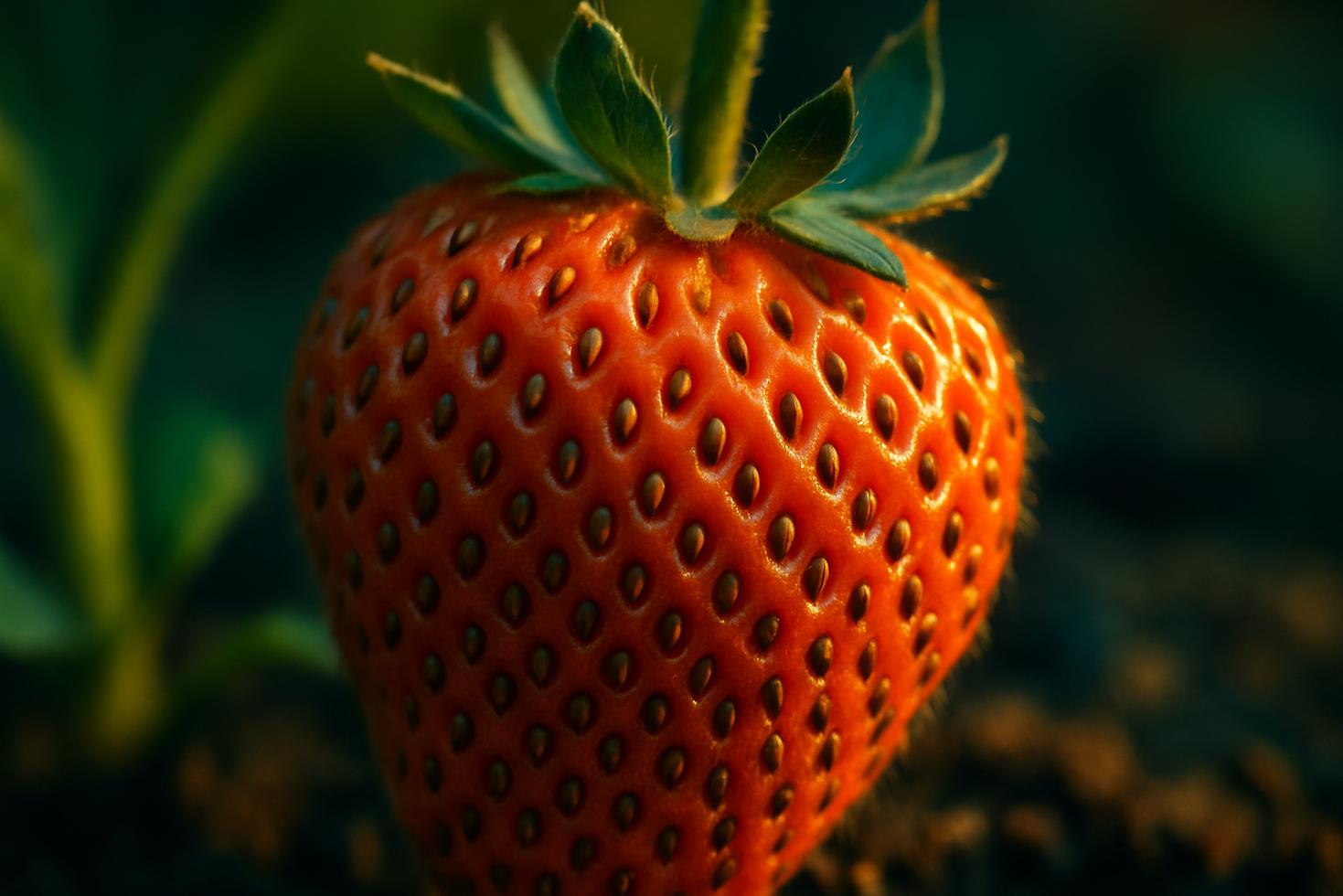
The red flesh of a strawberry is swollen flower base — the ~200 tiny specks on the outside are the actual fruits, each holding one seed.
The edible red portion of a strawberry is not botanical fruit tissue at all — it is the enlarged receptacle, the base of the flower that swelled during ripening. That discovery flips the intuitive read of a strawberry completely. What looks like seeds scattered across the surface are actually complete, independent fruit units called achenes.
Each achene is dry and hardened, containing exactly one seed inside. The receptacle grew around them — not to be eaten, exactly, but swelling as a biological consequence of fertilization. The result is a structure that attracts animals, who scatter the achenes elsewhere.
How a Strawberry Earns Its Classification as an Aggregate Accessory Fruit
A strawberry flower contains multiple ovaries, not one. Each fertilized ovary develops into a separate achene. That makes the strawberry an aggregate fruit — many ovaries from one flower. Because the dominant tissue is receptacle rather than ovary wall, it also earns the “accessory” label. Both terms apply simultaneously.
This separates the strawberry sharply from a true berry. A botanical berry — think tomato or grape — develops from a single ovary, with seeds fully enclosed inside the fruit wall. A strawberry inverts that arrangement: the “seeds” sit on the outside.
What the ~200 Achenes on a Strawberry’s Surface Actually Are
Roughly 200 achenes stud a mature strawberry, though the count shifts with cultivar and fruit size. Each one is a complete, self-contained dry fruit unit housing a single seed — not a seed itself, despite what it looks like.
The red color, sweetness, and scent belong to the receptacle tissue, not to any of those 200 fruits. The achenes contribute nothing to flavor. They are passengers on a very effective advertisement.
Frequently Asked Questions
What is the red part of a strawberry made of?
The red flesh is enlarged receptacle tissue — the flower base that swelled after fertilization. It is not derived from the ovary wall, which is what defines true fruit tissue in botany.
Are the little specks on a strawberry seeds or fruits?
They are achenes, which are dry fruit units. Each achene contains one seed inside, so the visible speck is fruit, not seed.
Why is a strawberry called an accessory fruit?
The dominant edible tissue comes from non-ovary floral tissue — the receptacle — rather than from the ovary itself. Fruits built substantially from other floral parts carry the accessory classification.
Is a strawberry a berry?
No. A botanical berry develops from a single ovary with seeds enclosed inside the fruit wall. A strawberry has seeds on the outside and flesh derived from the receptacle, so it does not qualify.