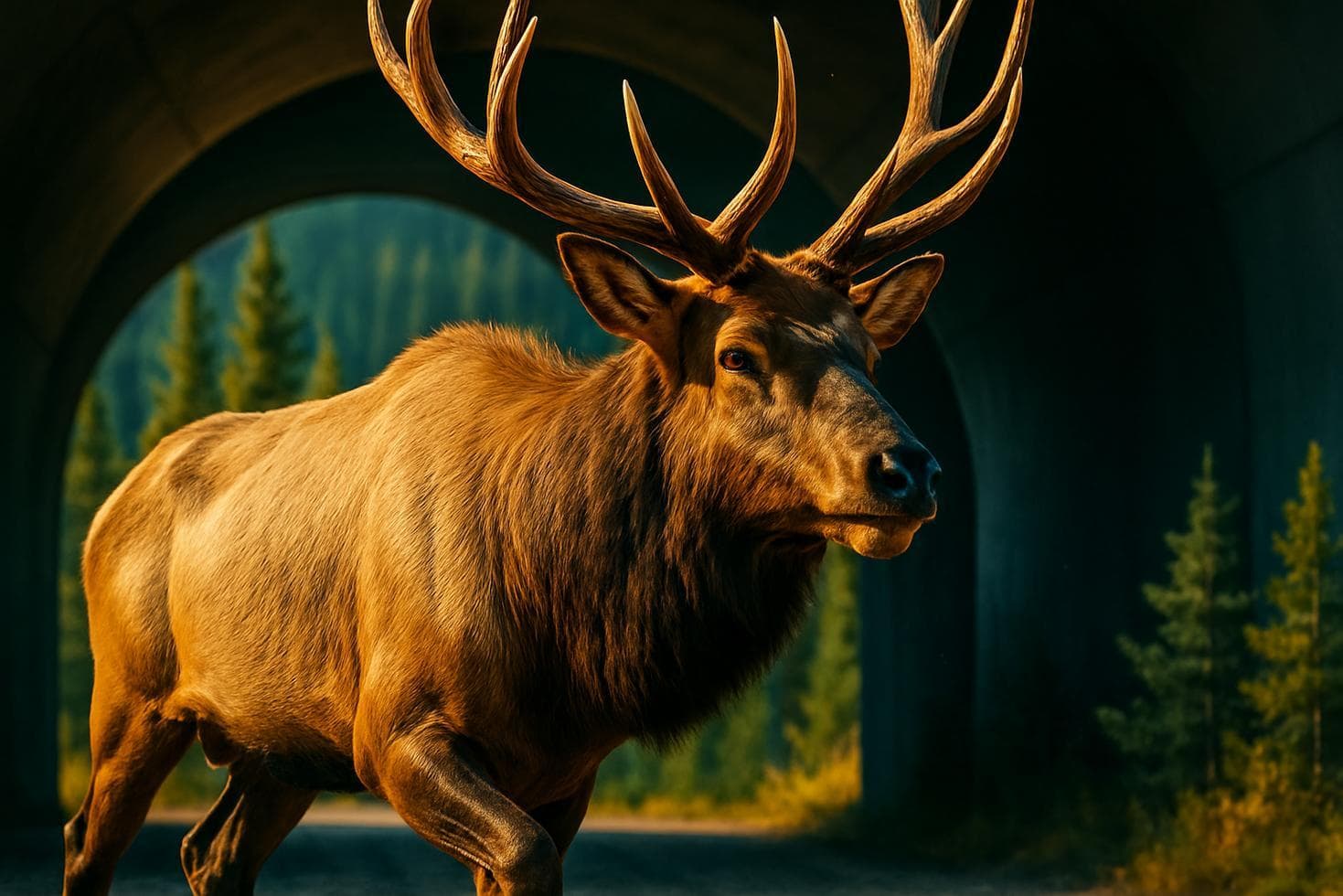
41 crossings built into 41 miles of highway — and wildlife-vehicle collisions fell by nearly 70–80% in monitored segments. The asphalt moved around the animals.
The US-93 wildlife crossing program on the Flathead Indian Reservation in Montana cut wildlife-vehicle collisions by nearly 70 to 80 percent in monitored segments, making it one of the most documented results of highway-integrated wildlife infrastructure in North America. That figure comes from a corridor where 41 crossing structures were woven into 41 miles of reconstructed highway through the reservation. The sheer specificity of the outcome — one crossing per mile, for 41 miles — is what makes this project worth understanding closely.
For decades, the highway split the reservation like a hard seam. Elk mid-migration. Bears cut off from seasonal range. The Confederated Salish and Kootenai Tribes pushed back against that condition and spent years working with engineers to rebuild the road on the land’s terms instead of against them.
What the 41 Crossing Structures on the Flathead Corridor Actually Include
The structures are not uniform. Underpasses sized for large mammals sit alongside smaller passages for deer, and one wildlife overpass is part of the combined US-93 project scope. Exclusion fencing channels animals toward crossings rather than leaving approach angles to chance. More than nine linear miles of that fencing line both sides of the road. Without it, a crossing is just a hole — the fencing is what makes the system work as a system.
How Animals Actually Used the Crossings After Construction
Camera stations and track monitoring confirmed that multiple species adopted the crossings. Mountain lions, grizzly bears, white-tailed deer, and elk herds were documented using the underpasses and overpass. The animals did not need to be trained or guided beyond the fencing. The structures mimicked enough of the surrounding terrain that animals read them as usable passage rather than obstruction. That the adoption happened across multiple species — including bears, which are cautious about enclosed spaces — is the detail researchers found most significant.
What the Collision Reduction Numbers Actually Mean
The 70–80 percent reduction applies to monitored segments of the corridor, not a single uniform measurement across every mile. That distinction matters. Monitored segments represent locations where baseline and post-construction collision data were both collected. Within those segments, the collision drop is among the steepest recorded for any comparable highway wildlife crossing program in the United States. The combined US-93 reconstruction is one of the largest highway-integrated wildlife crossing efforts in North America by structure count — 81 total across 76 miles when both project phases are measured together.
The Flathead corridor shows what happens when a road gets rebuilt around existing animal movement rather than simply patched after the damage is done. One crossing per mile, guided by fencing, confirmed by cameras. The math worked.
Frequently Asked Questions
How many wildlife crossings are on US-93 through the Flathead Indian Reservation?
41 crossing structures are built into the 41-mile Flathead Indian Reservation corridor of US-93.
How much did wildlife-vehicle collisions drop after the crossings were built?
Monitored segments recorded collision reductions of nearly 70 to 80 percent after construction was completed.
What animals use the US-93 wildlife crossings in Montana?
Camera and track monitoring confirmed use by elk, white-tailed deer, grizzly bears, and mountain lions, among other species.
How does the fencing along US-93 relate to the crossing structures?
More than nine linear miles of exclusion fencing line both sides of the road, directing animals toward crossing entrances rather than onto the open highway.