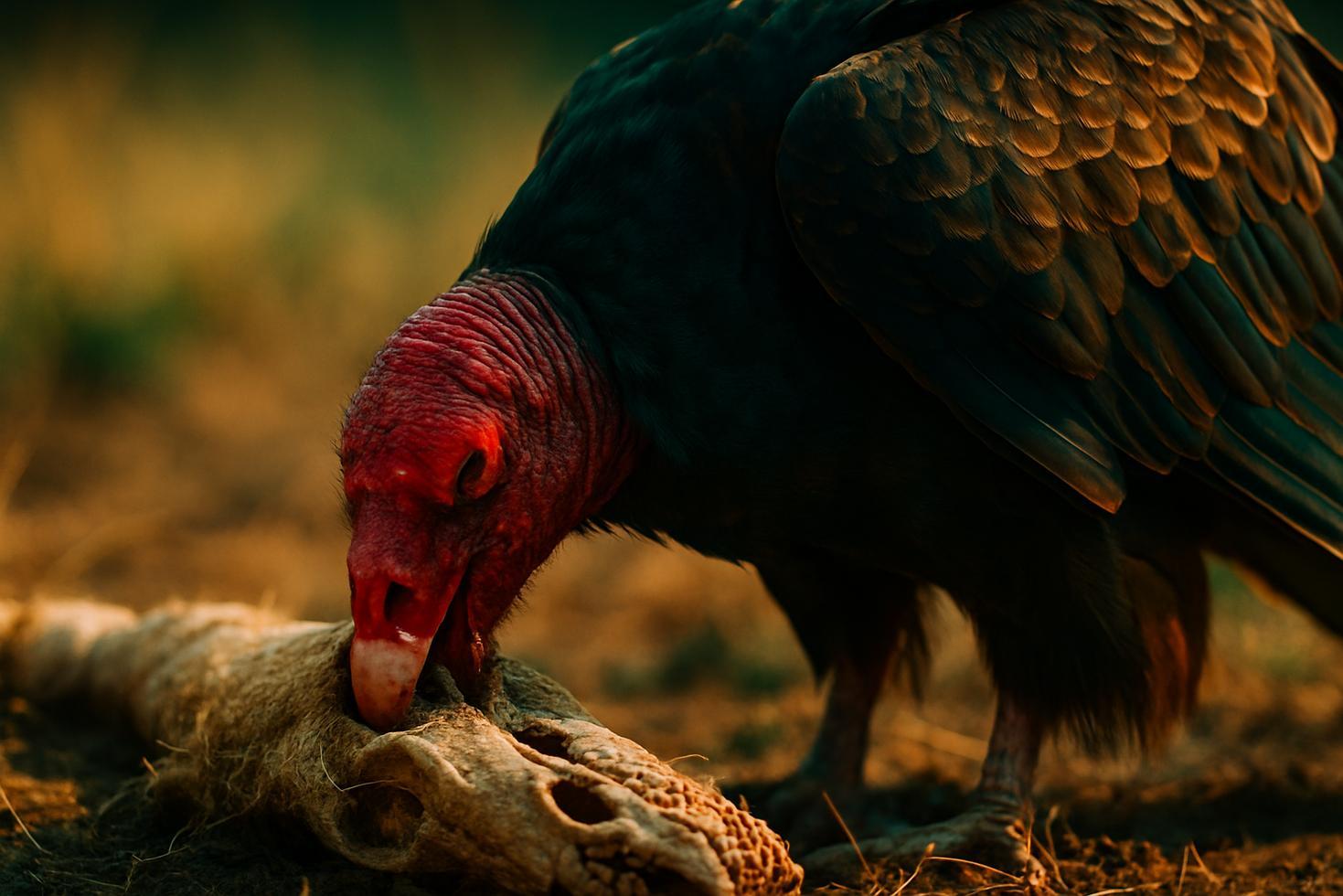
Turkey vulture gastric juice runs near pH 0 to 1 — roughly 100 times stronger than human stomach acid — neutralizing anthrax spores, botulinum toxin, and rabies virus before anything escapes.
Turkey vultures carry some of the most acidic gastric juice measured in any vertebrate, with stomach pH documented near 0 to 1, approximately 100 times more acidic than human gastric juice. That single biological fact turns a scavenging bird into a disease dead end. A carcass loaded with anthrax, botulinum toxin, or rabies virus goes in. Nothing infectious comes out the other side.
The mechanism is chemical, not magical. That near-zero pH environment denatures proteins, destroys viral envelopes, and dismantles bacterial spores that can otherwise survive decades in soil.
Quick facts:
– Turkey vulture stomach pH sits near 0 to 1, compared to around pH 2 in humans
– Gastric pH crashes from roughly 7 to around 1.5 within 24 hours of swallowing prey
– Documented pathogens neutralized during digestion include anthrax spores, botulinum toxin, and rabies virus
– Vultures are described in multiple sources as “dead-end hosts” — digestion ends transmission
– Removing infected carcasses reduces pathogen exposure for other animals and humans
How Turkey Vulture Stomach Acid Works Against Pathogens
The acidity alone doesn’t tell the whole story. Gut pH crashing to 1.5 within 24 hours strips most pathogens of any structural integrity before digestion completes. Anthrax spores are famously durable — capable of persisting in soil for decades — yet the gastric environment neutralizes them during transit. Botulinum toxin, one of the most acutely toxic substances known, is similarly denatured. Rabies virus, which compromises the nervous systems of nearly all exposed mammals, does not survive the process either.
The result is that the bird functions as a biological endpoint for the infection chain rather than a link in it.
Turkey Vultures as Ecosystem Disease Control
The disease-suppression role extends beyond what happens inside the bird. By consuming a carcass before other scavengers, insects, or water runoff can disperse it, a vulture removes the environmental reservoir entirely. A rotting body left untouched can leach bacteria into groundwater, attract flies that carry pathogens to new locations, and expose mammals that investigate the site. Vulture scavenging interrupts all of those pathways simultaneously.
Sources characterize this as carcass removal reducing disease exposure risk for other animals and humans — a supported ecological inference, though not a chain of transmission proven step by step for specific species in the provided material.
One additional oddity worth noting: when threatened, turkey vultures can projectile vomit up to 10 feet. That expelled material is highly acidic. It functions as both a deterrent and, incidentally, another surface where pathogens meet the same fate they would inside the stomach.
Closing
A stomach running at pH 0 to 1 is doing chemistry that most laboratory disinfectants would recognize. The turkey vulture didn’t evolve this trait to clean ecosystems. It evolved it to eat what nothing else could safely touch — and the ecosystem got the benefit anyway. The most effective disease-control mechanism at a carcass site arrived on wings and needs no assistance.
Frequently Asked Questions
What is a turkey vulture’s stomach pH?
Turkey vulture gastric juice is documented near pH 0 to 1, roughly 100 times more acidic than human stomach acid at around pH 2.
Can turkey vultures actually digest anthrax?
Yes. Multiple sources confirm anthrax spores are neutralized during digestion, making the vulture a dead-end host rather than a disease carrier.
Why doesn’t stomach acid harm the vulture itself?
The bird’s stomach lining is adapted to tolerate near-zero pH; the same acidity that destroys pathogens does not damage its own gastric tissue.
How do vultures help prevent disease outbreaks in the wild?
By consuming infected carcasses before other animals or insects access them, vultures remove the environmental pathogen reservoir and reduce broader exposure risk.