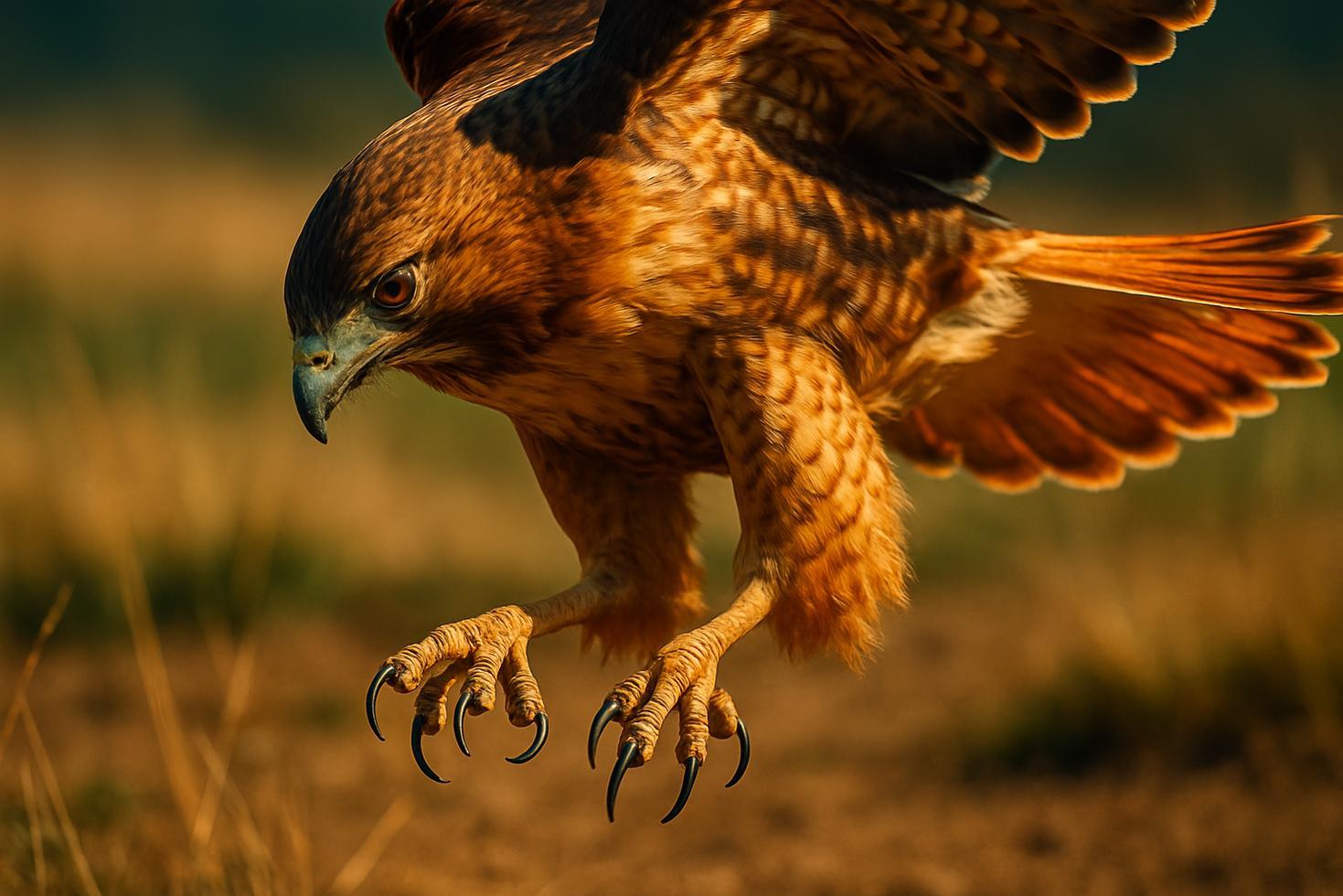
A hawk consuming hundreds of rodents per season inherits each animal’s full chemical load — and the EPA confirms top predators can carry concentrations millions of times higher than the surrounding environment.
Fat-soluble toxins like DDT, PCBs, and mercury do not flush from tissue — they accumulate, and every predator up the food chain collects the stacked load of every prey animal it has ever eaten. That single biological fact transforms what looks like a successful hunt into a slow chemical deposit. A red-tailed hawk catching a poisoned mouse doesn’t catch a meal. It absorbs a debt.
The EPA defines this as two linked processes: bioaccumulation, where a contaminant builds up in an individual organism faster than it is excreted, and biomagnification, where concentration increases as that contaminant moves from prey to predator across trophic levels. Both happen at the same time, in the same tissues.
How Fat Tissue Traps Persistent Chemicals Through Bioaccumulation
Fat tissue is not passive storage. It actively holds fat-soluble compounds that the body cannot break down or remove quickly enough. The EPA’s definition of bioaccumulation centers on this rate mismatch: uptake exceeds excretion, so the compound builds. Persistent chemicals stored in fat, not excreted — that is the mechanism behind every toxin story at the top of a food web. Mercury, DDT, and PCBs are all confirmed examples of compounds that behave this way because they resist breakdown and bind readily to fatty tissue.
How Biomagnification Multiplies Concentration Across Trophic Levels
Each time a predator eats contaminated prey, it inherits that prey’s accumulated load. A hawk eating one poisoned rodent gets one load. A hawk eating hundreds of rodents across a season stacks those loads repeatedly. The EPA states explicitly that this process can leave top predators carrying concentrations millions of times higher than what exists in the surrounding open-water environment — enough to cause serious deformities or death even when contamination at the base of the chain is nearly undetectable.
Barn owls, great horned owls, red-tailed hawks, and eagles all occupy this apex position. Their exposure scales directly with hunting success — the more prey consumed, the greater the chemical accumulation. What looks like biological advantage is also chemical vulnerability.
The top of any food chain is not a refuge. It is the destination where everything deposited at the bottom eventually arrives, concentrated and compounded.
Frequently Asked Questions
What is the difference between bioaccumulation and biomagnification?
Bioaccumulation is the buildup of a toxin within one organism when uptake exceeds excretion. Biomagnification is the increase in concentration as that toxin moves from prey to predator across multiple trophic levels.
Can a hawk be poisoned by eating a rodent that ate rodenticide?
This is called secondary poisoning and is biologically plausible, though the outcome depends on the specific compound, dose, and whether it is persistent and fat-soluble enough to transfer and remain active.
Which chemicals are confirmed to biomagnify in food webs?
Mercury, DDT, and PCBs are established examples — all are persistent, fat-soluble, and do not break down readily in biological tissue.
How much higher can toxin concentrations get in top predators?
The EPA confirms concentrations in the fatty tissues of top predators can reach millions of times higher than levels measured in the surrounding open-water environment.