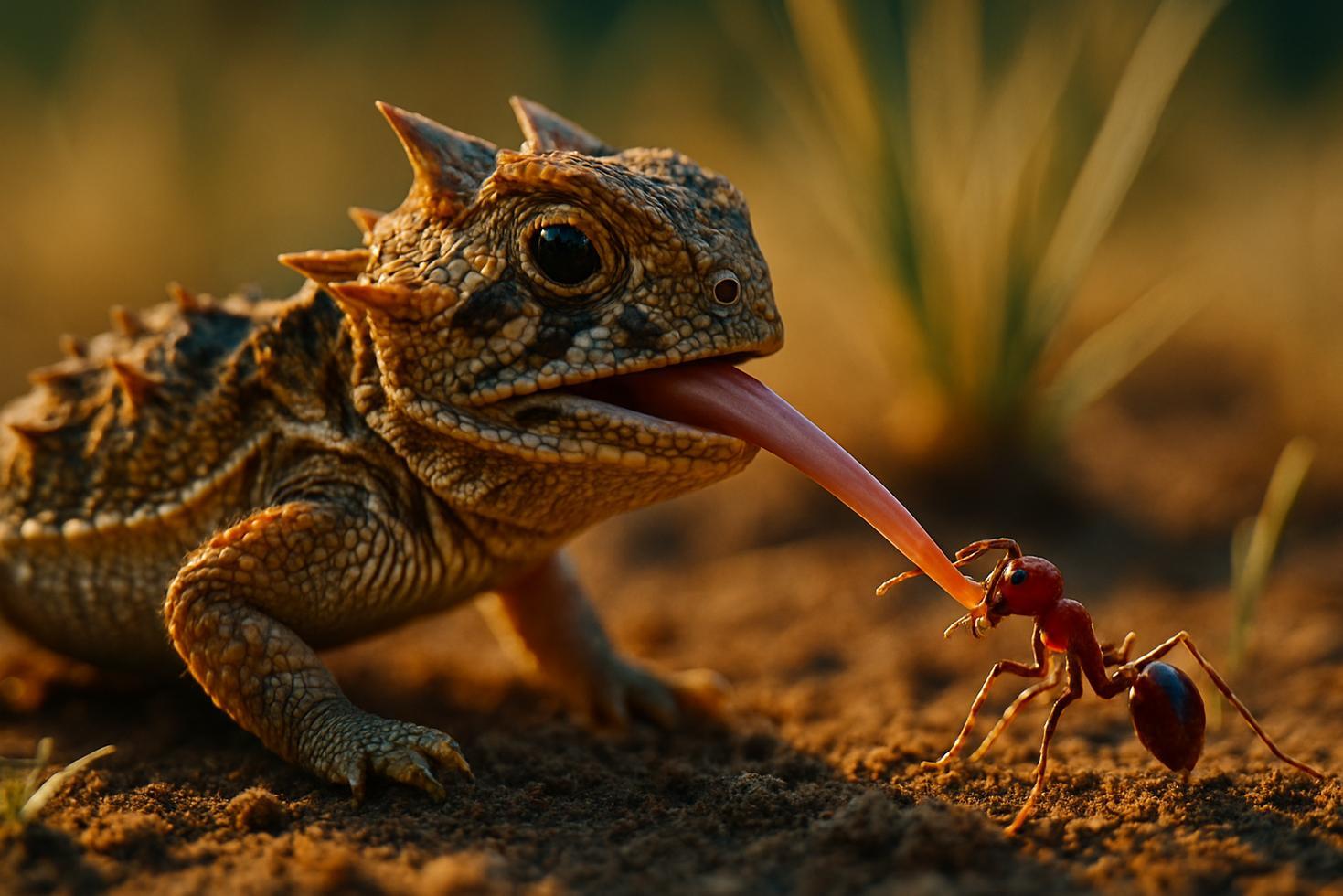
617 lizards waited at the gate — no release happened until red harvester ant colonies already covered 200–250 acres of native grass. The grassland looked ready. The ants said otherwise.
Texas horned lizard reintroduction in the state depends on restoring red harvester ant populations first, because wildlife managers treat verified ant presence as a non-negotiable prerequisite before any lizards reach the ground. That sequencing — ants before lizards, prey before predator — is not a precaution. It is the program’s architecture. At Mason Mountain Wildlife Management Area, that architecture finally closed the loop: hatchlings released in 2019 became the first in the program to breed and reproduce on their own.
Why Red Harvester Ants Disappeared From Texas Grasslands
Texas horned lizards are highly specialized feeders, and red harvester ants are the core of their diet. The species cannot simply switch to alternative prey when ants are scarce.
Three overlapping pressures collapsed harvester ant populations across the state: invasive fire ant expansion, pesticide drift, and the conversion of native grasslands that ants depend on for nesting and foraging. Fire ants outcompete and displace native harvester ant colonies directly, which removed the food base the lizard’s survival depended on. Without the ants, the habitat held no functional role for a returning lizard population.
How the Texas Horned Lizard Conservation Program Sequences a Release
TPWD, the Fort Worth Zoo, and the San Antonio Zoo built the reintroduction program around habitat prerequisites rather than animal availability. A site qualifies only when native grass is restored, fire ant pressure is low, and harvester ant colonies are measurably present across 200–250 acres.
The release schedule itself reflects that caution. The program’s plan called for 100 young lizards per site per year for three years, then 25 hatchlings every other year after that. Rebuilding grassland and ant habitat acre by acre precedes every release phase. The San Antonio Zoo’s reintroduction project, which launched in early 2017, targets Central and South-Central Texas counties including Bexar, Bandera, Comal, Hays, Blanco, Kerr, and Kendall under the same logic.
Landowners with eligible land can contribute by restoring native grasses, using controlled grazing and burning, and protecting existing harvester ant mounds from disturbance.
What Independent Breeding at Mason Mountain Actually Confirmed
The 617-lizard release total at Mason Mountain is the program’s largest on record. But the number that mattered most came smaller: several dozen hatchlings in 2019, produced without human assistance.
Independent reproduction confirmed that the food chain was functional, not just populated. Lizards don’t breed in marginal habitat. Those hatchlings meant the ant colonies sustained a full predator-prey relationship through a complete season — the threshold the program had been working toward since the Fort Worth Zoo’s breeding effort began in 2000.
The prey base came back first. The predators followed. That order was not incidental.
Frequently Asked Questions
Why can’t Texas horned lizards eat something other than harvester ants?
Texas horned lizards are highly specialized feeders with red harvester ants as their primary food source, and they cannot thrive when ants are absent or replaced by invasive fire ants.
What does a Texas horned lizard release site need to qualify?
Sites must have 200–250 acres of native-grass habitat with red harvester ants established and minimal fire ant presence before any lizards are released.
When did the Texas horned lizard reintroduction program begin?
The Fort Worth Zoo started breeding the northern genetic population in 2000; the San Antonio Zoo’s reintroduction project launched in early 2017.
What made the 2019 Mason Mountain results significant?
Several dozen hatchlings produced at Mason Mountain in 2019 were the first in the entire program to breed and reproduce independently on a release site.