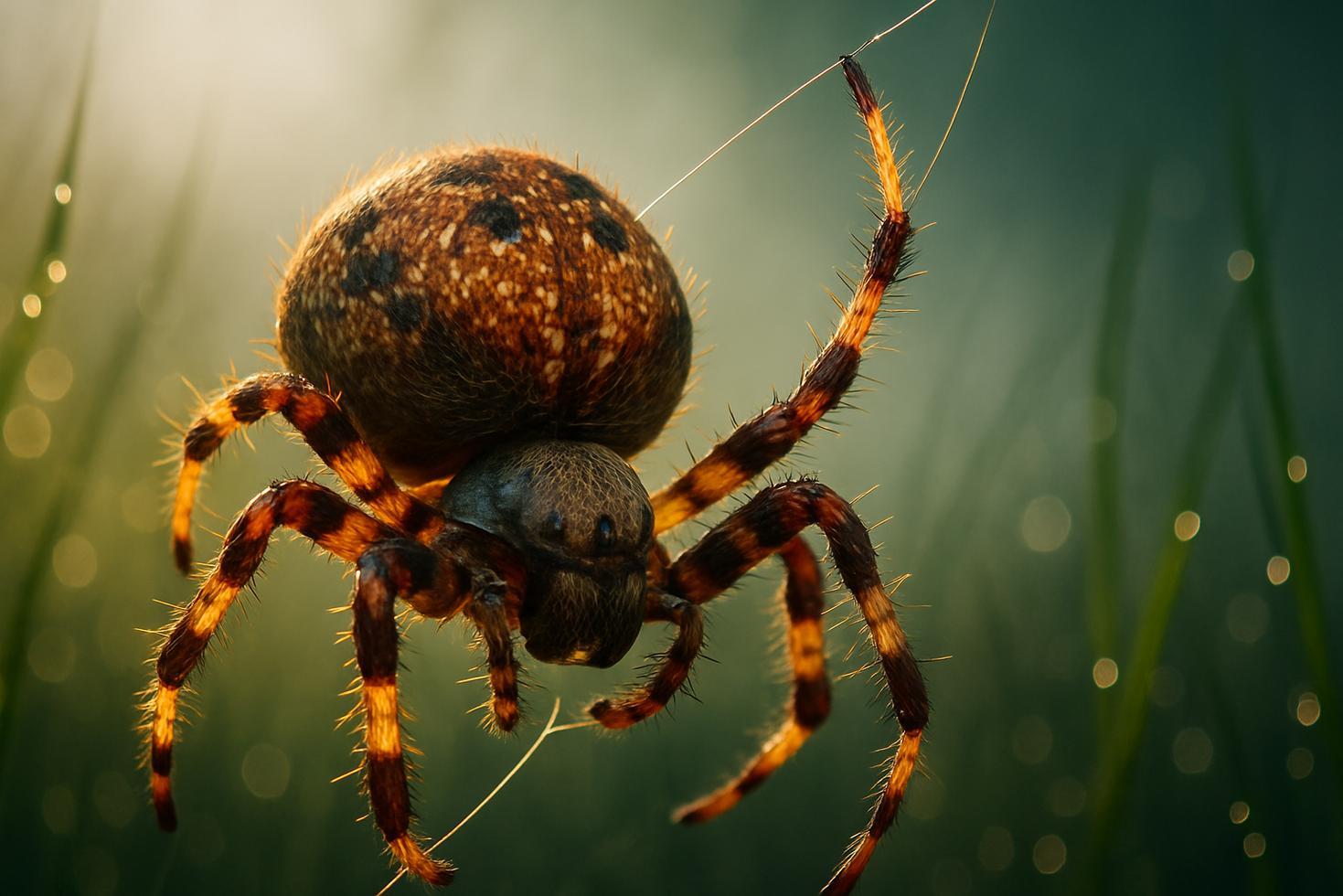
Humidity above 70% physically tightens silk fibers — a web built before a storm isn’t the same structure as one built on a clear afternoon.
Spiders don’t predict storms — they feel the same atmospheric shifts that produce them, through their own bodies, in real time. That distinction matters. It means what looks like forecasting is actually something stranger: a body so tuned to its environment that rising humidity and falling pressure translate directly into changed behavior, before a single raindrop falls.
Tiny hair-like mechanosensory structures cover a spider’s legs and body. These structures detect minute changes in air movement, moisture, and vibration — the same variables that precede a storm system.
How Spider Mechanosensory Structures Detect Atmospheric Shifts
The hair-like structures distributed across a spider’s exoskeleton function as environmental receivers. They register changes in humidity and air pressure the way a fingertip reads texture — through direct physical contact with the surrounding medium.
When humidity climbs past 70%, those conditions reach the silk itself. Silk fibers supercontract at high humidity, pulling tighter across the web’s frame and increasing the structure’s overall tension. That mechanical change improves how the web absorbs the kinetic energy of flying prey hitting the threads at speed.
A web built under those conditions performs differently than one built on a dry afternoon. The spider didn’t plan that outcome. The atmosphere produced it.
How Spiders Change Web Building and Shelter Behavior Before Storms
When humidity rises and pressure falls, spider behavior shifts in documented ways. Some spiders delay construction entirely. Others relocate to more protected positions — lower to the ground, tucked against bark or stone — where the web faces less exposure to wind and rain damage.
Others rebuild at a different angle relative to wind direction. Reducing structural exposure before high-wind conditions isn’t calculation; it’s a behavioral response to the same cues humans use weather instruments to measure.
Heat waves and cold snaps produce a parallel effect. Spiders may migrate toward cooler, shaded interiors when temperatures spike. Where insects concentrate, spiders follow — outdoor lighting attracts insects, which can indirectly shape where spiders appear near structures during warm weather.
Closing
What these behaviors share is the absence of foresight and the presence of an exquisitely sensitive body. The spider isn’t reading tomorrow. It’s reading now — humidity, pressure, vibration — and responding with the only tools it has.
That the response so reliably precedes rain is a coincidence of mechanism, not intention. The atmosphere speaks. The spider moves.
Frequently Asked Questions
Do spiders actually predict the weather?
No. Spiders respond to the same atmospheric conditions — humidity, pressure, temperature — that accompany weather changes, but they are not forecasting future conditions.
Why does high humidity affect spider webs?
Above 70% humidity, silk fibers supercontract, increasing tension across the web and improving its ability to absorb the impact of flying prey.
What behaviors change when a storm approaches?
Spiders may delay web construction, relocate to sheltered positions, or rebuild at angles that reduce wind exposure when humidity rises and pressure drops.
Can heat waves change where spiders appear indoors?
Yes. Heat waves and cold snaps can trigger spiders to migrate toward cooler, shaded interiors.