
The spider plant (Chlorophytum comosum), also called airplane plant, ribbon plant or spider ivy, is one of the most common houseplants around. It is easily grown and especially popular for how fast it makes new plants. Pet owners like it too: spider plant is non-toxic to dogs and cats.
Wondering how to say the name? It’s kloe-roe-fy-tum koe-MOE-sum.
So what should you pot it in? Good news: this plant isn’t fussy about soil. What really matters is drainage, the water you pour on it, and repotting before those thick roots run out of room. Let’s walk through each one.
What Is The Best Soil For Spider Plants?
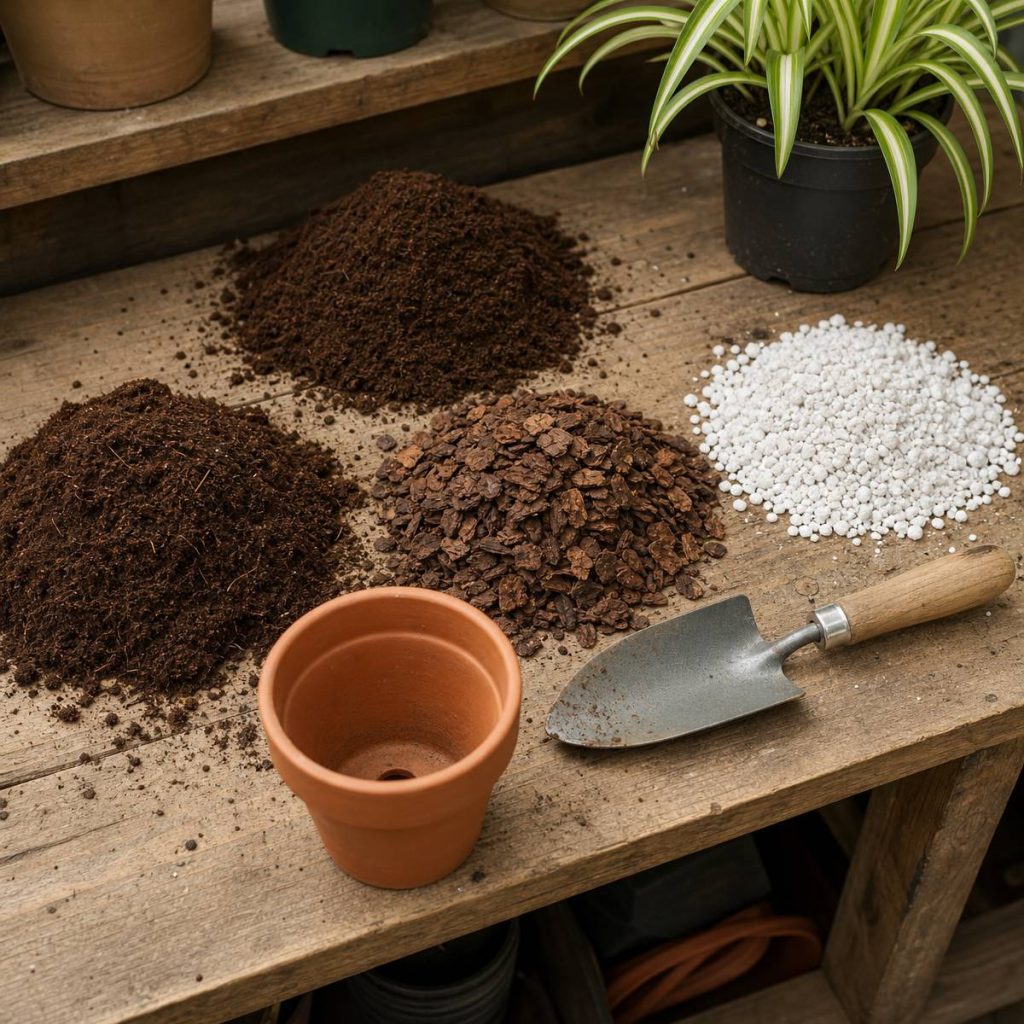
Short answer: any good potting mix that drains well. A general-purpose potting soil is suitable for spider plants. The RHS recommends a multi-purpose or houseplant potting mix (it specifies peat-free). Loam soil with good drainage that stays moist works too.
Why so easygoing? A UF/IFAS Extension production guide written for Florida foliage growers calls spider plant one of the easier foliage plants to grow, because it tolerates wide changes in growing medium, fertilizer, light and temperature without serious loss of quality.
Drainage Comes First
This is the one rule that really counts. Clemson Extension says root rot usually results from a soil mix that does not drain quickly or from excessive watering. The Missouri Botanical Garden says spider plants are susceptible to root rot if waterlogged.
Spider plants tolerate some over- and underwatering but dislike standing in water for any length of time, so pour away any water that collects in the saucer or outer pot. Always use a pot with drainage holes.
Skip the garden soil in containers. University of Missouri Extension says that for houseplants in general, you should usually avoid adding soil to a potting medium, because it often leads to poor drainage, overwatering and root diseases.
What pH Do Spider Plants Like?
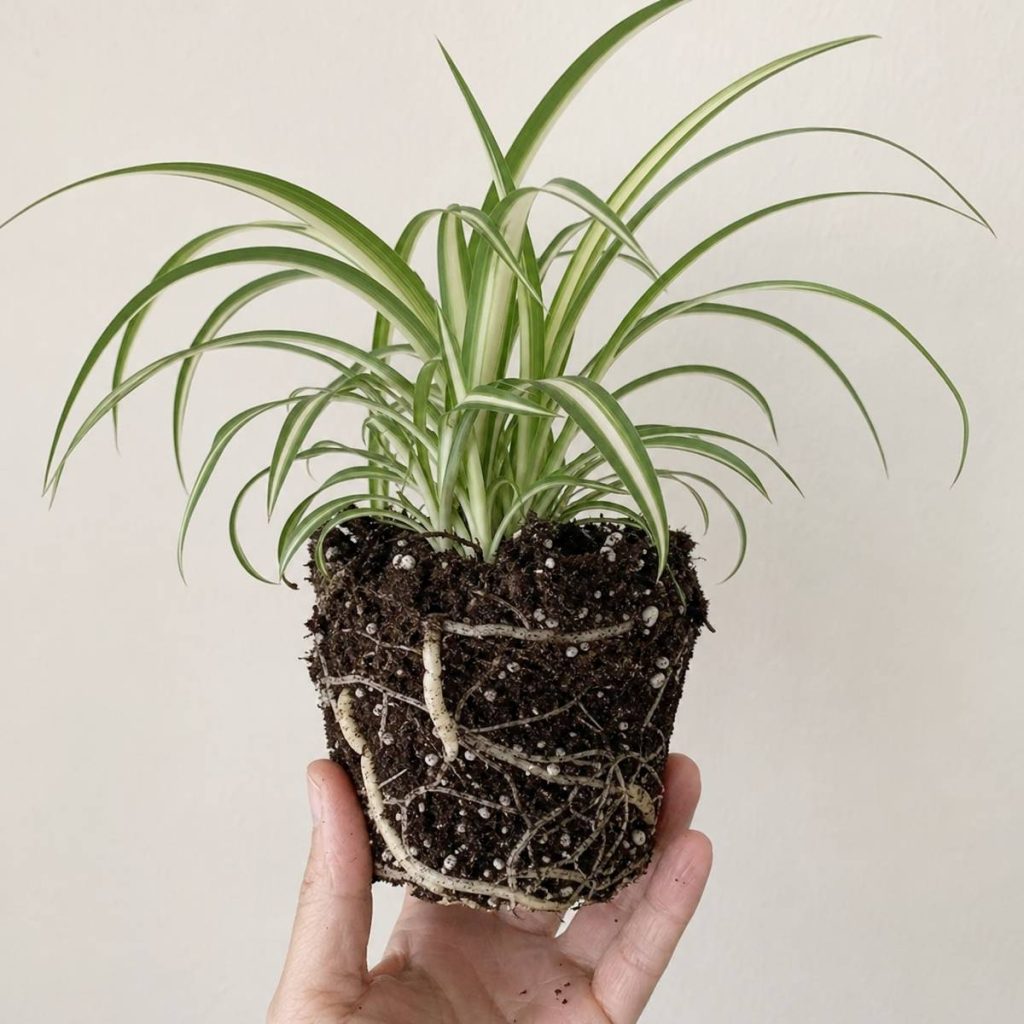
Spider plants handle a fairly wide pH range. NC State Extension lists neutral soil, pH 6.0 to 8.0.
Commercial growers aim tighter. That production guide says to amend potting media with dolomite or limestone, if needed, to raise the pH to 6.0 to 6.5. It explains that keeping the pH at 6.0 to 6.5 reduces the availability of boron and fluoride, two causes of tip burn in spider plants. That 6.0 to 6.5 range is a growers’ target; for a houseplant, a general-purpose potting soil is suitable.
How To Make Your Own Spider Plant Potting Mix
Like to mix your own? The same production guide says the best media have excellent aeration, high cation exchange capacity (the ability to hold nutrients) and high water-holding capacity. Its examples include prepared artificial (soilless) mixes and combinations of peat (at least 50%) with pine bark, vermiculite, perlite and styrofoam beads.
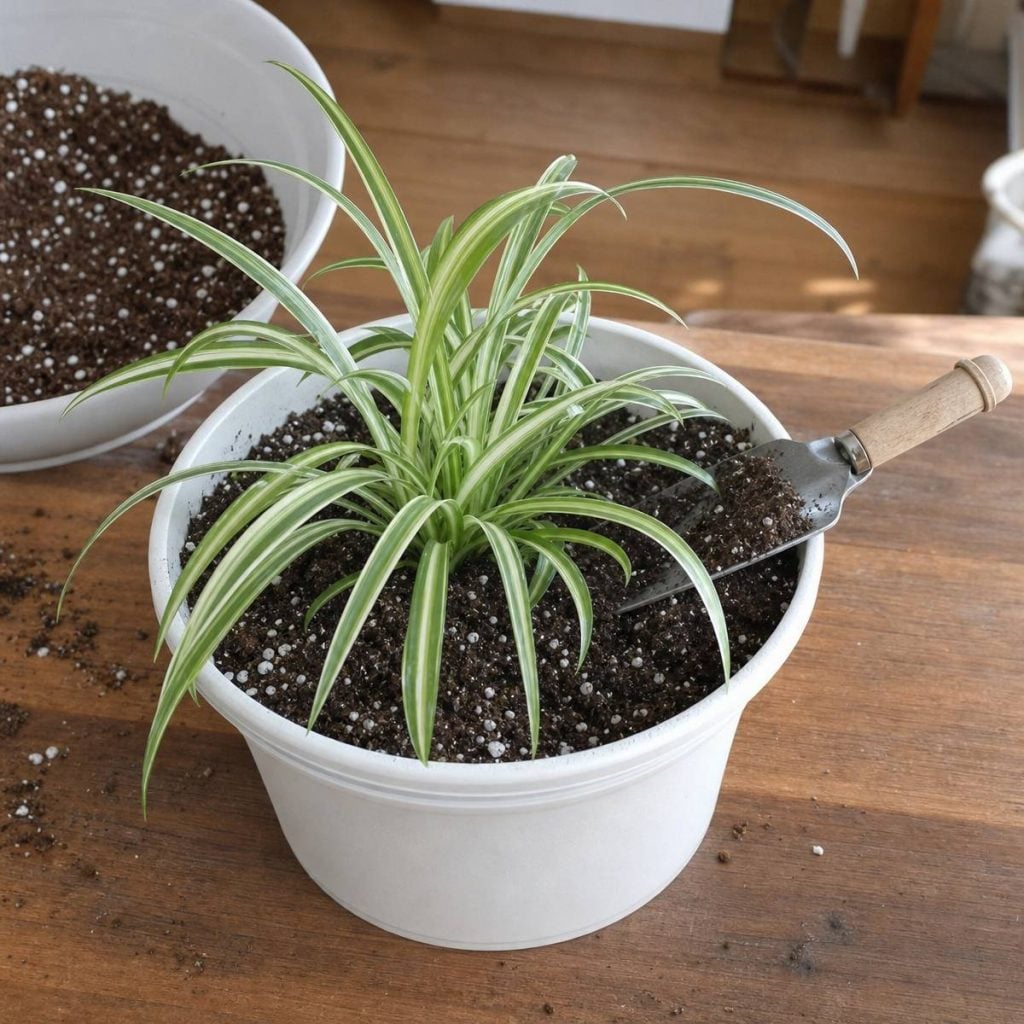
For most houseplants, a simple recipe is three parts sphagnum peat, one part vermiculite and one part perlite. Many commercial peat-lite mixes are ideal for houseplants, too.
Prefer to skip peat? Peat-free compost is recommended, and commercial peat-free mixes are made from ingredients such as loam, composted bark, coir and sand.
Common building blocks, then:
- Peat moss or coconut coir as the base
- Pine bark
- Perlite
- Vermiculite
- Dolomite or limestone, only if the mix needs its pH raised to 6.0 to 6.5
One grower caution: use components that do not add significant fluoride or boron to the mix.
Do You Need A Special Mix?
No. You’ll sometimes hear that African violet mix is the one “best” spider plant soil, but there’s no need to hunt for a special bag. A general-purpose potting soil is suitable. Pick a fresh mix that drains well and you’re set.
Water Quality And Brown Leaf Tips
Soil is only half the story. Spider plant is particularly sensitive to fluoridated water, and rainwater or distilled water is best if your tap water is fluoridated. Avoid watering with tap water, because the chlorine and fluorides can cause leaf tip burn; the fluoride content can brown the leaf tips, so collected rainwater is a good choice.
Salts are the other culprit. Leaf tip burn is caused by too much fertilizer or water high in soluble salts, and low humidity and very dry soil can also cause brown tips. Too little water, low humidity, too much salts and excess fluorides in the water are all on the list.
Not every guide agrees on tap water. General houseplant advice holds that the chlorine and fluorine often added to city water do not harm plants, while warning against using softened water continuously and noting that brown leaf tips are a typical symptom of fluoride toxicity in lily-family plants. Advice for spider plants specifically points to fluoride.
Related: Learn more about why houseplant leaves get brown tips.
When To Repot Your Spider Plant
Spider plants grow thick, fleshy tuberous roots, and they fill a pot fast. Divide and repot before the roots expand enough to crack the container; you can repot at any time of year. Plastic containers are especially at risk.
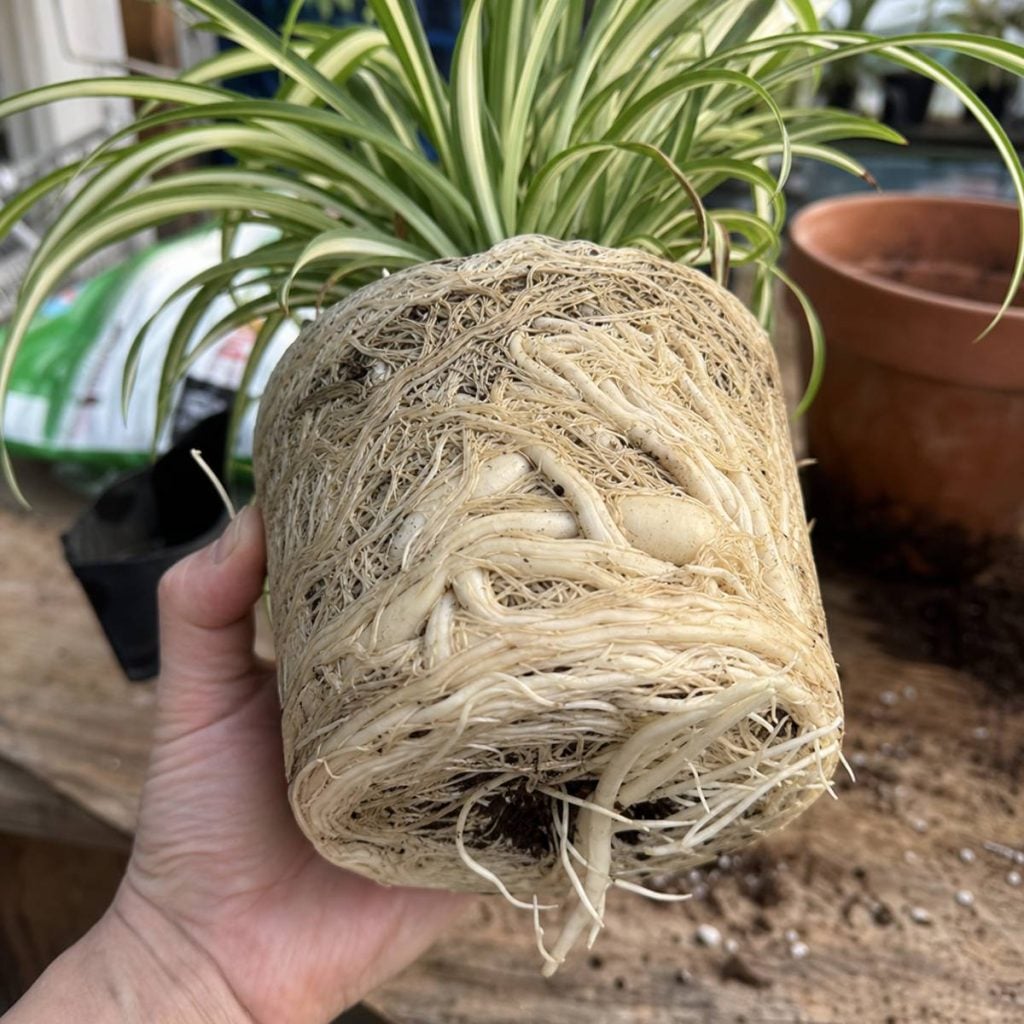
How often? A newly bought plant can usually stay in its pot for the first year, then repot every year or two into a slightly larger pot. A young plant thrives with repotting once a year, then every other year once it matures.
Don’t jump too big, though. An overly large pot, along with too little light and cool temperatures, can discourage flowering.
Got a big clump? Mature plants can be divided: the roots are thick and fleshy, so slice through with a knife if you can’t pull them apart, then repot healthy pieces with at least one growing point into their own pots of fresh mix.
Fresh Soil, Light Feeding
Fresh potting mix means you can go easy on fertilizer. Spider plants don’t generally need feeding if they are repotted regularly using fresh compost. If leaves yellow and moving the plant to a brighter spot doesn’t help, use a balanced liquid fertilizer every other month through the main growing season.
Feed during active growth with a water-soluble or time-release houseplant fertilizer, following the label, and wait four to six months before feeding newly potted plants.
Overdoing it backfires. Over-fertilizing decreases plantlet formation: heavily fertilized plants may not form as many new plantlets, and the tubers store reserve food. Spider plants’ nutrient demand is not as great as many other foliage plants, and fertilizer for them should not contain fluoride.
A Note For Florida Gardeners
Thinking of planting spider plants in the ground? Spider plant is predicted to become invasive in Florida’s natural areas, and it is no longer recommended there. In Florida, keep yours as a container plant.
What’s in your spider plant’s pot right now: bagged mix or your own blend? Tell us in the comments!
Frequently Asked Questions
What kind of soil does a spider plant need?
A well-draining, general-purpose potting mix. A general-purpose potting soil, or a multi-purpose or houseplant potting mix, suits spider plants. Drainage is key: root rot usually results from a soil mix that does not drain quickly or from excessive watering, and spider plants dislike standing in water for any length of time.
What pH do spider plants like?
Spider plants handle a fairly wide range: neutral soil, pH 6.0 to 8.0. Commercial growers target pH 6.0 to 6.5, adding dolomite or limestone if needed, because that range reduces the availability of boron and fluoride, two causes of tip burn. For a houseplant, a general-purpose potting soil is suitable.
Can I use garden soil for a potted spider plant?
It’s best not to. For houseplants in general, you should usually avoid adding soil to a potting medium, because it often leads to poor drainage, overwatering and root diseases. Use a potting mix instead, such as three parts sphagnum peat, one part vermiculite and one part perlite, or a ready-made peat-lite or peat-free mix.
Why are my spider plant’s leaf tips turning brown?
Water is one common cause. Spider plants are particularly sensitive to fluoridated water, so use rainwater or distilled water if your tap water is fluoridated; the chlorine and fluorides in tap water can cause tip burn. Too much fertilizer, water high in soluble salts, low humidity and very dry soil can also cause brown tips.
How often should I repot a spider plant?
Every year or two. A newly bought plant can usually stay in its pot for the first year, then should move to a slightly larger pot every year or two. Divide and repot before the thick roots crack the container, and wait four to six months before feeding a newly potted plant.