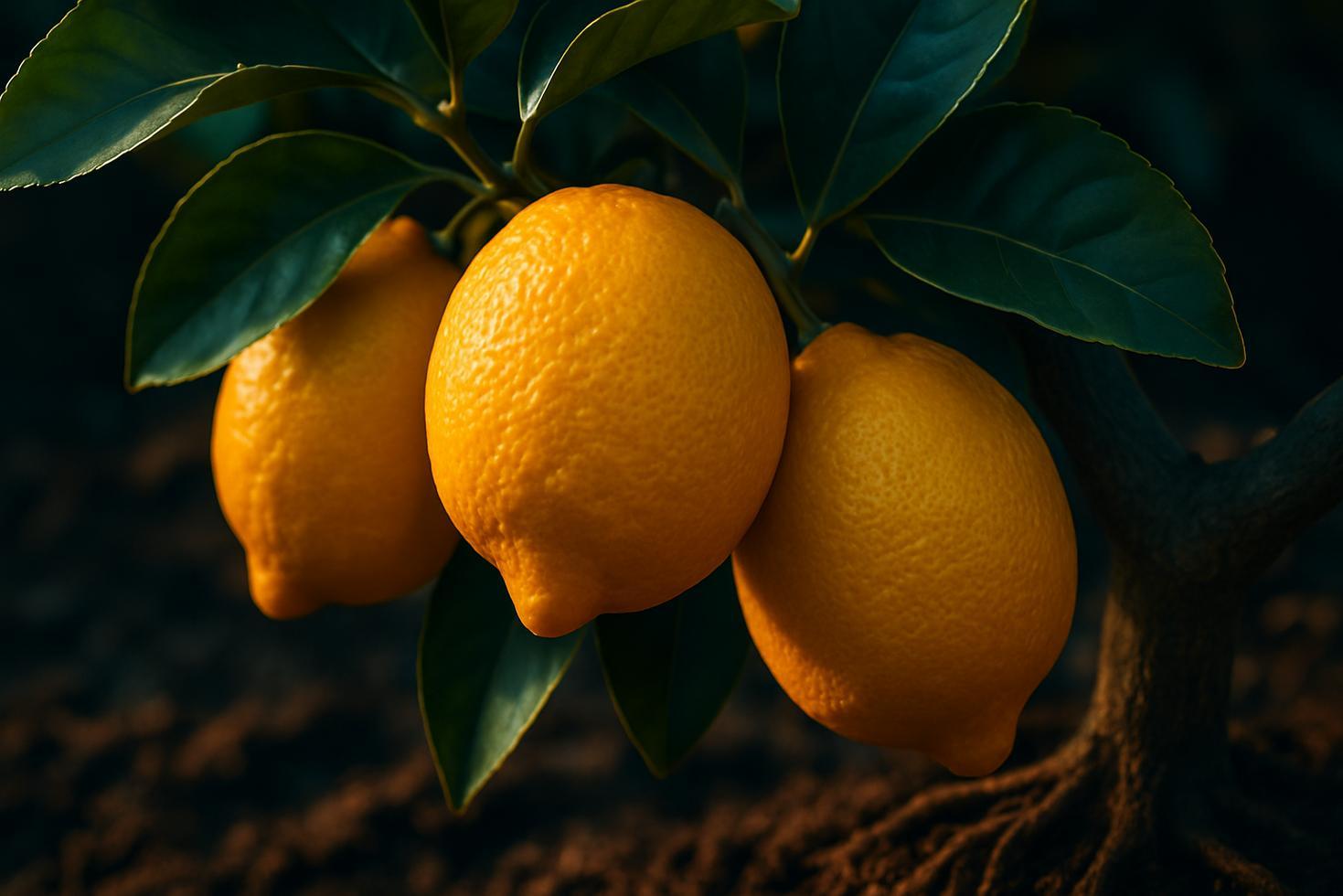
Lemon trees drop 70–80% of their flowers before fruit ever forms — but at pH 6.0–6.5, nitrogen availability improves enough to push mature trees past 100–200 lbs of fruit in a single season.
A lemon tree sheds the vast majority of its flowers every season, and that isn’t failure. It’s resource allocation. The tree measures what it can finish and drops what it can’t support. Soil chemistry is one of the biggest factors determining how many flowers make the cut.
Nitrogen is the nutrient most directly tied to fruit set, but nitrogen doesn’t move freely through soil at every pH. At the 6.0–6.5 range commonly recommended for citrus, pH influences microbial activity and root uptake efficiency in ways that make nitrogen and other essential nutrients more available to the roots. Outside that window, those same nutrients may sit physically present in the soil but largely inaccessible.
How Soil pH Controls Nitrogen Access in Lemon Trees
Soil pH doesn’t change how much nitrogen is present. It changes how much the roots can actually use. pH shifts microbial activity and nutrient solubility simultaneously, meaning a tree growing at 6.0–6.5 is working with the same soil but accessing a meaningfully larger fraction of what’s there.
When pH drifts too low or too high, nutrient lockout affects multiple elements at once — not just nitrogen. Phosphorus, calcium, and micronutrients follow similar curves. The result is a tree running on partial fuel, which accelerates flower drop and reduces the number of fruit that reach maturity.
What Lemon Tree Yields Actually Look Like at Maturity
Published extension data puts average mature lemon tree yield at 100–200 lbs per tree per year, with some well-managed trees reaching 85–150 kg annually. Trees typically begin producing fruit in their third year — around 38 lbs — and cross the 100-lb threshold by year four or five.
Fruit count varies widely by cultivar and fruit size, which is why sources more often report yield by weight. Lemon trees can flower and fruit multiple times per year, with fruit taking 6–9 months from flowering to harvest in most conditions. That overlapping cycle means a healthy mature tree often carries blossoms, developing fruit, and ripe fruit simultaneously.
Frequently Asked Questions
Why do lemon trees drop so many flowers?
Lemon trees drop 70–80% of their flowers during and just after blooming as a response to available resources — the tree sheds flowers it cannot supply with enough carbohydrates to reach mature fruit.
What is the best soil pH for a lemon tree?
The 6.0–6.5 range is consistently cited as the favorable zone for citrus, where nitrogen and other essential nutrients are most available to roots.
How many lemons does a mature tree produce per year?
Mature trees commonly yield 100–200 lbs per year, with well-managed trees in good conditions exceeding that range; fruit count varies too widely by cultivar to give a reliable single number.
When do lemon trees start producing fruit?
Most lemon trees begin fruiting in their third year, reaching peak production somewhere between years five and ten.