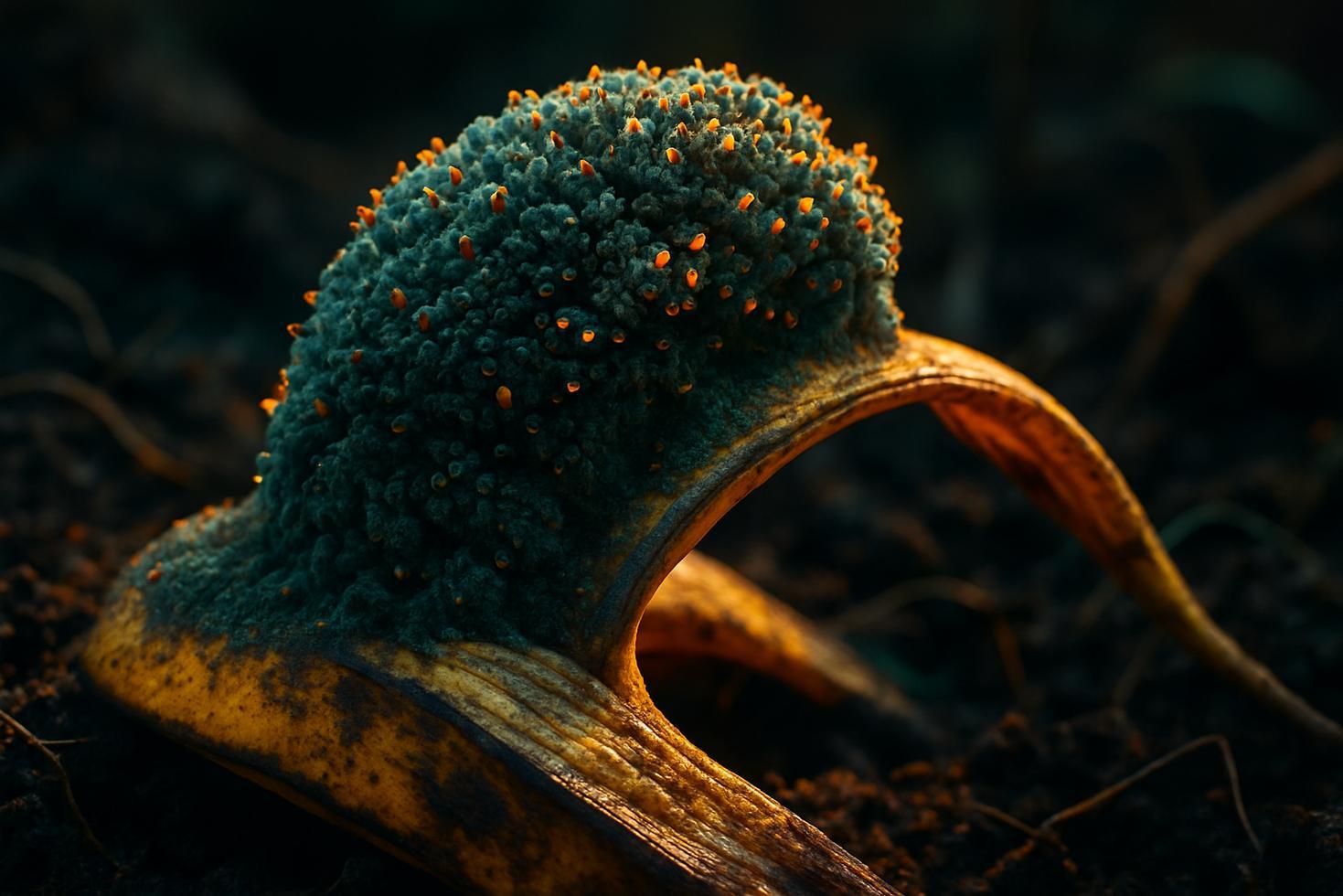
A single banana peel holds roughly 1,025 mg of potassium — but every milligram stays locked in fiber until microbes tear the structure open. The peel never feeds soil alone.
A banana peel buried in soil releases its potassium only when microbes break down the peel’s structural fibers first. That distinction matters more than most gardeners realize. The peel is potassium-rich biomass, not an instant fertilizer — and the difference between those two things is an entire microbial workforce.
Banana peels are dense with cellulose, hemicellulose, pectin, and lignin. Those compounds give the peel its tough texture and also physically trap mineral nutrients inside the tissue. Nothing escapes until decomposers arrive to dismantle the structure.
How Microbial Decomposition Unlocks Potassium From Banana Peel Fiber
Bacteria and fungi colonize the peel’s surface and secrete digestive enzymes that break apart cell walls. As the structural carbohydrates collapse, soluble potassium ions diffuse into soil water sitting between particles. From there, potassium moves quickly — it is one of the most mobile nutrients in soil and can leach downward through layers as it follows moisture deeper.
Phosphorus follows a slower, different path. It binds tightly to soil particles and releases gradually, shaped by soil chemistry and which microbial species are present.
How Peel Preparation Changes the Speed of Nutrient Release
Particle size directly controls how fast decomposition proceeds. An intact peel forces microbes to work inward from the outer surface only. A peel chopped into small pieces exposes far more surface area, and microbes swarm every exposed edge simultaneously.
Moisture, temperature, and particle size all govern the pace. No single universal timeframe applies — decomposition is gradual and variable depending on whether the peel is composted, chopped, or left whole. Faster release is the consistent finding when peels are processed before burial.
Banana peels work best as part of a compost or managed soil amendment system. A single peel contributes nutrients, but the magnitude and duration of that release are too variable to treat it as a precise fertilizer dose.
What the Potassium in a Banana Peel Actually Means for Soil
The roughly 1,025 mg potassium figure comes from human nutrition research and describes the total mineral content of the peel — not the fraction immediately available to roots. How much of that potassium a plant eventually captures depends on soil texture, how much leaches downward before roots intercept it, and cation exchange capacity of the surrounding soil.
Incorporating banana peels into compost increases organic matter, microbial activity, and gradual nutrient availability — all verified outcomes in the peer-reviewed literature. That is a real and measurable benefit, just not an instant one.
Frequently Asked Questions
Does a banana peel release potassium on its own in soil?
No. Potassium remains locked in the peel’s structural fibers until soil microbes break those fibers down through enzymatic decomposition.
How long does a banana peel take to decompose in soil?
No single timeframe applies universally. Decomposition speed depends on particle size, moisture, temperature, and whether the peel is composted or buried whole.
Is a banana peel enough to fertilize a plant by itself?
Research does not support using a single peel as a complete fertilizer. Peel-derived nutrients are gradual and variable, and peels are best used within a broader compost or amendment system.
Does chopping a banana peel actually speed up nutrient release?
Yes. Smaller pieces expose more surface area to microbial activity, which accelerates breakdown and speeds the release of soluble potassium into soil water.
Sources:
PMC (banana by-products and fertilizer use)
PMC (banana peel composition and nutrient content)
ScienceDirect
Verywell Health
WebMD