
Snake plants have a reputation for being nearly indestructible, so it’s a shock when the leaves start to lean, flop or topple over.
Take a breath. There are a few common reasons, and you can sort out which one you’re dealing with by checking three things in order: the pot, the soil and the roots.
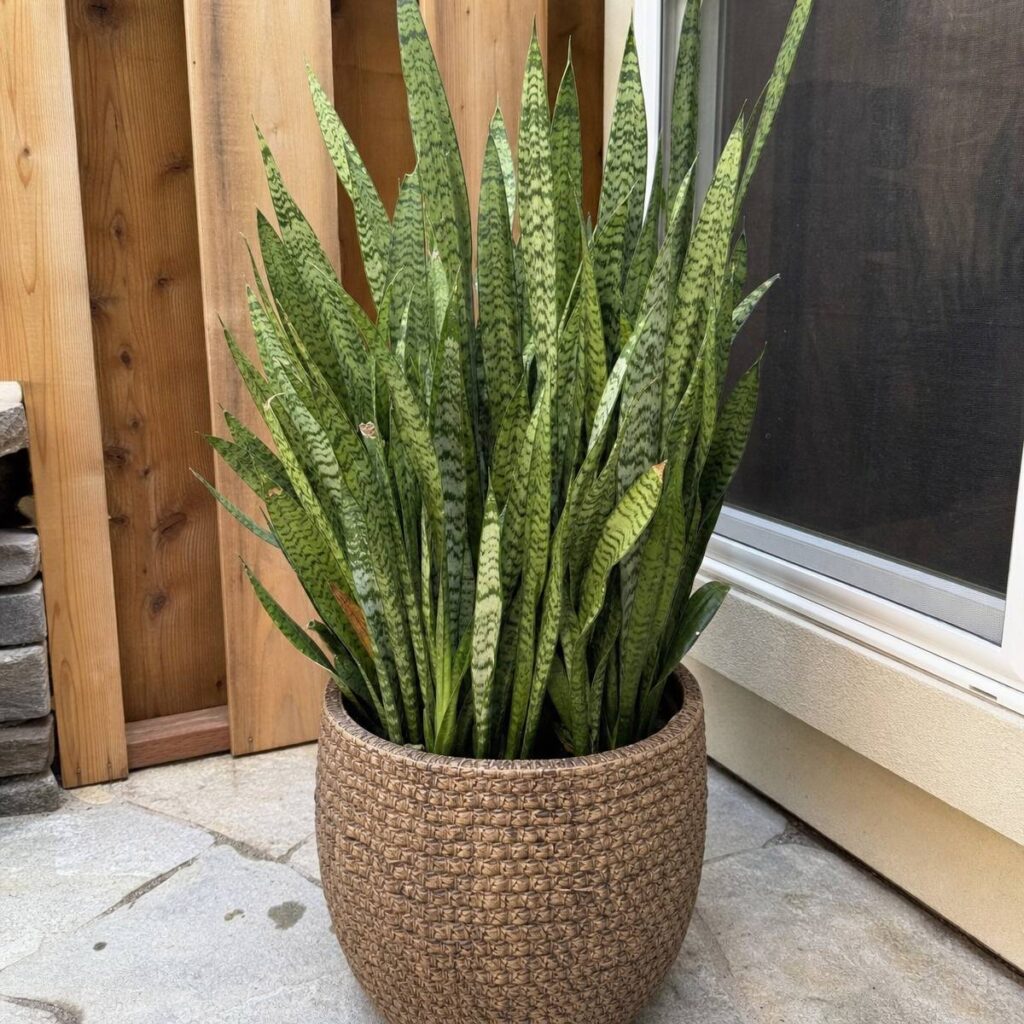
Sansevieria trifasciata (also called mother-in-law’s tongue and viper’s bowstring hemp) is a stemless evergreen perennial and a succulent houseplant with erect, fleshy, sword-shaped leaves.
It belongs to the Asparagaceae family and is native to tropical western Africa, according to Missouri Botanical Garden. Genetic research has since moved snake plants into the genus Dracaena, says Penn State Extension, so you will see both names for the same plant.
That African heritage shapes how you care for it. Missouri Botanical Garden lists it as winter hardy only in USDA zones 10 to 12, so most of us grow it in a pot indoors. Gardening in Florida? UF/IFAS rates the group a high invasion risk statewide.
UF/IFAS Extension Orange County says to keep it in a pot indoors, and UF/IFAS Extension Sarasota County allows a pot, planter or enclosed bed.
Snake plants earn their popularity. Penn State says you can neglect to water one for a month or so and it will be no worse for wear. One popular claim to skip, though: that snake plants purify your air.
A 2020 review of 12 published chamber studies by Drexel University researchers, in the Journal of Exposure Science & Environmental Epidemiology, found it would take roughly 10 to 1,000 potted plants per square meter of floor space to match the VOC removal that normal outdoor-to-indoor air exchange already provides. Grow it for the looks and the toughness.
Why Are Snake Plant Leaves Falling Over?
From across the room, two very different problems look alike: a plant that is top-heavy and tipping, and a plant whose roots are failing. Figure out which one you have before you change anything.
The Plant Is Simply Top-Heavy
Snake plant leaves are long and stiff. The straight species can grow up to 4 feet tall, according to Penn State Extension, and the weight of those leaves can topple the plant over, especially when the soil is dry.
Penn State’s advice is to choose a heavy pot for the taller varieties. Colorado State University Extension says the plants can get top heavy and are often grown in clay or ceramic pots rather than plastic for stability, and Missouri Botanical Garden says clay pots wider than they are high are often used so this tall, narrow plant does not topple over.
If the leaves are firm and green and the whole plant leans or the pot tips, weight is the likely suspect. One catch: Penn State warns that a snake plant can break a clay pot if it gets too rootbound. The UConn Home & Garden Education Center suggests keeping the plant in a slightly smaller plastic pot and setting that inside a clay or ceramic pot.
The Soil Stays Wet (Root Rot)
Overwatering is a common culprit. Iowa State University Extension says snake plants can go weeks, sometimes months, without water, but if they stay wet, root rot develops, causing leaves to turn yellow and collapse.
Penn State calls root rot a common affliction of snake plants due to overwatering. University of Wisconsin–Madison Extension explains why: most root rot fungi prefer wet soil, and plants with root rot often wilt even though the soil is wet.
Colorado State University Extension calls snake plant a succulent, and that fits: it copes with dry spells far better than with soggy soil. It is one of many types of succulent plants, and like the others it does best in a pot that drains.
Light and Cold
Snake plants tolerate low light very well but prefer bright, indirect light, and Penn State says to keep them out of direct sun, as it can burn. UConn cautions that a plant tucked into the darkest corner may hang on for a few months and then run out of stored resources.
On temperature, UConn says to avoid anything below 55°F, and Iowa State says to avoid cold drafts, especially in winter. The extension guides do not name light or cold as a cause of leaves falling over, so treat them as things to rule out rather than the first suspect.
Related: More on Snake Plant Light Requirements
Root-Bound Is Usually Fine
A snug pot is not a problem by itself. Penn State says snake plant doesn’t mind being snug in its container, and Iowa State says it doesn’t mind being a bit crowded, though dividing helps with excessively pot-bound plants. Penn State’s rule of thumb is to repot with fresh potting media every 5 years or so.
Its repotting guide says spring, when growth begins, is the best time, and the new container should be slightly larger than the current one.
How To Tell What You Are Dealing With
Work through these in order:
- Check the pot. Is the whole plant tipping, or the pot leaning, while the leaves stay firm and green? That points to weight.
- Check the soil. Is it still wet long after watering, and are the leaves limp or yellow? That points to rot. Push a finger into the soil before you water again.
- Check the roots. Slide the plant out of its pot. University of Wisconsin–Madison Extension says rotted roots are soft and brown and may have a bad odor.
If It Is Root Rot
University of Wisconsin–Madison Extension is blunt: for a houseplant with root rot, the best and most cost-effective move is often to throw it out. If you decide to save it, reduce soil moisture and start fresh.
Do not reuse the old potting mix, use a pasteurized commercial potting mix rather than garden soil, and choose a pot with drainage holes. Skip the rocks or gravel at the bottom of the pot, which can actually inhibit drainage.
Wisconsin also says to disinfest tools, working surfaces and clay pots with a 10% bleach or detergent solution, or alcohol, and not to allow the plant to sit in drainage water.
For a snake plant, that means unpotting it, shaking off the old mix, trimming away the soft brown roots with clean tools and repotting into a fast-draining mix. Penn State suggests a cactus potting mix or one with perlite. Go easy on water afterward, and hold off on fertilizer until the plant is growing again.
If the roots are beyond saving, a healthy leaf may be worth a try. Penn State lists leaf cuttings as one way to make new snake plants, though division is the easiest.
How To Prevent Snake Plant Leaves From Falling Over
- Pick a stable pot with drainage holes. Heavy and wide beats light and narrow, and Penn State says to choose only containers with drainage holes to prevent soggy soil.
- Use a fast-draining mix. Good Sansevieria care starts with a cactus potting mix or a potting soil amended with perlite (Penn State and Iowa State both say so).
- Water only when the soil is dry (Penn State). In spring and summer, Colorado State says to water thoroughly and let the soil dry slightly between waterings, while Iowa State says to wait until it has completely dried out. From fall through late winter, Missouri Botanical Garden says to reduce watering significantly, and in winter UConn says roughly once a month, and sparingly at that. Keep water out of the center of the rosette, and do not let the pot sit in drainage water.
- Give it bright, indirect light (Penn State) and shield it from hot afternoon sun (Missouri Botanical Garden).
- Keep it away from cold drafts or chilly windows in winter, as Mississippi State University Extension advises, and above 55°F (UConn).
- Go light on fertilizer. Iowa State says frequent fertilizing is not necessary and suggests half or quarter strength in spring, while Penn State suggests half strength monthly during the growing season for a more robust plant.
What About Damaged or Bent Leaves?
If a leaf is damaged, cut it off at the soil level, says Penn State. Use clean, sharp shears or scissors. A leaf that is bent but still firm can be tied loosely to a bamboo stick or other support stake while you fix the cause.
Handle the trimmings with care. Penn State says all species of snake plant are toxic because they contain saponin toxins, and Iowa State says they should be kept out of reach of children, dogs and cats.
Final Thoughts
So the checklist is short: a heavy pot, soil that dries between drinks, and bright, indirect light. Which one turned out to be your plant’s problem?
Frequently Asked Questions
How do I fix snake plant leaves that are falling over?
Start by finding the cause. If the whole plant is tipping, move it to a heavier, wider pot, because Penn State Extension says the weight of tall leaves can topple a snake plant, especially when the soil is dry. If the soil is wet and the leaves are yellow and collapsing, suspect root rot, and University of Wisconsin–Madison Extension says to reduce soil moisture if you keep the plant.
Can a snake plant fall over just because it is top-heavy?
Yes. Penn State Extension says the weight of the leaves can topple taller varieties, especially when the soil is dry, and recommends a heavy pot. Colorado State University Extension says the plants can get top heavy and are often grown in clay or ceramic pots rather than plastic for stability, and Missouri Botanical Garden says wide clay pots are often used to keep this tall, narrow plant from toppling.
How can I tell if overwatering is causing the problem?
Check the soil and the roots. Iowa State Extension says a snake plant that stays wet develops root rot, and its leaves turn yellow and collapse. University of Wisconsin–Madison Extension says plants with root rot can wilt even though the soil is wet, and that rotted roots are soft and brown and may have a bad odor.
How often should I water a snake plant so the leaves stay upright?
Only when the soil is dry. Penn State Extension says you can skip watering for a month or so with no harm, and that you can kill a snake plant by overwatering. Missouri Botanical Garden says to cut watering back significantly from fall to late winter and to keep water out of the center of the rosette.
Should I cut off a damaged snake plant leaf?
Yes. Penn State Extension says to remove a damaged leaf by cutting it off at the soil level. Keep the trimmings away from pets and small children: Iowa State Extension says snake plants are mildly toxic and should be kept out of reach of children, dogs and cats.