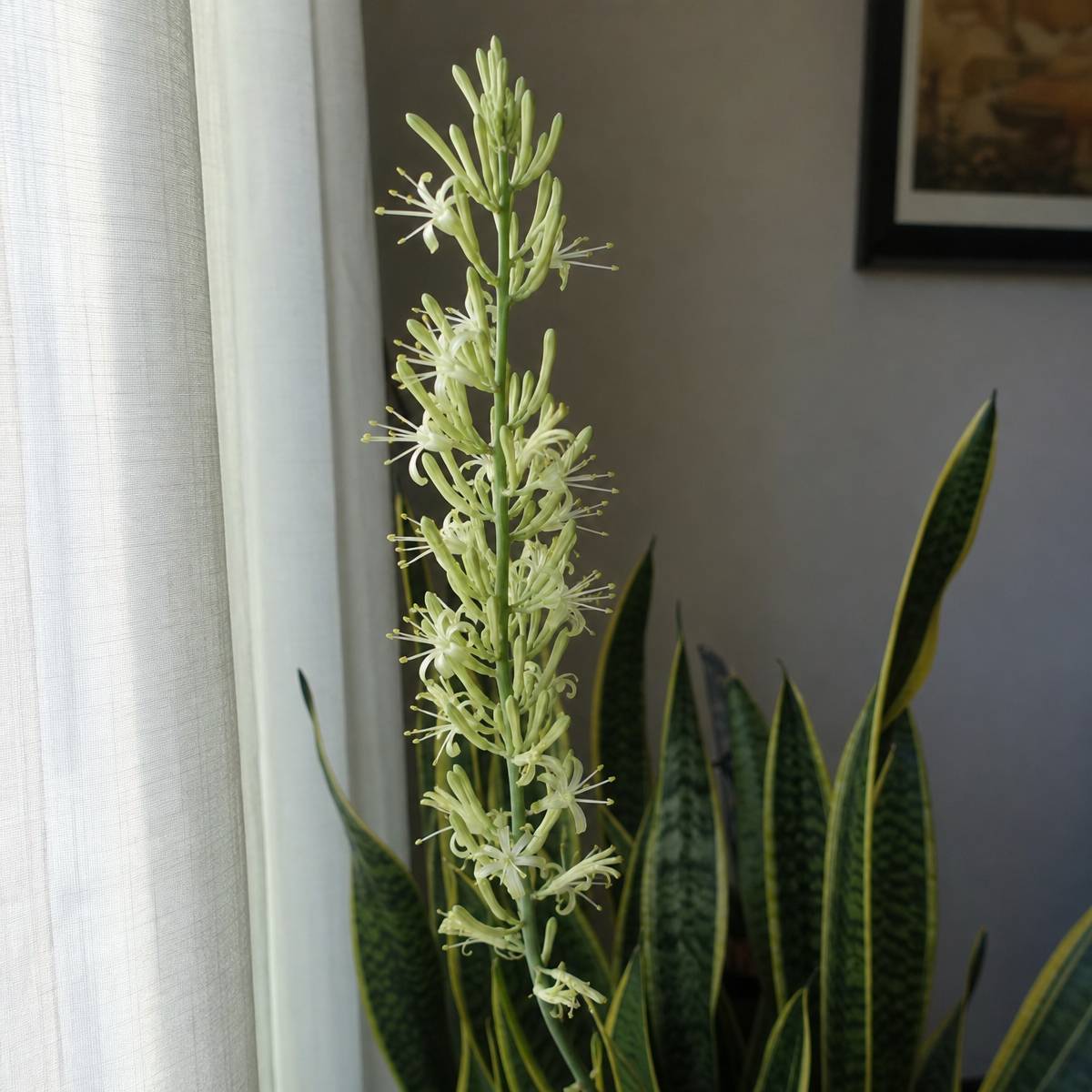
Yes, snake plants flower, and it is rare enough indoors that seeing it is a real event. The plant many of us call the snake plant, mother-in-law’s tongue or viper’s bowstring hemp is now filed as Dracaena trifasciata, previously known as Sansevieria trifasciata, though some references still group these plants under Sansevieria. Same plant, two names.
Here is the honest picture: it rarely flowers indoors, and no care guide names a sure way to make it happen. Below is what the sources say, what they leave out, and how to give your plant its best shot. New to the plant? Start with our Snake plant (Sansevieria) care guide.
Do Snake Plants Flower?
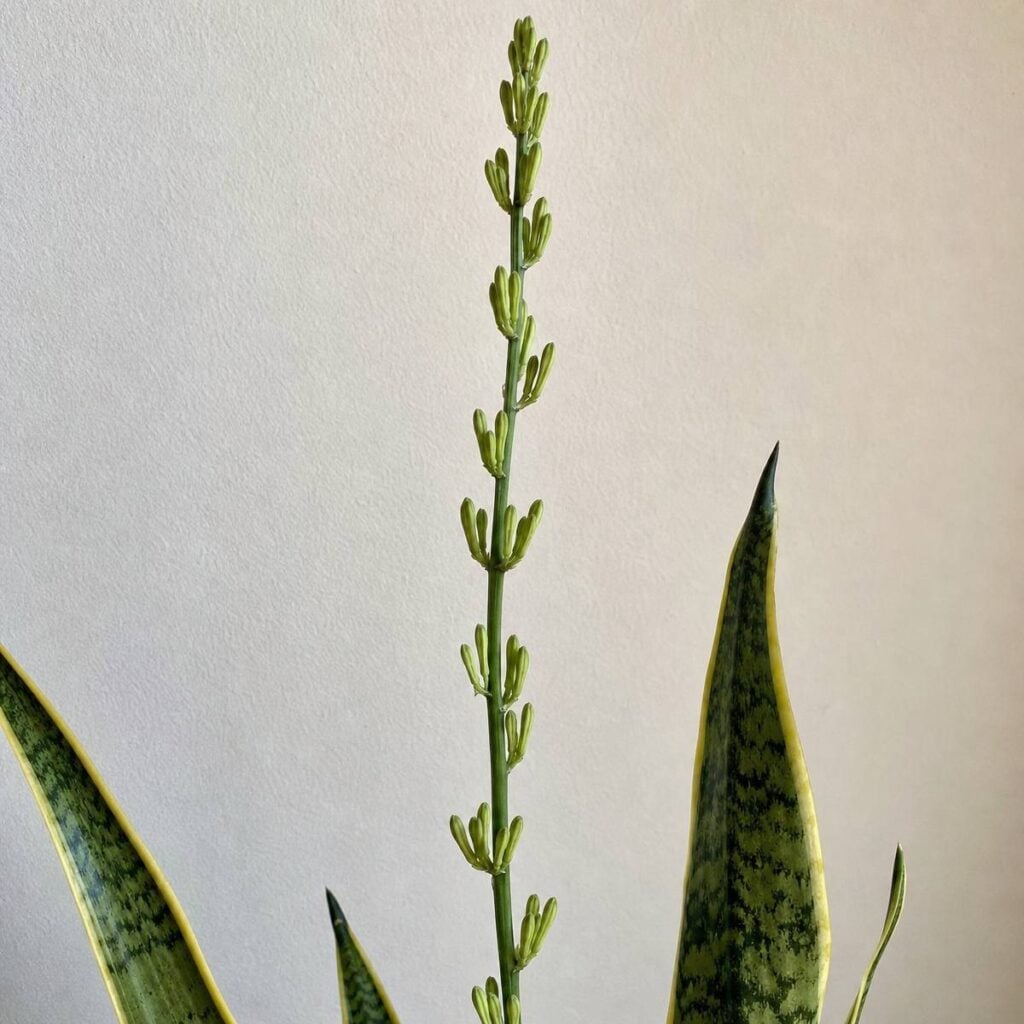
Mature plants can send up a flower stalk, usually in spring. Missouri Botanical Garden describes small, fragrant, greenish-white flowers that bloom on mature plants in spring, followed by orange berries. Spring is the usual bloom time; in its native habitat the plant blooms in winter, but as a houseplant it rarely blooms. Bloom time is often listed simply as “rarely flowers indoors.”
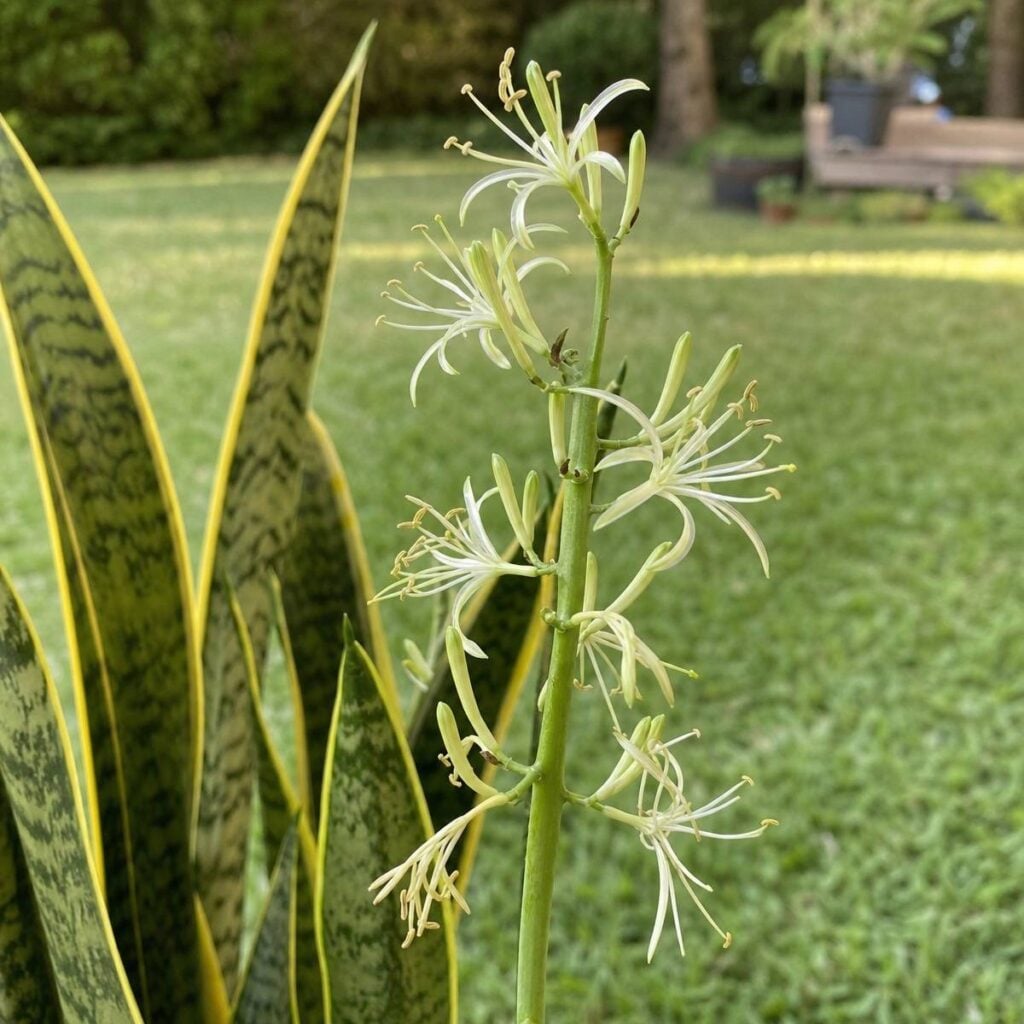
Put gently, sansevierias are grown as foliage houseplants and only occasionally produce flowers, on long thin stalks. No care guide gives a percentage, or an age at which a plant should flower, so take any hard number you read online with a grain of salt.
Is Neglect Really the Secret?
You will see the same advice everywhere: neglect a snake plant and it will bloom, because it thinks it is dying and wants to reproduce. It is a popular story, but no care guide backs it; they all describe flowering as rare or occasional. The one source that names a condition points the other way: Iowa State Extension says that when provided with abundant light and good fertility, sansevieria may produce flowers.
What they do describe is the kind of “neglect” that keeps a snake plant healthy:
- Light: the plant prefers warm, bright locations but tolerates some shade; protect it from hot afternoon sun. A bright, lightly shaded position is ideal.
- Water: let the soil dry between waterings. Overwatering is a common cause of poor health because the roots are likely to rot.
- Soil and pot: use a free-draining mix and a pot with plenty of drainage holes. Sansevierias prefer a snug pot and only need repotting once the roots and leaves have completely filled the container.
None of that is a guaranteed bloom switch. It is how you grow a healthy plant, and flowers appear on mature plants. The rest is patience; if a stalk shows up, count it as a bonus.
You will also hear that root-bound plants flower. Snake plants do like a snug pot. Mississippi State Extension says slightly root-bound plants are more likely to flower; the other guides don’t link the two. A much larger pot holds spare compost that stays damp and encourages root rot. So skip the two extremes: no need to starve a plant or to overpot it.
Do Snake Plants Need Special Soil or Fertilizer?
No special soil, just a well-draining one; a free-draining cactus compost works well. Feeding is optional: a monthly liquid houseplant or cactus feed through the growing season can boost growth, and none of the guides ties feeding to flowering. These plants are relatively slow-growing, so don’t expect a pot to fill up overnight.
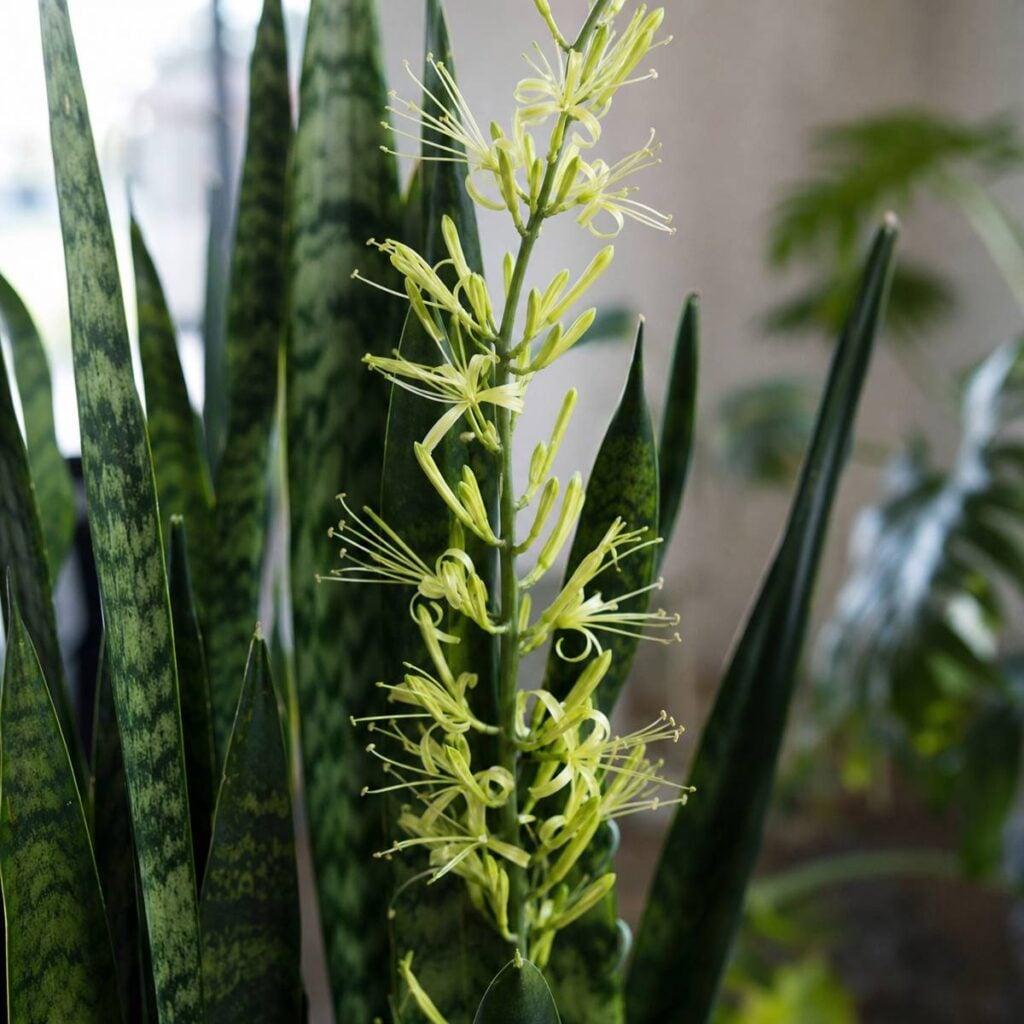
What Do the Flowers Look and Smell Like?
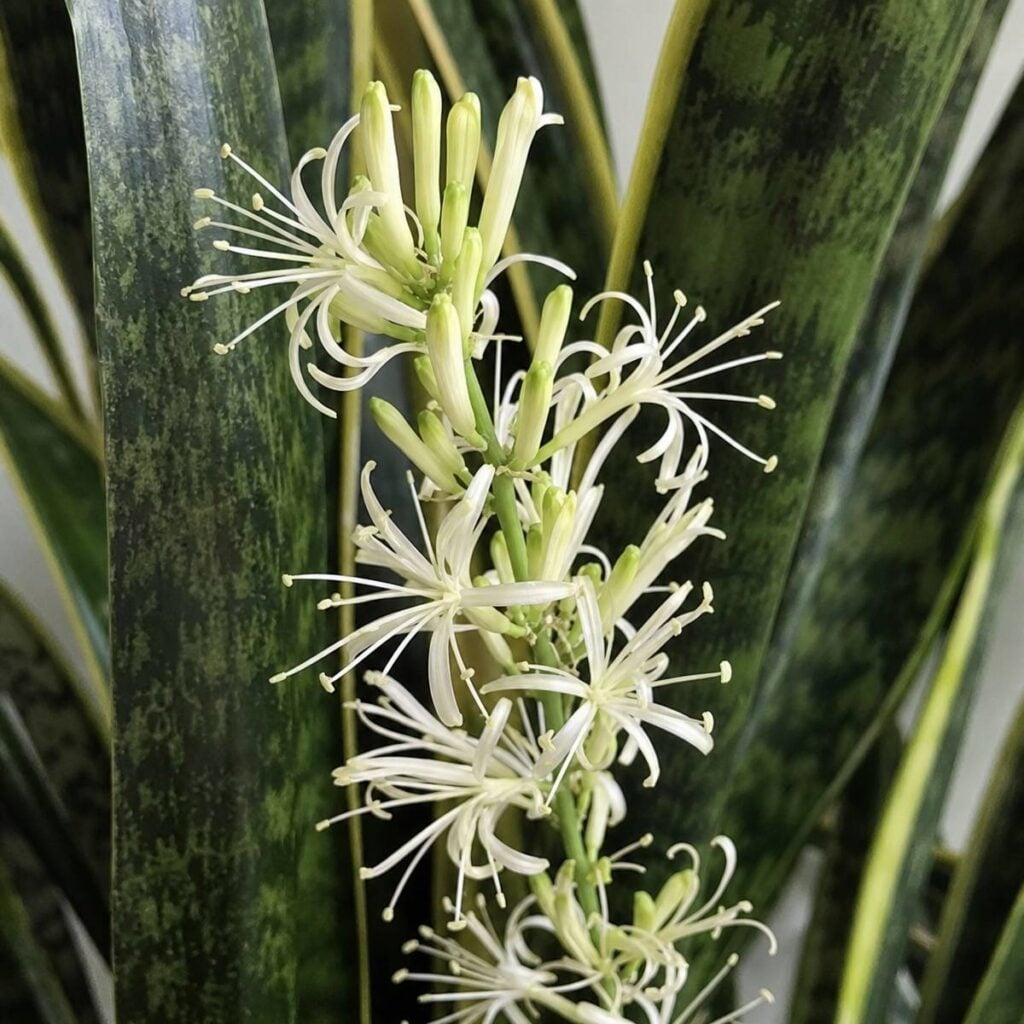
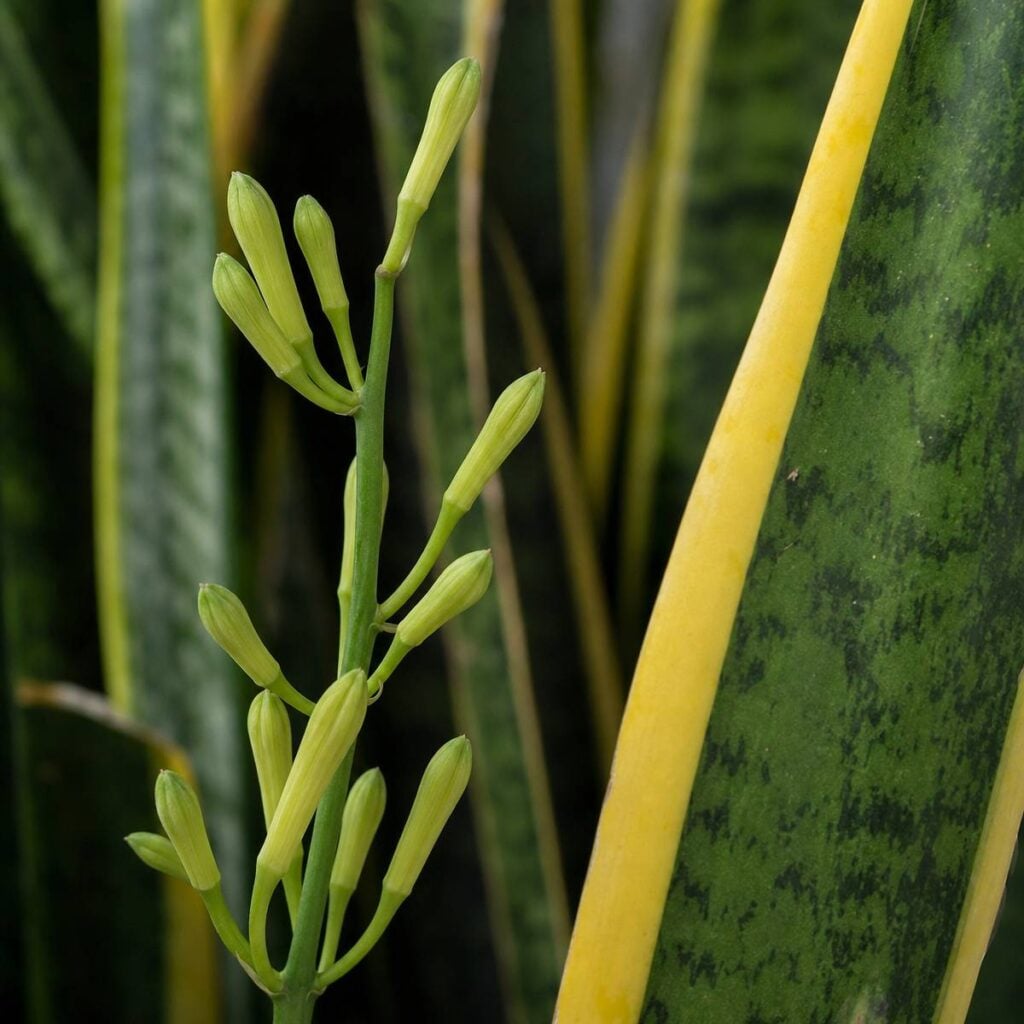
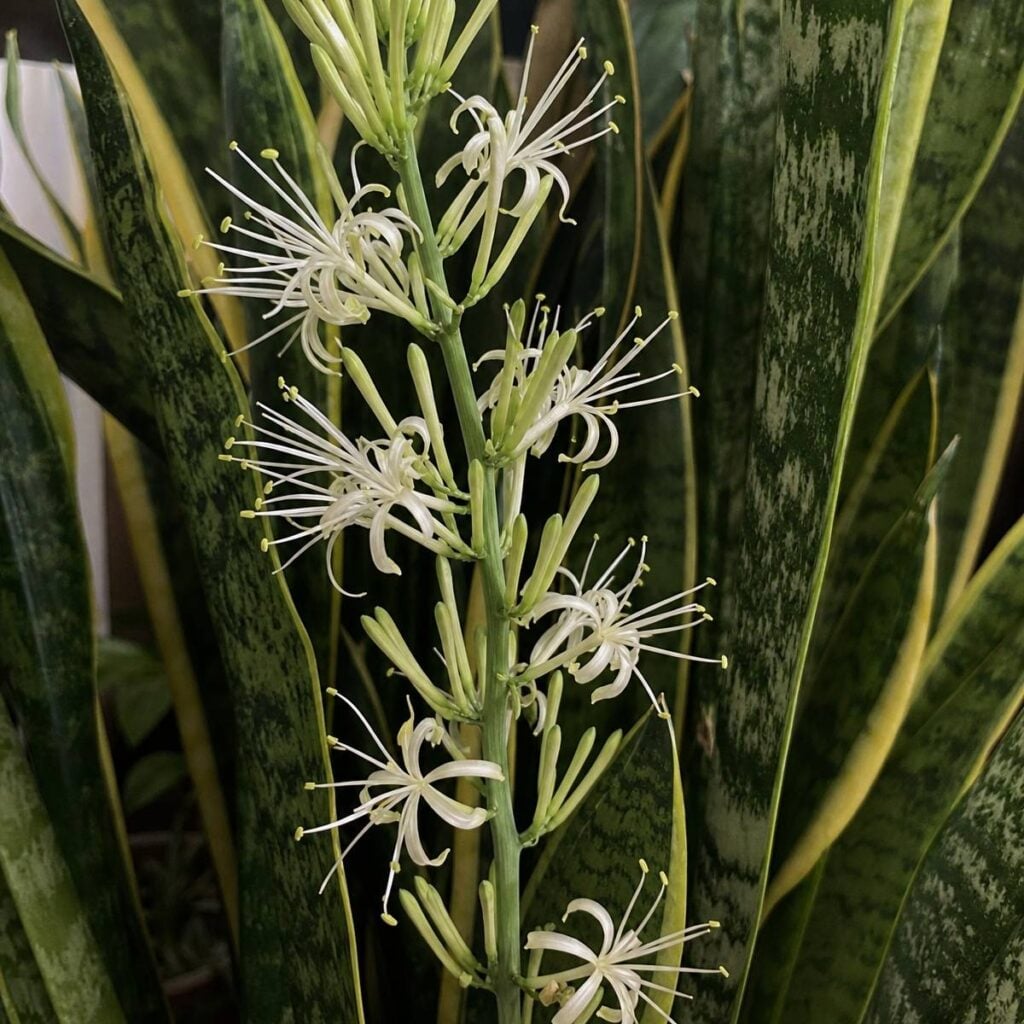
NC State Extension describes small, greenish-white to cream-colored flowers that are sticky and fragrant, carried on a raceme (a stalk with flowers along it). They can also look starry white and highly fragrant, and in the wild moths pollinate them. The tubular flowers have strap-like petals that curl back, and that their pleasant scent is strongest at night, similar to vanilla or jasmine.
How Long Do the Flowers Last, and What Comes Next?
The guides give a season, spring, not a duration, so there is no honest number to hand you. When the flowers fade, snip the stalk off at the base. Orange berries can follow flowering, though they are rarely seen on indoor plants.
Does the Snake Plant Die After Flowering?
Nothing in the guides suggests it does. It is a stemless evergreen perennial that, with proper care, will last for many years, and the aftercare is simply to snip the stalk off at the base.
Poison, Sap and Where to Grow It
The Royal Horticultural Society says sansevierias are poisonous, so keep them out of reach of children and pets, and that the sap is a skin irritant, so wear gloves when handling cut leaves.
If you live in Florida, keep snake plants in pots. The UF/IFAS Assessment of Non-Native Plants in Florida’s Natural Areas rates Sansevieria trifasciata a high invasion risk in the north, central and south zones, “predicted to be invasive and not recommended by IFAS,” with an assessment date of 2011. The runners don’t quit, either: planted in soil without a barrier the plant will overgrow and can consume a yard.
Favorite Sansevieria Varieties
- Sansevieria Hahnii: the bird’s nest snake plant
- Sansevieria cylindrica: the cylindrical snake plant
- Sansevieria Moonshine
- Sansevieria Black Coral
Frequently Asked Questions
Does a mother-in-law’s tongue plant flower?
Yes, but it is uncommon indoors. Bloom time is listed as “rarely flowers indoors,” and small, fragrant, greenish-white flowers bloom on mature plants in spring, followed by orange berries. Sansevierias only occasionally produce fragrant, starry white flowers. So a plant that never blooms is common.
When do snake plants bloom?
Spring is the season the guides give. The flowers bloom on mature plants in spring, though in its native habitat the plant blooms in winter. Indoors, flowers are rarely seen, so no guide promises a schedule.
How do I make my snake plant flower?
There is no guaranteed method. Flowering is rare or occasional, though abundant light and good fertility make flowers more likely. Flowers appear on mature plants, so the practical plan is patience and steady care: a bright spot, soil that dries between waterings, a free-draining mix, and a snug pot repotted only when the roots and leaves fill it.
Do snake plant flowers smell?
Yes. The flowers are small, greenish-white to cream-colored, sticky and highly fragrant. The scent is strongest at night and is similar to vanilla or jasmine. In the wild, moths pollinate them.
What should I do after my snake plant flowers?
Snip the flower stalk off at the base once the flowers fade. Nothing in the guides suggests flowering ends the plant’s life: it is an evergreen perennial that will last for many years with proper care. Orange berries can follow the flowers, though they are rarely seen on indoor plants.