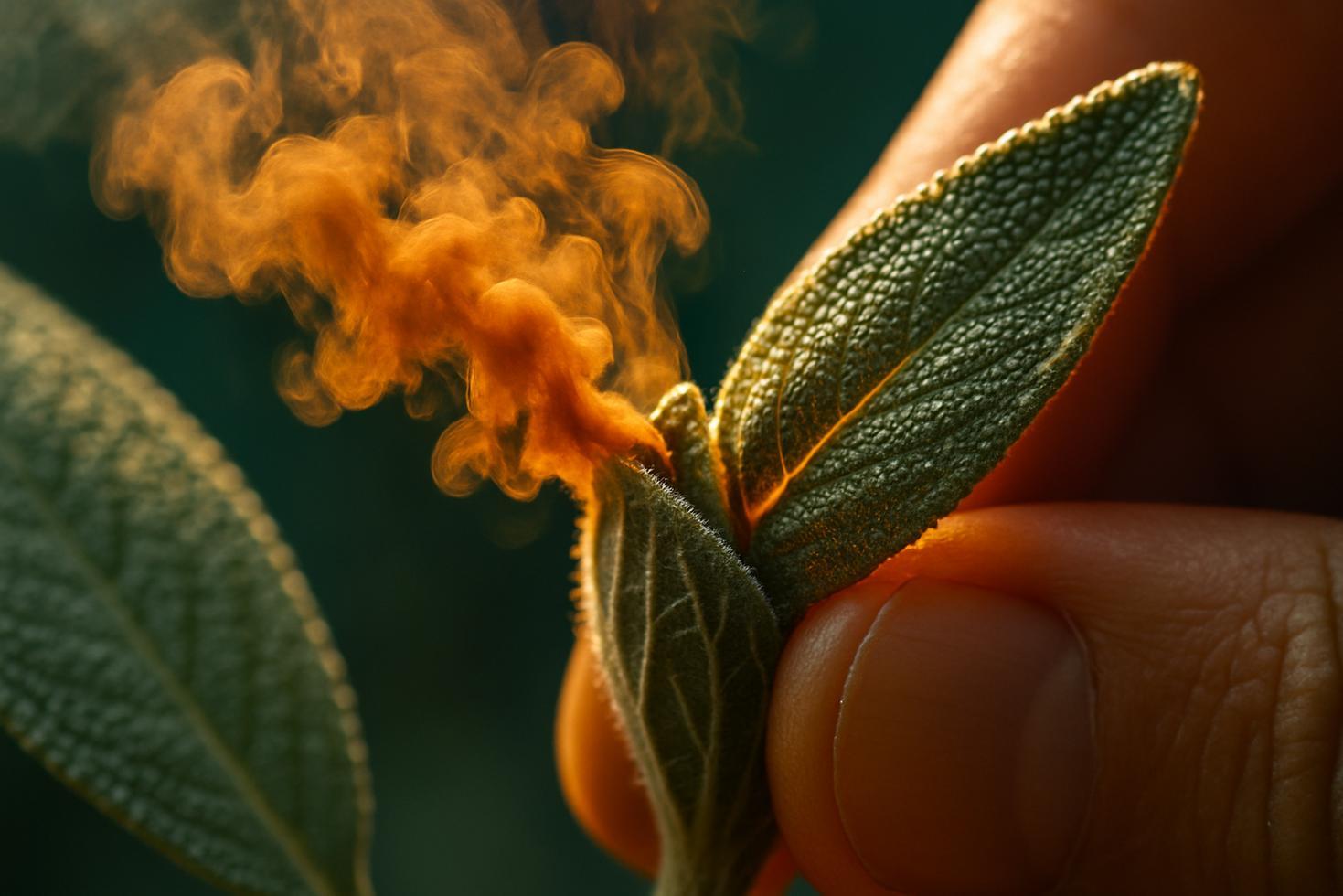
Sage oil runs 54.3% alpha-thujone — locked inside leaf glands until crushed. A sage-patchouli blend held mosquitoes off for 270 minutes in controlled testing.
Sage stores its defensive chemistry inside microscopic oil glands on the leaf surface, and those glands only rupture when the tissue is physically damaged. That single biological fact explains the entire repellency story. The plant doesn’t broadcast its terpenes freely — it holds them under pressure until something breaks the seal.
When the seal breaks, what pours out is chemically specific. Alpha-thujone makes up 54.3% of analyzed sage oil. Camphor accounts for another 18.8%. Those two compounds alone represent nearly three-quarters of the oil’s composition by weight in tested samples.
What the Numbers in Sage Oil Actually Mean
Alpha-thujone is not a minor constituent — it dominates sage oil at over half the total composition. Research confirms that thujone can interact with insect odorant-binding proteins, disrupting how mosquitoes interpret chemical signals in their environment.
Camphor adds a second layer. Together these monoterpenes can alter ion channels and engage receptors including GABA receptors and nicotinic acetylcholine receptors in the insect nervous system. The mosquito doesn’t die. It loses reliable access to its own sensory map.
How Long Sage Terpenes Actually Protect Against Mosquitoes
The 270-minute figure comes from a controlled study using a sage-patchouli oil combination tested against Aedes dirus. That’s the median complete-protection time — not an estimate. A basil-sage 1:1 blend tested against Aedes aegypti in the same research reached 150 minutes.
Both figures reflect median complete-protection time, a rigorous standard requiring zero bites during the test window. The difference between 150 and 270 minutes shows that sage’s partners in a blend matter as much as sage itself.
The mechanism isn’t camouflage. Sage terpenes don’t mask a host’s scent — they chemically interfere with the receptors mosquitoes depend on to read their environment at all. A plant that never moves, never chases, never signals. It just makes the air around it harder to interpret.
Forty years of watching plants solve problems, and the locked gland is still one of the most elegant solutions in the garden.
Frequently Asked Questions
Why do sage leaves need to be crushed to release the repellent?
Sage stores volatile terpenes inside sealed surface glands. Physical damage to leaf tissue ruptures those glands and releases the compounds into the air.
What is alpha-thujone and why does it affect mosquitoes?
Alpha-thujone is the dominant terpene in sage oil at 54.3% of composition. Research indicates it can interact with insect odorant-binding proteins and alter nervous-system receptors, disrupting mosquito sensory behavior.
How long does sage actually repel mosquitoes?
In controlled testing, a sage-patchouli blend provided 270 minutes of median complete-protection time against Aedes dirus. A sage-basil blend reached 150 minutes against Aedes aegypti.
Does sage kill mosquitoes or just repel them?
The mechanism documented in research is behavioral disruption, not lethality. Sage terpenes interfere with how mosquitoes sense their environment rather than killing them directly.