One inch of rain on a 1,000 sq ft roof generates 623 gallons — most of it gone underground before a root touches a drop. A barrel at the downspout changes that math.
One inch of rain falling on a 1,000 square foot roof generates about 623 gallons of runoff. That number comes straight from the conversion: 0.623 gallons per square foot per inch of rainfall. Most of those gallons exit through a downspout in under an hour, channeled into storm drains before the soil ever gets involved.
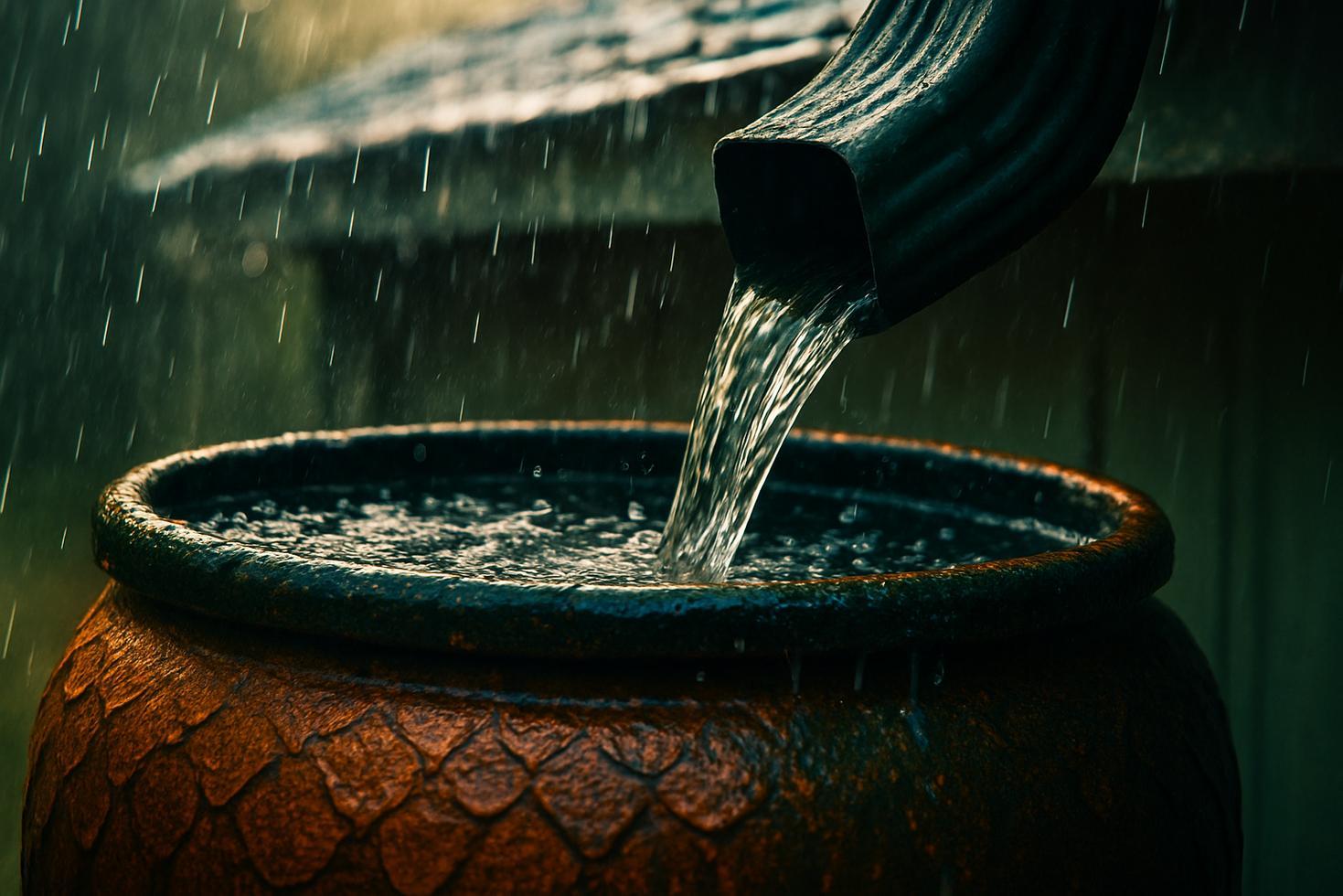
That’s the moment a rain barrel intercepts. It connects directly to the downspout and redirects rooftop water into storage rather than the drainage system. The roof was already acting as a collection surface. The barrel just changes the destination.
How the Roof-to-Runoff Calculation Works
The math behind rain barrel sizing is straightforward. One cubic foot of water holds 7.48 gallons. One inch of rainfall over one square foot equals 0.623 gallons. Multiply that factor by any roof area and the collection potential scales directly.
A 1,200 square foot roof yields about 700 gallons from a single inch of rain. Scale to 2,000 square feet and the same storm produces 1,246 gallons. The conversion factor of 0.623 gallons per square foot appears consistently across EPA materials, university extension guides, and county government resources.
Barrel size matters here. A standard 50- to 80-gallon barrel fills quickly — just one-quarter inch of runoff from an average roof can fill one completely.
What a Rain Barrel Diverts Away from Storm Drains
Every gallon captured in a barrel is a gallon that doesn’t enter a storm drain. EPA and county extension materials both confirm that a rain barrel can save roughly 1,300 gallons during peak summer months, diverting that water away from drainage channels and into landscape irrigation instead.
University of Nevada, Reno Extension calculated that a 1,500 square foot roof, receiving 7.5 inches of annual precipitation at 90% collection efficiency, can yield about 6,300 gallons per year. Rooftop runoff diverted into storage reduces the volume entering local streams, which lowers the sediment and pollutant load those streams carry after storms.
Placement amplifies that diversion. Extension guidance recommends elevating barrels at least 15 inches above ground on cinder blocks or a platform so gravity drives water flow to the garden without a pump.
The roof never stopped collecting. It was always funneling rain somewhere — the only question was whether that somewhere was a storm drain or a garden. A barrel at the downspout answers that question with a very specific number: 623 gallons per inch, ready to stay on site.
Frequently Asked Questions
How many gallons does 1 inch of rain produce on a roof?
About 0.623 gallons per square foot, so a 1,000 sq ft roof yields roughly 623 gallons from one inch of rainfall.
How much water can a rain barrel save in a summer?
EPA materials and county extension sources state a rain barrel can save about 1,300 gallons during peak summer months.
What size is a typical rain barrel?
Standard rain barrels range from 50 to 80 gallons and include a spigot for watering cans or soaker hoses.
How high should a rain barrel be placed off the ground?
University of Nevada, Reno Extension recommends elevating the barrel at least 15 inches above ground so gravity drives water flow.