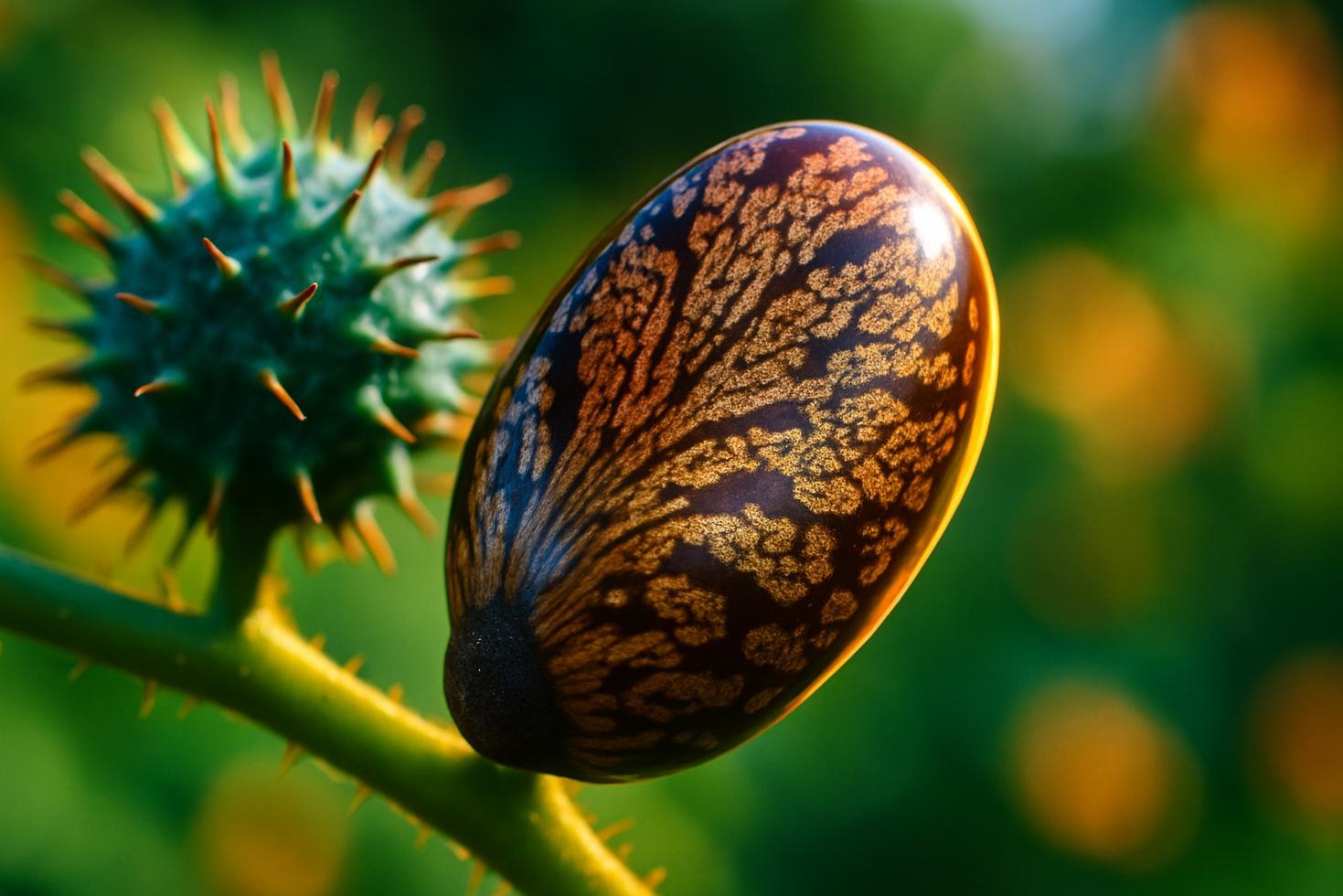
One or two castor bean seeds approach the lethal dose for an adult — and the rosary pea raises that stakes further: a single cracked seed has caused death.
Castor bean seeds contain one of the most potent plant toxins known, ricin, concentrated almost entirely in the seed itself rather than distributed through the rest of the plant. That asymmetry is what makes the seed so disproportionately dangerous. The stem, leaves, and roots of the same castor plant carry far lower toxin loads — the seed is where the chemistry peaks.
Ricin works by entering cells and shutting down the ribosomes that build proteins. Without functional ribosomes, cells stop working entirely. The amounts required to reach that threshold are measured in micrograms — quantities invisible to the naked eye.
Quick facts:
– 1–2 castor bean seeds approach the lethal dose for an adult
– A single rosary pea seed has caused death
– Ricin is concentrated in the seed, not distributed equally across the plant
– Ricin disables protein synthesis inside cells, causing them to stop functioning
– Castor plants are grown as ornamentals in gardens worldwide
How Ricin Concentrates Inside Castor Bean Seeds
The seed is where the plant’s reproductive investment sits, and it is also where the toxin load peaks dramatically. Ricin loads into seed coat and inner flesh, leaving roots, stems, and leaves comparatively low in toxicity. That pattern — extreme concentration in one part, relative quiet elsewhere — is what makes accidental exposure to seeds specifically so consequential.
Texas A&M AgriLife Extension documents the 1–2 seed figure for adults as approaching lethal dose, a number that puts castor bean in a different category from plants where large quantities are required to cause serious harm.
Rosary Pea and the Single-Seed Threshold
The rosary pea illustrates the same seed-concentration principle at an even sharper scale. Texas A&M’s toxicology data records that a single rosary pea seed has caused death — not a handful, one cracked seed. The key word is cracked. An intact seed may pass through the digestive system. A broken seed releases its toxin directly.
Both plants demonstrate that seed damage determines actual toxin exposure. The outer coat, if breached, removes the barrier between the chemistry inside and the person who encountered it.
What Happens Inside the Body
Ricin’s mechanism is cellular rather than systemic in the way a venom might be. The toxin binds to ribosomes and inactivates them. Protein production halts. The effects are not immediate, which historically made ricin difficult to recognize early. Symptoms can include vomiting, diarrhea, breathing difficulty, and collapse depending on dose and route of exposure.
Anyone suspecting ingestion of castor bean or rosary pea seeds should contact Poison Control immediately: 800-222-1222 in the United States.
Castor plants are not hidden in remote ecosystems. They grow in suburban gardens, often handled without a second thought. The toxin doesn’t advertise itself with bitter taste or obvious warning. It sits quietly inside something that looks like a speckled bead — waiting for a crack.
The seed does all the work.
Frequently Asked Questions
Why are castor bean seeds so much more toxic than the rest of the plant?
Ricin is concentrated in the seed coat and inner flesh rather than distributed evenly; Texas A&M documents the rest of the plant as carrying far lower toxin levels.
How many castor bean seeds are dangerous to an adult?
Texas A&M AgriLife Extension identifies 1–2 seeds as approaching the lethal dose for an adult.
Does a rosary pea seed have to be chewed to be dangerous?
Yes — a cracked or chewed seed releases toxin; an intact seed may pass through without causing the same level of harm.
What should someone do after possible castor bean seed ingestion?
Contact Poison Control immediately at 800-222-1222; do not wait for symptoms to appear.