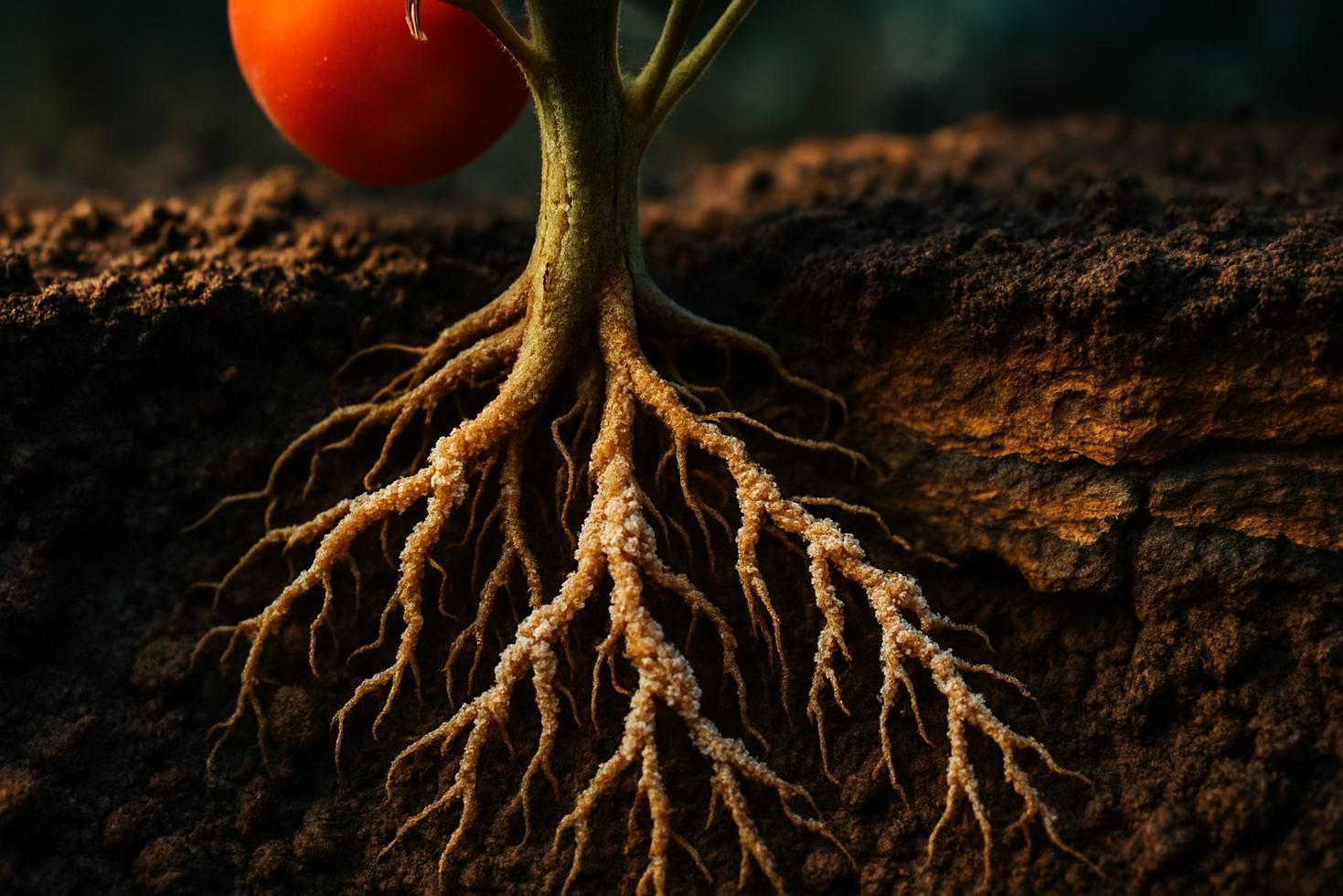
Tap water can push soil above pH 8 — rainwater lands near pH 5.5. That gap shifts whether iron, zinc, and manganese are chemically reachable or effectively locked away from roots.
Rainwater and tap water deliver the same molecule — H₂O — but carry very different chemistry into the soil. That chemistry determines whether micronutrients like iron, zinc, and manganese sit available at the root surface or get bound up beyond a plant’s reach. The difference comes down to dissolved salts, treatment additives, and pH.
Municipal water commonly contains chlorine and fluoride. In salt-sensitive soils, those dissolved minerals accumulate over repeated watering cycles. That buildup gradually shifts soil pH upward, and at pH 8 or above, micronutrient availability drops sharply.
How Soil Salt Accumulation Locks Out Micronutrients
When tap water evaporates or moves through soil, dissolved minerals stay behind. Over time, those salts bind to iron, zinc, copper, and manganese — the minerals driving chlorophyll production and cell repair — and pull them into chemically unavailable forms.
Salt-bound micronutrients block absorption even when the minerals are physically present in the soil. The plant is surrounded by what it needs and cannot reach any of it.
Rainwater’s lower pH helps reverse this. Its natural acidity — produced partly by dissolved carbon dioxide forming carbonic acid — breaks those salt bonds apart and shifts soil back toward the 5.5–6.5 window where nutrients move freely.
What Rainwater Actually Carries Into the Root Zone
Rainwater is not simply clean water. As it falls through the atmosphere, it picks up reactive nitrogen compounds. Those compounds reach the soil as a small but real nitrogen input — nitrate being the most bioavailable form plants use directly.
Atmospheric nitrogen delivered in falling rain is a genuine mechanism, not a gardening myth, though the concentration per rainfall event is modest and no precise flux numbers are available in the current research.
Rain also leaches accumulated salts downward through the root zone, physically flushing the buildup that repeated tap watering deposits. The leaching and the pH shift work together.
Rainwater does not fix every soil problem, and rooftop-collected rain can pick up organic debris or bird droppings that complicate the chemistry. But what falls directly on garden soil carries a combination of low dissolved salts, mild acidity, and trace atmospheric nitrogen that tap water simply does not replicate. The faucet keeps plants alive. The sky, periodically, resets the chemistry the faucet slowly alters.
Frequently Asked Questions
Why does pH matter so much for plant nutrient absorption?
Soil pH controls the solubility of mineral nutrients. At pH above 7, iron, zinc, and manganese form compounds that roots cannot take up, even when those minerals are physically present in the soil.
Does tap water’s chlorine actually harm plants?
Chlorine and fluoride in municipal water are flagged as relevant for salt-sensitive plants and soils that accumulate dissolved minerals, but the research does not provide a specific damage threshold or timeline.
Is rainwater always acidic?
Most sources cite rainwater pH around 5.5–5.6, though values vary by location and atmospheric conditions. That figure is not universal, but it consistently falls well below typical tap water pH.
Does rain add nitrogen to soil?
Yes. Falling rain picks up reactive nitrogen compounds from the atmosphere and delivers them to the root zone. The amounts per event are modest, and no precise concentration figures are available in current research.