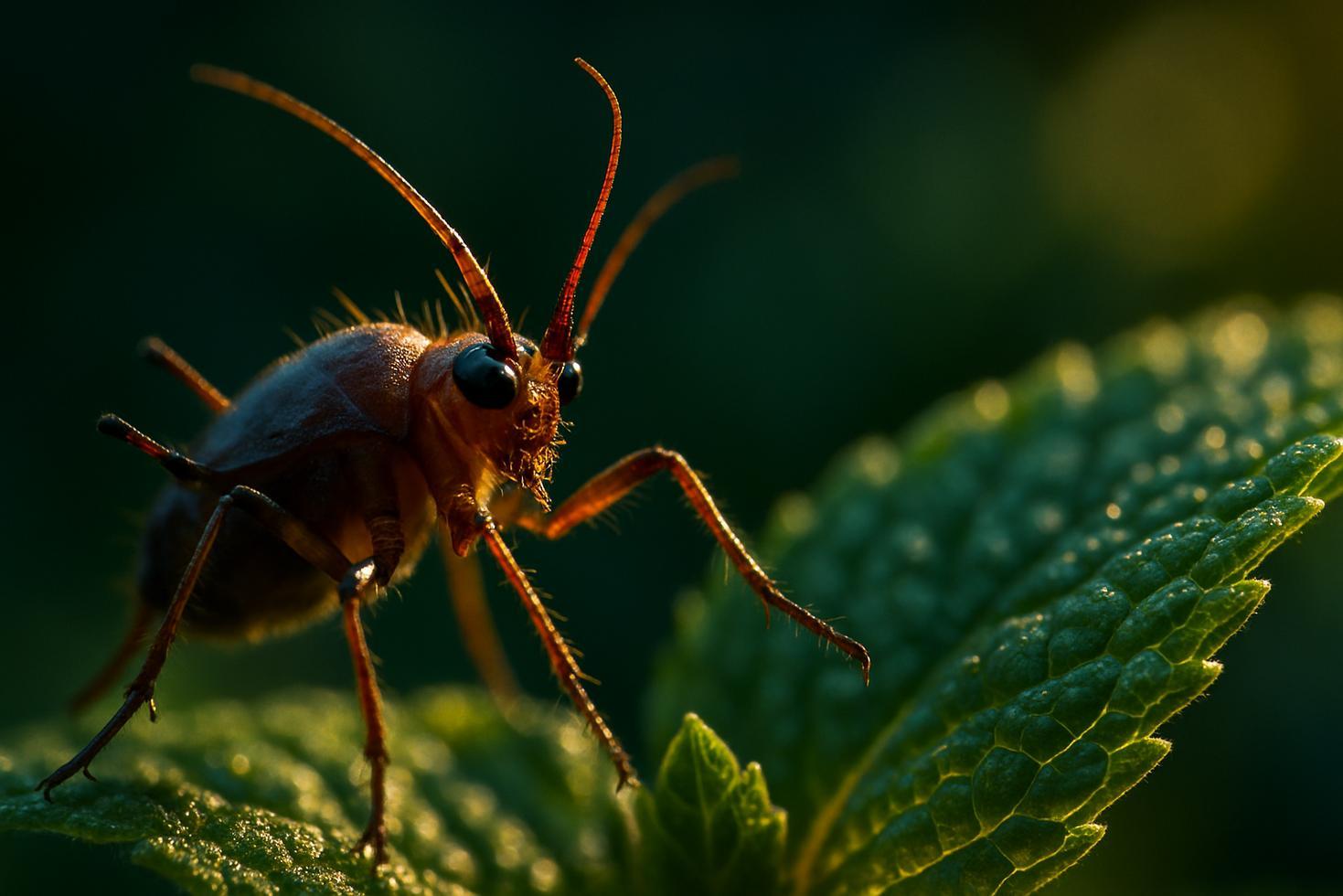
Menthol makes up 30–55% of peppermint’s essential oil — the same compound that scrambles insect navigation and stops larvae from reaching adulthood.
Peppermint oil repels and can kill insects through two distinct mechanisms: olfactory receptor activation that disrupts navigation, and neurotoxic interference with nerve signaling. That combination, rooted in a single volatile-rich oil, makes Mentha piperita one of the more studied plants in insect defense research. A 1999 study confirmed larvicidal and mosquito-repellent action from peppermint oil specifically, and the mechanistic picture has grown considerably sharper since then.
What makes the chemistry interesting is how layered it turns out to be. Early assumptions pointed to simple masking — the plant smells strong, insects leave. The actual research tells a more specific story.
How Peppermint Volatiles Activate Insect Olfactory Receptors
Research using Drosophila Orco mutants showed that peppermint oil and menthol activate multiple odorant receptors and olfactory receptor neurons. In Orco mutants, repellency was significantly reduced or abolished — direct evidence that odorant receptor pathways drive a meaningful share of the behavioral response.
olfactory receptor neurons firing on peppermint contact is the mechanism, not simple scent masking. The insect’s navigation system reads peppermint volatiles as a signal it cannot ignore or filter out.
That said, the same Drosophila study found that peppermint oil, menthone, and other plant volatiles also include receptor-independent repellency pathways. The full response involves more than one route.
Peppermint Oil’s Neurotoxic and Larvicidal Effects on Insects
Beyond olfactory disruption, menthol-rich essential oils have been shown to inhibit acetylcholinesterase activity — the enzyme insects need to regulate nerve signal transmission. Work on the rice weevil Sitophilus oryzae documented both acetylcholinesterase inhibition and oxidative imbalance as modes of action.
A 2007 paper specifically attributed insecticidal activity against mosquito disease vectors to menthol as the dominant aroma compound in peppermint oil. At sufficient concentrations, the effect moves from behavioral repellency into direct toxicity.
Larvae exposed to concentrated peppermint oil face both disruption tracks simultaneously. The 1999 study confirmed larvicidal activity against mosquitoes, making peppermint one of the earlier plant-derived candidates documented at peer-reviewed level for this dual action.
What Peppermint’s Chemical Defense Actually Represents Evolutionarily
Peppermint evolved secondary metabolites — menthol-rich volatile oils among them — that produce repellency and toxicity as observed outcomes in herbivores and insects. Cornell’s profile confirms the oil’s repellent properties across insects, dogs, and cats.
This is chemical defense through secondary metabolism, not camouflage. The plant isn’t hiding from insects. It’s producing compounds that make proximity costly.
The menthol concentration range of 30–55% ensures those compounds reach insects at behaviorally and physiologically relevant levels simply through normal volatilization.
Peppermint’s defense works because it operates on two tracks at once — sensory disruption and direct nerve interference — using the same family of volatile molecules. One plant, one oil, two mechanisms. That’s an efficient defense architecture, however it got there.
Frequently Asked Questions
Does peppermint oil actually kill insects or just repel them?
Both. Peer-reviewed research confirms larvicidal activity against mosquitoes and acetylcholinesterase inhibition in rice weevils, alongside behavioral repellency.
How does menthol affect insect scent receptors?
Menthol activates multiple odorant receptors and olfactory receptor neurons in insects; it doesn’t simply block signals but triggers receptor-dependent responses that disrupt navigation behavior.
Is menthol the only active compound in peppermint oil?
Menthol is the dominant compound at 30–55% of the oil, but menthone and other volatiles also contribute, including through receptor-independent repellency pathways.
Which insects has peppermint oil been tested against?
Peer-reviewed studies document activity against mosquitoes (Mentha piperita oil, 1999 and 2007 studies), Drosophila species, and the rice weevil Sitophilus oryzae.