Menthol makes up 40.7% of peppermint oil — and in cockroaches, pairing just 0.1 μM of it with a weak pesticide stretched recovery time from 10 to 18.9 seconds. The plant was already running chemistry.
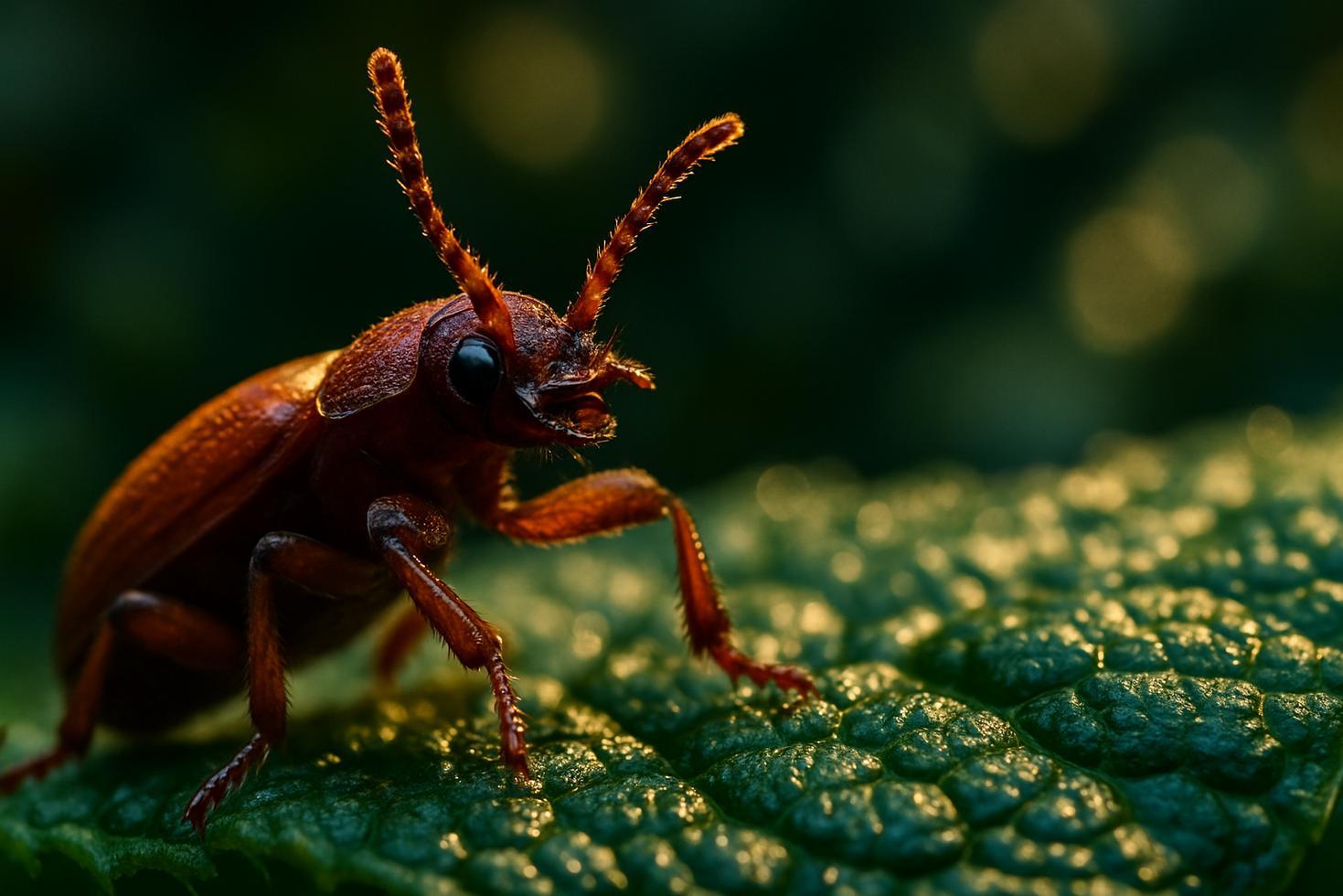
Peppermint menthol disrupts insect nervous systems through direct contact, not scent alone — and it does so through a specific sensory channel called TRPM. That distinction matters. In red flour beetles (Tribolium castaneum), researchers identified contact repellency as the primary driver, mediated by TcTRPM, an insect channel that responds to physical stimuli. The effect arrives before the insect processes anything through smell.
What makes this stranger is what menthol does as a partner compound. In cockroaches, it holds a low pesticide dose open long enough to do real damage.
How Menthol Triggers the TRPM Channel in Red Flour Beetles
In Tribolium castaneum, l-menthol contact repellency was traced directly to the TcTRPM channel. This channel is part of a class of sensory receptors that respond to temperature and physical stimuli. Menthol activates it on contact, before olfactory processing begins.
The finding shifted how researchers frame the repellency question. Contact activation, not olfactory disruption, is the mechanism in this species. Smell was not the door menthol walked through.
How Menthol Potentiates Bendiocarb in Cockroaches
In cockroach experiments using Periplaneta americana, 0.1 μM menthol was combined with a low dose of bendiocarb — a carbamate insecticide. Alone, the bendiocarb dose caused limited knockdown. Combined, the time for cockroaches to right themselves jumped from 10 ± 4.3 seconds to 18.9 ± 7.24 seconds.
The mechanism was attributed to octopamine receptor activation by menthol, which increased the nervous system’s sensitivity to the insecticide. Menthol was not the primary toxin. It lowered the threshold so the pesticide crossed it faster.
What Menthol Does Alone: Red Palm Weevil Mortality Data
In red palm weevil (Rhynchophorus ferrugineus) assays, menthol showed dose-dependent mortality: 40% at 1 mg, 86.6% at 2 mg, 96.6% at 3 mg, and 90% at 5 mg. The same research also found that menthol attracted RPW males at 100% and females at 60% in behavioral assays — attraction, not repellency, in that context.
The species-specific contrast is the real finding. Attraction in one species, contact repellency in another — same compound, same general class of insects, opposite behavioral outcomes depending on which nervous system receives the signal.
The same molecule that pushes one insect away pulls another closer. Menthol’s effects are real, measurable, and species-dependent — not a single universal mechanism, but a suite of them, each shaped by the nervous system on the receiving end.
Frequently Asked Questions
Does peppermint menthol repel all insects?
No. Research shows contact repellency in Tribolium castaneum but attraction in red palm weevil males at 100% in one behavioral assay.
What is the TRPM channel and why does it matter for insect repellency?
TcTRPM is a sensory channel in T. castaneum that responds to physical contact stimuli; menthol activates it directly on contact, independent of olfactory pathways.
How does menthol make pesticides more effective in cockroaches?
Menthol activates octopamine receptors, increasing nervous system sensitivity to carbamate insecticides like bendiocarb at concentrations too low to cause strong effects alone.
Does menthol alone kill insects?
In red palm weevils, menthol alone produced 96.6% mortality at a 3 mg dose in laboratory assays.