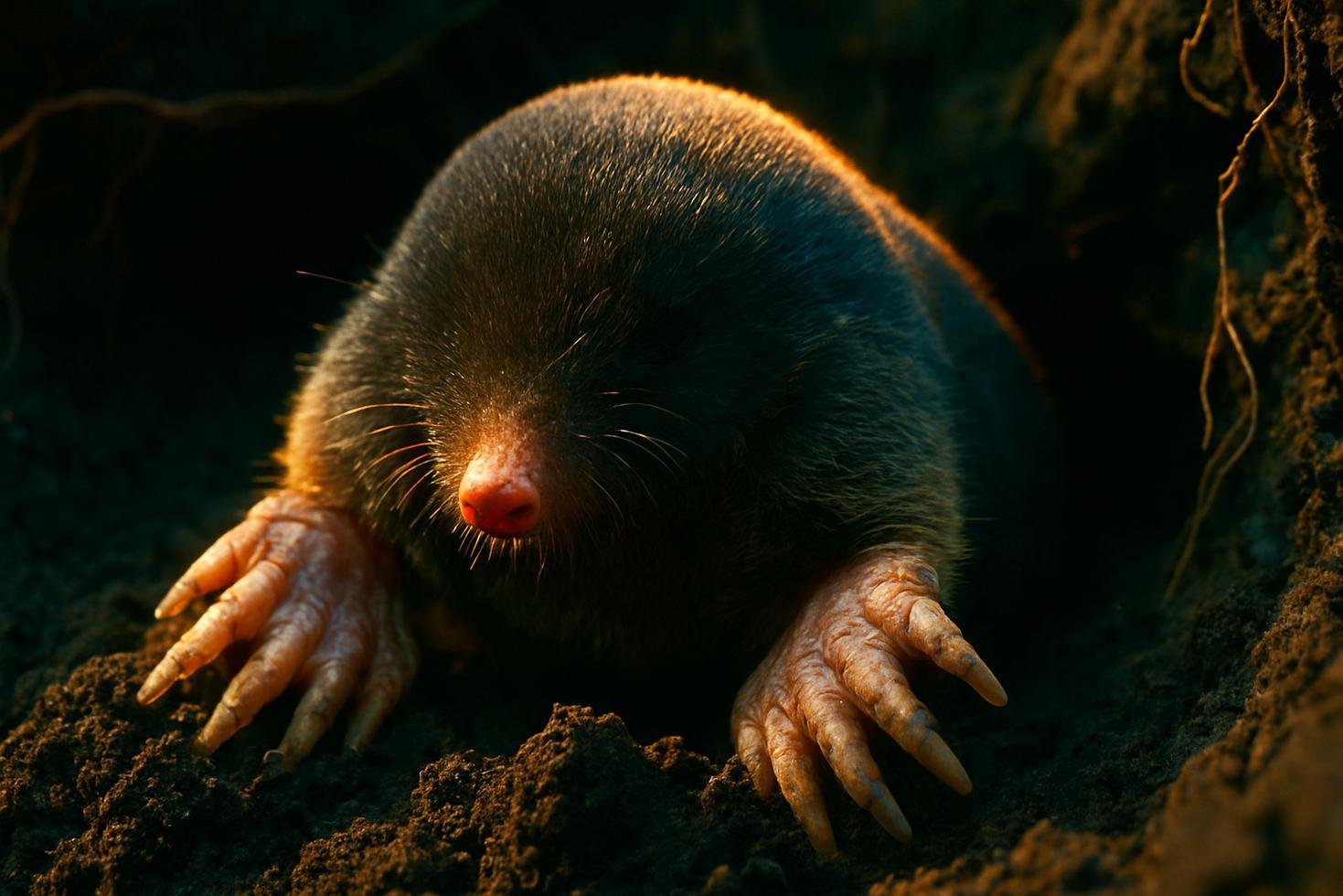
One stomach analysis found 175 white grubs inside a single mole. Two-thirds of moles studied had eaten grubs. The digger crossing the lawn is running pest control.
Eastern moles create tunnel networks that measurably improve soil aeration and water infiltration as a direct byproduct of foraging. That visible ridge across the grass is not damage — it is a macropore system being built in real time. Each channel lets air and rainwater move deeper into the root zone instead of running off the surface.
The mole producing that ridge is also hunting. White grubs — beetle larvae that chew through grass roots underground — are a primary target. Researchers examining mole stomach contents found grubs in two-thirds of the moles studied, with one individual containing 175 grubs in a single analysis.
How Mole Tunneling Changes Soil Structure
Eastern moles are subterranean insectivores. Tunneling is foraging, and the soil restructuring is a side effect of that foraging — not a goal. The result is still real. Loose, disturbed channels allow water to percolate rather than sheet off compacted ground.
Missouri Extension and Virginia Tech extension sources both document that mole tunnels accelerate humus incorporation into the soil profile, moving organic material downward while pulling subsoil particles upward. That redistribution makes nutrients more accessible to roots, not less.
Moles as White Grub Predators
The stomach-analysis numbers come from Missouri Extension research. One mole, 175 grubs. Two-thirds of examined moles had grubs present. White grubs are the larval stage of beetles, and they feed on grass roots from below — causing the kind of turf damage that gets blamed on surface disturbance.
The mole finds grubs without light or mapped territory, navigating entirely by touch and smell through tunnel systems. University of Connecticut IPM sources confirm that white grubs, mole crickets, and Japanese beetle larvae are all documented prey.
The Real Tradeoff in a Mole’s Presence
Molehills and shallow tunnels can dislodge small plants, dry out sod along the tunnel line, and create uneven surfaces on lawns or athletic fields. Those are legitimate cosmetic and maintenance concerns. Extension sources from Penn State, UF/IFAS, and Virginia Tech all acknowledge the tradeoff.
What those same sources do not support: the idea that moles broadly starve plants or seal soil against water. Plant injury from moles is incidental, not a feeding behavior. The dominant finding across university sources is that the soil benefits are real and the damage is usually minor.
The creature leaving the most visible trail is often doing the least visible work. A mole tunnel is infrastructure — imperfect, inconvenient in a manicured lawn, and genuinely useful to the soil underneath it.
Frequently Asked Questions
Are moles beneficial or harmful to lawns?
University extension sources consistently describe moles as beneficial to soil structure and as predators of turf pests, while noting that their tunnels can cause cosmetic surface damage.
Do moles eat grass roots?
Moles are insectivores and rarely eat plant material. Root disturbance from tunneling is incidental, not intentional feeding behavior.
How many white grubs can a mole eat?
One mole stomach analysis documented 175 white grubs. Two-thirds of moles studied had consumed grubs.
Do mole tunnels help with drainage?
Yes. Extension sources from multiple universities confirm that mole tunnels increase soil aeration and water infiltration by creating channels through compacted ground.