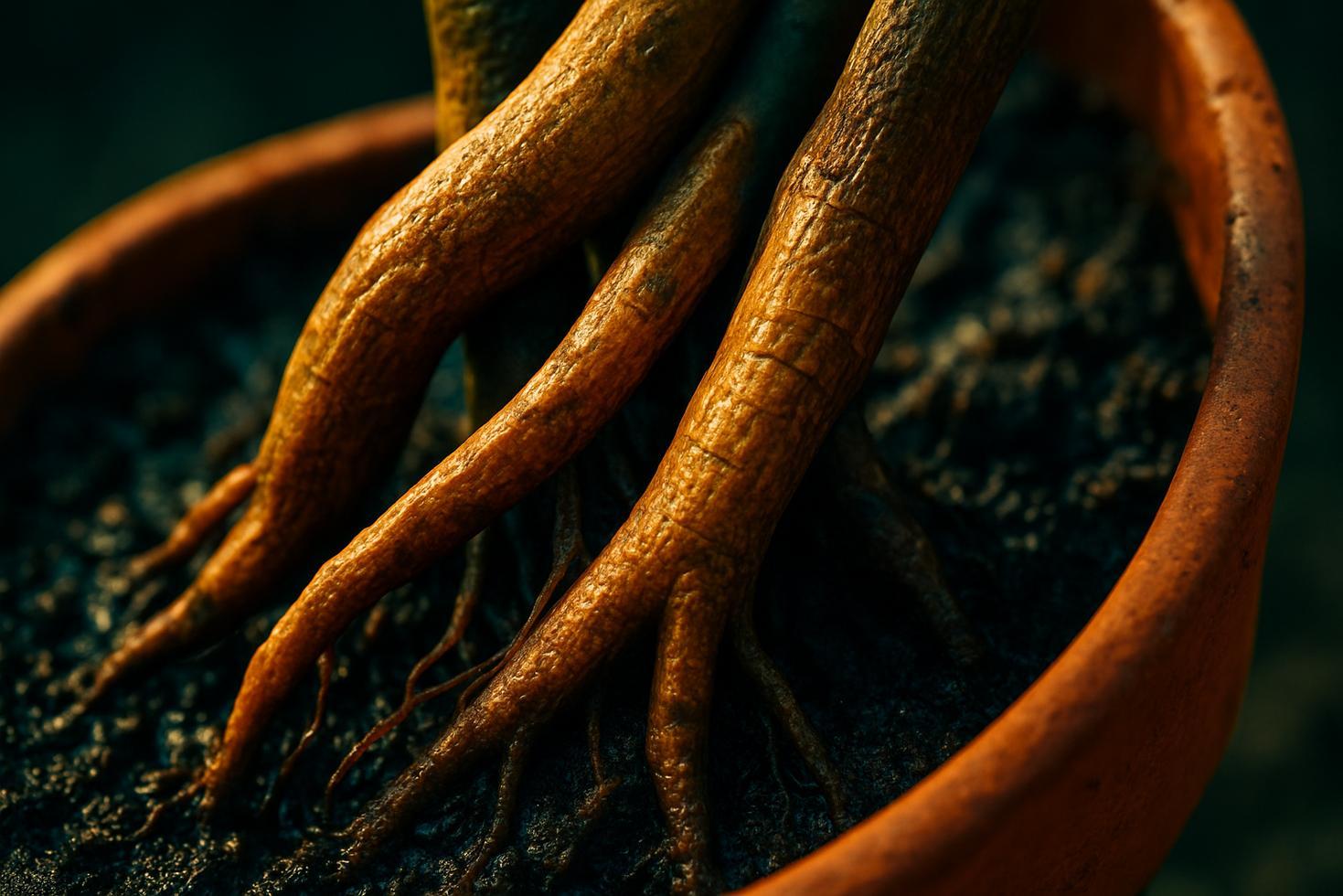
Container Meyer lemons lose nutrients through every drainage hole — while the same roots shut down within 24–48 hours of waterlogged soil. Two opposite threats, one water source.
A Meyer lemon growing in a container faces two distinct root-zone problems triggered by the same act: watering. Nutrients dissolve the moment water contacts soil, and in a container that water moves directly downward and out the drainage hole — leaving roots little time to absorb what passed through. That is not a minor inefficiency. It is the core reason container citrus demands more frequent fertilizing than the same tree planted in the ground.
The second problem runs in the opposite direction. Citrus roots absorb oxygen through tiny pores along the root surface, pulling it from air spaces between soil particles. Waterlogged soil collapses those air pockets. When that happens, root function stops — not gradually, but effectively offline — within 24 to 48 hours.
Quick facts:
– Nutrients leach from containers faster than from in-ground soil, driving higher fertilizer frequency for potted citrus
– Citrus roots require oxygen from air spaces in soil — waterlogging removes those spaces
– Root oxygen deprivation impairs both water movement and nutrient uptake
– A young citrus tree roughly 4 feet across needs about 12 gallons of water per week in summer
– Mature in-ground citrus generally needs deep watering only once a month
How Nutrient Leaching Works in Container Citrus
Every watering event in a container acts as a partial flush. Soluble nutrients — nitrogen, potassium, magnesium, iron, manganese, and zinc among them — move with water toward the drainage hole. The verified citrus nutrition guides note that nitrogen, iron, manganese, magnesium, and zinc deficiencies are the most common causes of leaf yellowing in citrus, which reflects how quickly those elements exit the container system.
Container drainage removes soluble nutrients faster than roots can capture them, which is why potted citrus needs fertilizer replenishment far more often than in-ground plantings. Foliar applications can bypass soil leaching entirely — urea penetrates citrus leaves within 12 to 24 hours under favorable conditions.
What Waterlogged Soil Does to Citrus Roots
Citrus roots do not tolerate saturated soil. When air pockets between soil particles fill with water, oxygen availability drops and root metabolism slows sharply. UF/IFAS extension guidance recommends watering container citrus only when the top few inches of soil have dried — not on a fixed schedule.
Cold soil creates a similar effect: roots fail to absorb nutrients even when nutrients are present and adequate in the growing medium. This means a Meyer lemon can show deficiency symptoms with a well-fertilized pot simply because soil temperature dropped.
Closing
The tension in container citrus is structural, not accidental. The same water that carries nutrients through the pot also threatens the oxygen supply those roots depend on. Getting the balance right means watering deeply but infrequently — enough to move nutrients through the root zone without saturating it long enough to cut off air.
A container Meyer lemon is not a low-maintenance plant. It is a small system with narrow tolerances and no margin for standing water.
Frequently Asked Questions
Why do potted Meyer lemons need more fertilizer than in-ground trees?
Nutrients dissolve into water and drain out through the container’s drainage hole before roots can fully absorb them, creating faster depletion than in-ground soil allows.
How quickly does waterlogged soil harm citrus roots?
Waterlogged soil can impair citrus root function within 24 to 48 hours by eliminating the air spaces roots need for oxygen uptake.
How much water does a young container citrus tree need in summer?
A young citrus tree approximately 4 feet across requires about 12 gallons of water per week during summer months.
Can cold soil cause nutrient deficiency even in a fertilized pot?
Yes. Cold soil temperatures prevent roots from absorbing nutrients even when those nutrients are present in adequate amounts in the growing medium.