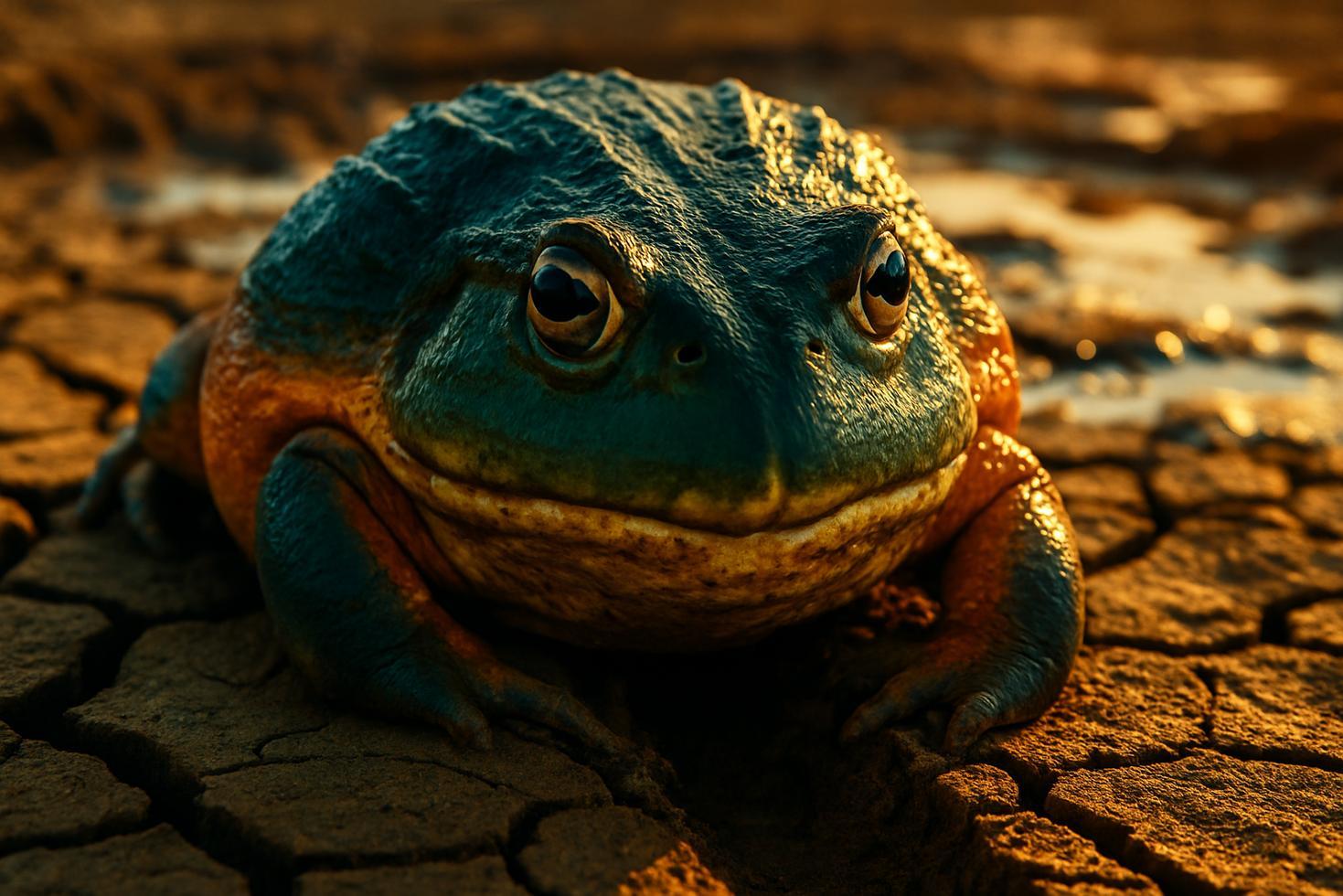
A male African bullfrog digs a channel with his back legs and blunt snout — connecting two shrinking pools before the water vanishes — for a brood that can number in the thousands.
The male African bullfrog digs a physical trench through sun-baked mud to connect an isolated nursery pool to a neighboring puddle, giving thousands of tadpoles a route to survival when heat threatens to dry out their temporary home. That’s not a metaphor. It’s excavation, done with legs and snout, under open sun.
Temporary pools in African grasslands evaporate fast. A bullfrog brood packed into warm, shallow water faces suffocation or desiccation when the water drops. The father doesn’t wait for the crisis to arrive.
How Male African Bullfrogs Dig Rescue Channels
The male scrapes with his powerful back legs and pushes with his blunt snout, cutting a trench through dried mud until two separate water bodies become one connected system. BBC Earth’s documentary footage shows the behavior in detail.
The function is straightforward: tadpoles move through the channel into a neighboring puddle that still holds enough water. physical excavation connecting isolated ephemeral pools is the mechanism, and without it, the brood cooks in a shrinking, oxygen-depleted pocket of warm water.
The father doesn’t leave once the channel is open. He stays on guard through the full transformation, chasing off anything that approaches, baking in the heat.
What Else the Father Does While Guarding the Brood
Channel-digging is one part of a larger pattern of paternal care. Before conditions force excavation, the male herds the tadpoles toward cooler, deeper water with better oxygen when the nursery pool warms.
He also guards against predators. Notably, secondary reporting documents that the male may eat some tadpoles himself to sustain his energy during the long guard — cannibalism as a survival mechanism for the guardian. The brood is large enough that some offspring still complete metamorphosis despite that cost.
He remains until the tadpoles have legs and no longer need a water connection to survive.
What Makes African Bullfrog Paternal Care Unusual
Most amphibian males do not remain with offspring at all. The African bullfrog is a documented exception, confirmed by both PBS Nature and BBC Earth sources.
The temporary, ephemeral breeding sites are central to why this behavior matters. These pools dry without warning. A father who stays and responds physically to water loss changes the survival odds for a brood that can hit a few thousand individuals.
One channel. One father. A few thousand tadpoles with legs at the end of it.
Frequently Asked Questions
How does a male African bullfrog dig a channel?
He uses his strong back legs to scrape and his blunt, pointed snout to push, cutting a trench through dried mud between two water bodies.
How many tadpoles can a male African bullfrog guard at once?
A single brood can number as many as a few thousand tadpoles, all dependent on the nursery pool staying connected to water.
How long does the male African bullfrog stay with his tadpoles?
He remains with the brood until the tadpoles complete metamorphosis and become juvenile frogs.
Does the male African bullfrog eat his own tadpoles?
Yes. Secondary reporting documents that males may eat some tadpoles to sustain themselves during the long guard period.