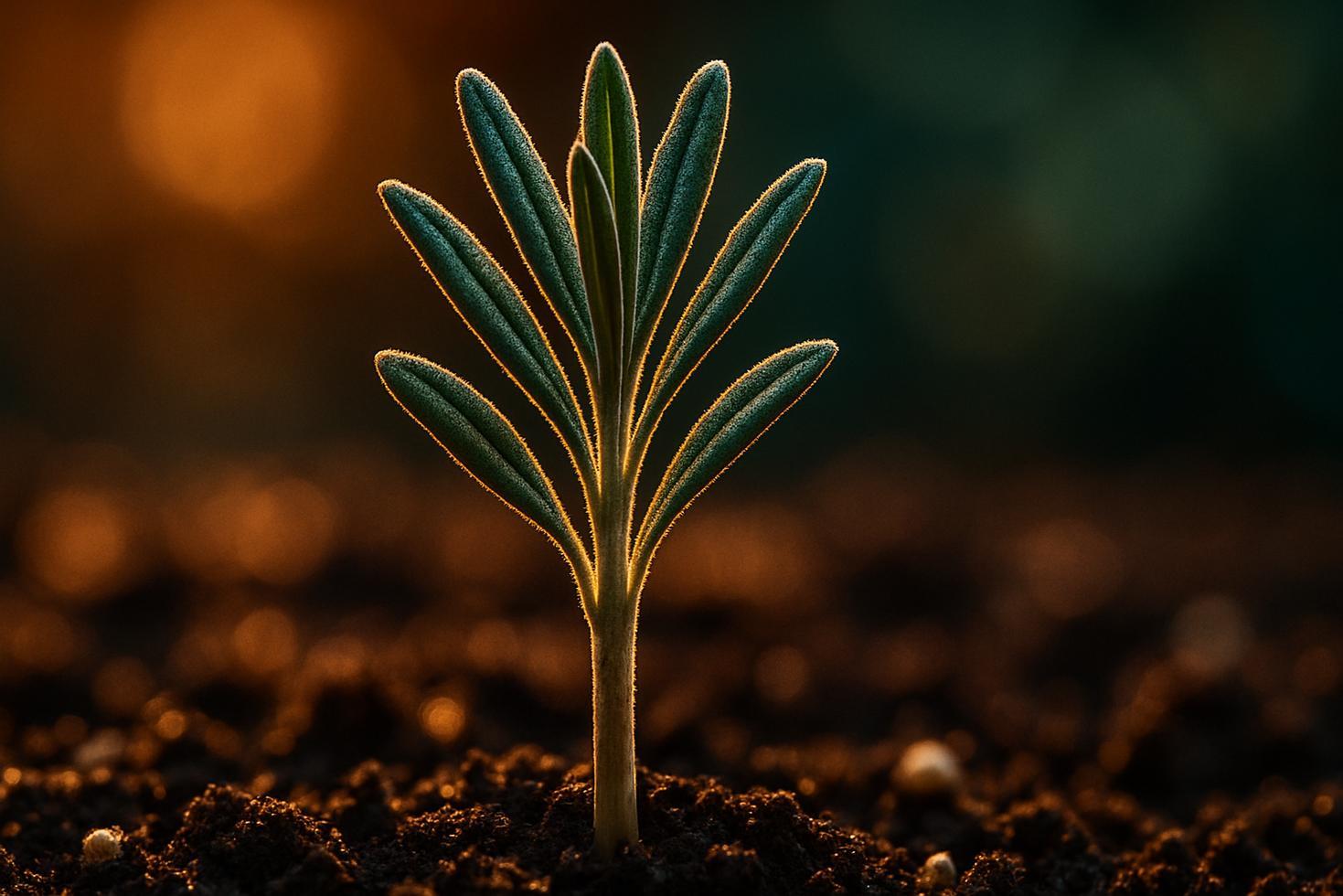
A severed lavender stem keeps photosynthesizing for 4–6 weeks with zero roots — running entirely on stored moisture and light until white threads finally push through the bark.
A lavender cutting can survive four to six weeks with no roots at all, sustaining itself through photosynthesis in its remaining leaves while new root tissue forms from the buried stem. That is not a metaphor for resilience. It is a specific biological sequence happening in slow motion inside a few inches of severed plant.
The upper leaves stay on the cutting precisely because they are still working. They capture light and convert it into sugar, feeding a structure that has no other way to take in energy. The lower leaves come off — typically clearing the bottom half of a 3-to-4-inch stem — so the buried section can form root tissue without rotting foliage in the way.
What the Rootless Cutting Actually Runs On
The cutting operates on two reserves: stored carbohydrates already in the stem tissue, and fresh sugars produced by the leaves above. Neither source is generous. The margin between surviving and collapsing is narrow, which is why conditions during this window matter so much.
Retained foliage fueling root development is the core mechanism guides consistently point to. Indirect light keeps the leaves active without driving water loss faster than the stem can manage. High humidity — sources cite around 80–85% around the foliage — slows that loss further. Direct sun repeatedly appears on warning lists because it can wilt an unrooted cutting before roots ever form.
Quick Answer: Lavender Cutting Survival at a Glance
- Visible roots typically appear in 4–6 weeks; softwood cuttings can root in as little as 2–4 weeks
- Standard cutting length is 3–4 inches, with the lower half of leaves removed
- Remaining upper leaves photosynthesize and supply sugar while roots are absent
- Humidity around 80–85% slows water loss through foliage during the rootless period
- Roots should reach 1–2 inches long before the cutting moves to a pot
When to Know the Cutting Has Actually Rooted
The tug test — a gentle pull on the stem after about four weeks — is the practical check. Resistance means roots have anchored into the medium. No resistance means more time is needed.
Roots at 1–2 inches long signal the cutting is ready to transplant. Before that point, the stem is still negotiating between photosynthesis and dehydration every single day.
The moment visible roots appear, the dynamic shifts. The cutting stops being a severed stem running on reserves and becomes a plant with its own supply line. Most guides do not mark that transition with much ceremony. The biology already did.
Frequently Asked Questions
How long can a lavender cutting survive without roots?
Most sources report 4–6 weeks for visible roots to appear, with softwood cuttings sometimes rooting in 2–4 weeks depending on conditions and cultivar.
Why are some leaves left on a lavender cutting during propagation?
The upper leaves continue photosynthesizing, producing sugars that sustain the cutting while it has no roots to absorb water or nutrients from soil.
Does a lavender cutting need rooting hormone?
Lavender can root without rooting hormone, though one secondary source cites IBA at 1,000–2,000 ppm as potentially increasing rooting success significantly; that figure comes from a summary rather than a directly verified primary study.
Why is direct sunlight bad for an unrooted lavender cutting?
With no roots to replace lost water, an unrooted cutting can wilt and die if sun drives moisture out of the leaves faster than the stem can compensate.