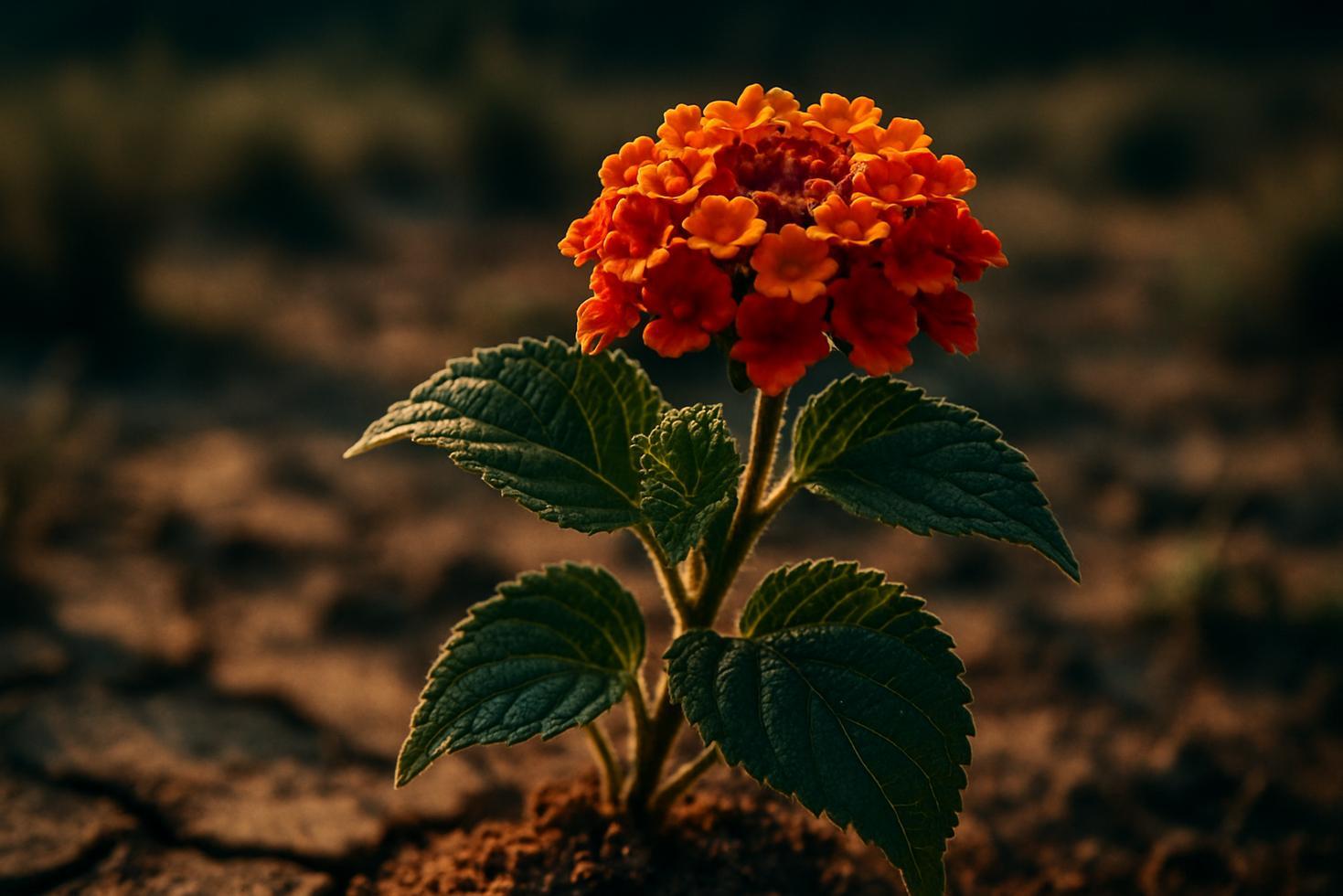
Established lantana needs zero supplemental irrigation in years with 30+ inches of rainfall — and mild drought stress is what triggers the flowers, not the enemy of them.
Lantana flowers most when water pulls back, not when it arrives in abundance. That runs counter to almost every gardening instinct, but the biology backs it up. When moisture drops, lantana shifts energy from building leaves toward producing flowers.
The effect is real, but the mechanism is specific. Research confirms lantana can go semi-dormant during severe drought — dropping leaves and delaying flowering until conditions improve. That drought-response loop, stress triggering dormancy then rebound flowering, is the core of how this plant operates.
How Lantana’s Drought Adaptation Actually Works
Lantana grows an extensive root system that captures available moisture well below the surface. When dry periods arrive, that root architecture is already positioned to keep the plant viable. In severe cases, leaf drop creates an insulating mulch layer that slows soil moisture loss further.
This is the drought-response mechanism the research confirms: stress triggers semi-dormancy, and then rebound conditions trigger flowering. The plant doesn’t bloom because it’s comfortable. It blooms as conditions recover after a hard stretch.
What Over-Fertilizing Does to Lantana Blooms
The Caption Text frames overwatering as the direct cause of leafy, bloom-free growth. The research doesn’t confirm that specific mechanism. What horticultural sources do document is that over-fertilizing reduces blooms and promotes foliage. A plant pushed with excess nutrients keeps building leaves because resources signal abundance, not urgency.
The correction matters. Growers blaming watering intervals for poor blooms may be overlooking fertilizer as the actual variable.
Lantana Watering Schedule by Establishment Stage
The numbers in the research are specific and worth knowing. Weeks one and two: water every two to three days. Weeks three through eight: once weekly. Months three through six: only when the top 4 inches of soil are dry. After six months in a region averaging 30 or more inches of annual rainfall: no supplemental irrigation needed.
That progression reflects a root system reaching full drought capability. The plant isn’t being neglected at month six. It’s finished with its establishment phase.
What makes lantana genuinely interesting is that the same plant people sometimes describe as struggling — dropping leaves, slowing down — is often doing exactly what it evolved to do. The pause is part of the cycle.
Knowing where a plant is in that cycle changes what intervention looks like.
Frequently Asked Questions
Why isn’t my lantana blooming even though it gets regular water?
Over-fertilizing is the documented cause of excess foliage and reduced blooms. Check fertilizer use before adjusting watering.
How long does lantana take to become drought tolerant?
Establishment takes 6–8 weeks, but full drought independence — needing zero supplemental water — is reached around 6 months in the ground.
Is it normal for lantana to drop leaves during a dry spell?
Yes. Severe drought triggers semi-dormancy in lantana, which includes leaf drop. Flowering resumes when conditions improve.
How often should established lantana be watered in summer?
Once every 10–14 days with a deep soak, or only when the top 4 inches of soil are dry.