
So your plant has mealybugs, and you’ve heard rubbing alcohol kills them. It can. The University of California Statewide IPM Program (UC IPM) says a 70% or less solution of isopropyl (rubbing) alcohol, dabbed on with a cotton swab, can kill or remove mealybugs on small houseplant infestations.
The catch? Alcohol can burn leaves too. UC IPM says to test it on a small part of the plant first, and UF/IFAS Gardening Solutions lists alcohol as phytotoxic, meaning it can cause leaf burn. So the strength you use, a spot test and a light touch matter more than any recipe.
Mealybugs can be hard to see, but they leave signs. UC IPM lists white, cottony egg masses, wax-covered plants, sticky honeydew, black sooty mold growing on top of the honeydew, and ants feeding on it. Here’s how to use alcohol the right way, what to skip, and what else works.
Does Rubbing Alcohol Kill Mealybugs?
Yes, when it reaches them. UC IPM says that on small infestations on houseplants, a 70% or less solution of isopropyl (rubbing) alcohol in water may be dabbed directly on mealybugs with a cotton swab to kill or remove them.
University of Maryland Extension says dabbing individual mealybugs with a swab dipped in household alcohol can control light infestations, and that treated mealybugs turn light brown.
University of Minnesota Extension and Missouri Botanical Garden describe the same alcohol-dipped cotton swab. Missouri Botanical Garden adds a reality check: this kind of hands-on removal is unlikely to eliminate mealybugs, but it can often keep an infestation within tolerable limits, with no negative impact on beneficial insects.
Why a swab and not just any spray? Mealybugs are hard to hit. UC IPM says the waxy coating on adult mealybugs repels most contact insecticides, and their habit of gathering in hidden spots makes them hard to reach. A swab puts the alcohol right on the bug.
Those hidden spots are where to look. UC IPM names the crown of the plant, branch crotches, stems near the soil and the spot between a stem and a touching leaf. University of Minnesota Extension adds the undersides of leaves along the veins and the point where leaves join stems.
What Strength of Alcohol Should You Use?
Use isopropyl (rubbing) alcohol at 70% or less for dabbing. UC IPM’s Quick Tips say the same thing in short form: for serious problems on houseplants, dab with a solution of 70% (or less) isopropyl alcohol and water, test on a small part of the plant first, and monitor for leaf burn. UC IPM adds that in some cases a much more diluted solution may be advisable.
Check the label on your bottle. Rubbing alcohol is sold in more than one strength, and anything above 70% is stronger than UC IPM’s dabbing solution, so add water before it touches the plant. Dabbing or wiping “full strength” from a stronger bottle goes past that limit.
Sprays call for a much weaker mix. For extensive infestations, UC IPM says you can apply a 10-25% isopropyl alcohol solution with a spray bottle. The half-water, half-alcohol sprays you’ll see online are stronger than that: half and half with 70% rubbing alcohol works out to about 35%.
How To Spot-Treat Mealybugs With Alcohol
- Test first. Dab the solution on a small part of the plant 1 to 2 days before you treat, and check for leaf burn (UC IPM).
- Dip a cotton swab in 70% or less isopropyl alcohol and dab it directly on each mealybug or cluster.
- Keep it on the bugs. The University of Maryland Extension says to avoid getting alcohol on the leaves, as it may damage them.
- Watch for the color change. University of Maryland Extension says mealybugs treated with alcohol turn light brown.
- Work into the hiding spots: the crown, branch crotches, stems near the soil and where leaves meet stems.
- Keep checking and repeat as needed. UC IPM says to continue monitoring plants, pots and stakes on a regular basis once you’ve found mealybugs.
Spraying a Bigger Infestation
When there are too many mealybugs to swab, UC IPM says you can apply a 10-25% isopropyl solution with a spray bottle, and you will need to repeat it weekly until the infestation is gone. Test it on part of the plant first, as you would with a swab.
Not every extension service is comfortable with alcohol on leaves. UF/IFAS lists vinegar and alcohol as phytotoxic ingredients that cause leaf burn and other plant injuries, and says they should not be applied to plant tissues. That is one more reason to test a small area first and to stop if you see damage.
If a plant is covered, weekly spraying may not be worth it. UC IPM says that when infestations become severe, consider discarding houseplants rather than repeatedly treating them with insecticides, and University of Maryland Extension says heavily infested plants should be discarded.
What Not To Use on Mealybugs
Dish Soap Mixes
Plenty of online recipes add dish soap to alcohol or neem oil. UF/IFAS advises against them. It says dish “soaps” are really detergents, designed to be powerful cleaners, and that even watered down they can cut through the waxy layer that protects leaves, often leaving damaged, dry, crispy leaves.
UF/IFAS also warns that mixing different products in home recipes can be dangerous, because common cleaners that may be safe on their own can be toxic to people when used together.
If you want a soap, use a product registered as an insecticidal soap and follow its label. UF/IFAS says properly registered insecticidal soaps are usually only 1-2% soap by volume, and that plants under drought stress, in excessive humidity or in heat above 90°F should never be treated with soaps.
Hand Sanitizer
Hand sanitizer is an antiseptic for hands, and its active ingredient varies. The U.S. Food and Drug Administration says alcohol (ethanol), isopropyl alcohol and benzalkonium chloride are used in about 97 percent of over-the-counter hand sanitizers.
UC IPM, University of Maryland Extension, University of Minnesota Extension and Missouri Botanical Garden all describe rubbing alcohol on a cotton swab. Stick with that.
Other Ways To Get Rid of Mealybugs
Hand Picking and a Water Spray
If you find mealybugs on a houseplant or in the garden, UC IPM says to hand pick them or prune them out. If mealybugs are somewhat exposed, it says a high-pressure or forcible spray of water can reduce populations on sturdy plants, repeated at several-day intervals if needed.
Insecticidal Soap, Horticultural Oil and Neem Oil
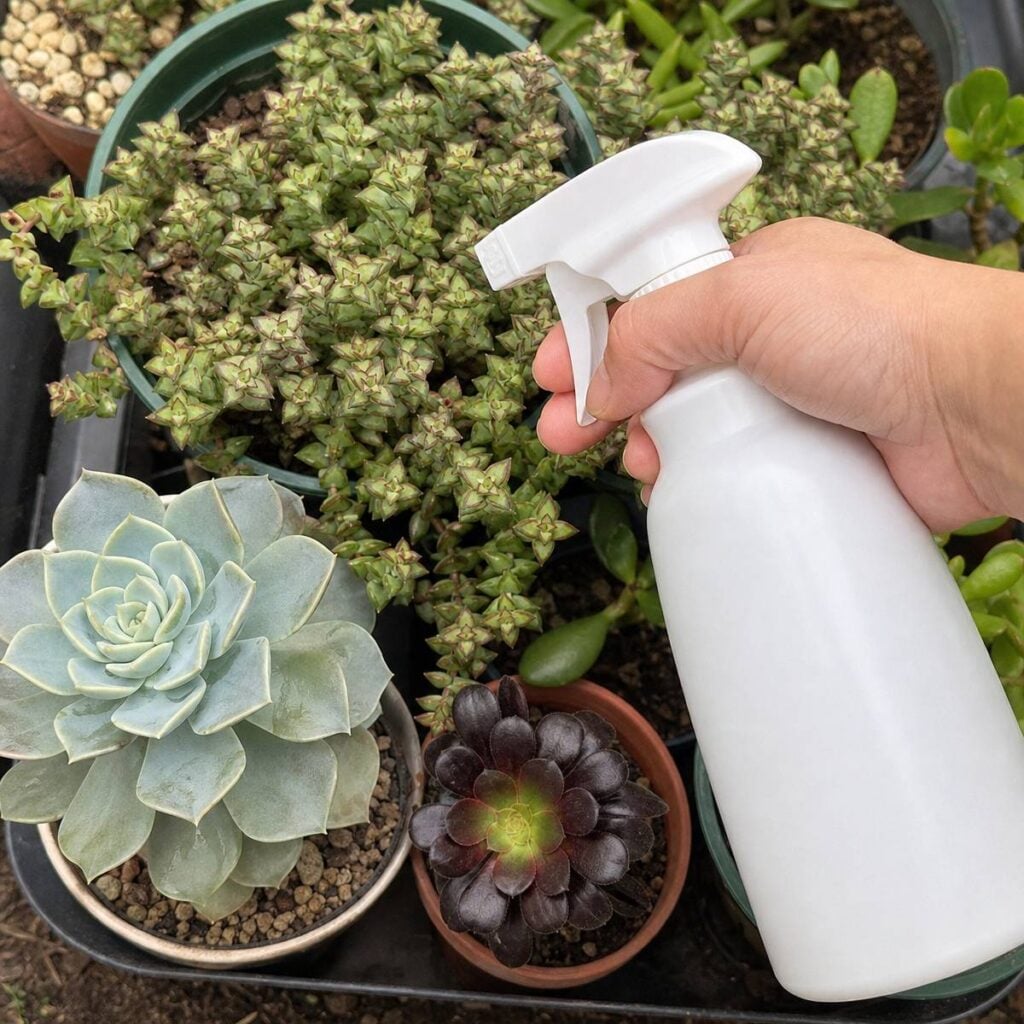
UC IPM says insecticidal soaps, horticultural oils and neem oil applied directly to immature mealybugs can reduce their numbers; the waxy adults are harder to reach. Test them on part of the plant first, just as with alcohol.
Missouri Botanical Garden suggests treating when crawlers are present, spraying thoroughly because mealybugs hide under leaves and in crotches, and repeating as the label directs. For neem oil, our guide to applying neem oil explains why the label rate on your bottle comes first.
Systemic Insecticides and Pyrethroids
UC IPM says plant spikes or granules containing imidacloprid may reduce mealybug crawler numbers on houseplants, but these neonicotinoid products are less reliable against mealybugs than against other piercing-sucking insects in many situations, and their use should be avoided when possible, especially on flowering plants, because of potential harm to natural enemies and pollinators.
Pyrethroids, it says, may not be much more effective than soaps and oils and can be devastating to natural enemies.
Whatever you buy, read the label first. Missouri Botanical Garden says to always follow the product label, make sure it works against mealybugs, and note that not following the pesticide label violates federal law.
Natural Enemies Outdoors
Outdoors, UC IPM says nonchemical methods usually provide enough control, and natural enemies do much of the work: parasitic wasps, lady beetles, green and brown lacewings, spiders, minute pirate bugs and predaceous midge larvae. Protect them by avoiding broad-spectrum insecticides and keeping ants away, since UC IPM says ants protect mealybugs from their natural enemies.
Thinking of buying predators? UC IPM says the mealybug-destroying lady beetle is often released in greenhouses and interiorscapes, but it’s pointless to release it when mealybug numbers are low or they aren’t reproducing.
Keep Mealybugs Out of Your Plant Collection
UC IPM says mealybugs are often brought in on new plants, tools or pots. Adult females can’t fly and mealybugs can’t crawl very fast, so they don’t spread quickly on their own. Missouri Botanical Garden adds that ants may carry mealybugs from one plant to another.
So inspect every new plant before it joins the others. UC IPM says that if you can’t remove all the mealybugs, discard the plant or, if possible, take it back to the source.
Then give it some time apart: Missouri Botanical Garden recommends quarantining new plants for 2 or 3 weeks, and University of Minnesota Extension suggests isolating newly acquired plants for 1 to 2 weeks so any pest problems can show up.
Moving plants back inside for the winter? University of Minnesota Extension says to thoroughly examine all plant parts and containers before bringing plants indoors. If you find mealybugs, treat them before the plant comes in.
A few more habits help. UC IPM says to check pots, stakes and other materials for mealybugs and their egg sacs and dispose of any infested items, and to avoid unnecessary nitrogen fertilizer on plants with mealybugs, because high rates of nitrogen with regular irrigation may stimulate tender new growth as well as mealybug egg production.
Some mealybugs live on the roots. UC IPM says these ground mealybugs are even harder to control than those above ground and advises disposing of infested plants quickly before the pests can move to clean plants.
For soil-borne pests, University of Minnesota Extension suggests repotting with new potting soil, using clean pots and washing soil off the roots. Our guide to mealybugs in soil covers the signs.
Mealybug Control Is an Ongoing Process
UC IPM is blunt: mealybugs are very difficult to manage with insecticides, and none of the available insecticides will likely provide complete control, so you will need to monitor and treat again as needed.
The plan that works is a combination:
- Inspect and isolate new plants
- Hand pick, prune, or swab with 70% or less rubbing alcohol after a spot test
- Use a registered insecticidal soap or oil on young mealybugs, following the label
- Go easy on nitrogen fertilizer
- Protect natural enemies outdoors and keep ants away
- Discard plants that are severely infested
For a small infestation, a cotton swab and a bottle of rubbing alcohol is a good place to start. What’s worked on your mealybugs? Tell us in the comments.
Frequently Asked Questions
Does rubbing alcohol kill mealybugs?
It can. UC IPM says you can dab a 70% or less isopropyl (rubbing) alcohol solution directly on mealybugs with a cotton swab to kill or remove them in small houseplant infestations. University of Maryland Extension says treated mealybugs turn light brown. Test it on a small part of the plant 1 to 2 days first, because alcohol can cause leaf burn.
What percent isopropyl alcohol should I use on plants?
70% or less for dabbing mealybugs. UC IPM gives that limit and says that in some cases a much more diluted solution may be advisable. For extensive infestations, it recommends a weaker 10-25% solution, repeated weekly. Check your bottle: if the label shows more than 70%, add water before using it on a plant, and test a small area first.
Can hand sanitizer kill mealybugs?
It isn’t a recommended treatment. UC IPM, University of Maryland Extension and Missouri Botanical Garden all describe plain rubbing alcohol on a cotton swab, and none of them name hand sanitizer. Hand sanitizer is an antiseptic for hands, and its active ingredient varies: the FDA says alcohol (ethanol), isopropyl alcohol and benzalkonium chloride are used in about 97 percent of over-the-counter hand sanitizers. Stick with rubbing alcohol at 70% or less, tested first.
Is alcohol spray safe for plants?
Only with care. UC IPM says you can spray a 10-25% isopropyl solution on extensive houseplant infestations weekly, but it recommends testing on a small part of the plant first to check for leaf burn. UF/IFAS is more cautious: it lists alcohol as phytotoxic, causing leaf burn, and says it should not be applied to plant tissues. Test first and stop if you see damage.
Can I mix rubbing alcohol with dish soap for mealybugs?
UF/IFAS advises against dish-soap recipes. It says dish soaps are really detergents, and even watered down they can cut through the waxy layer that protects leaves, often leaving damaged, dry, crispy leaves. It also warns that mixing products in home recipes can be dangerous. If you want a soap, use a registered insecticidal soap and follow its label.
