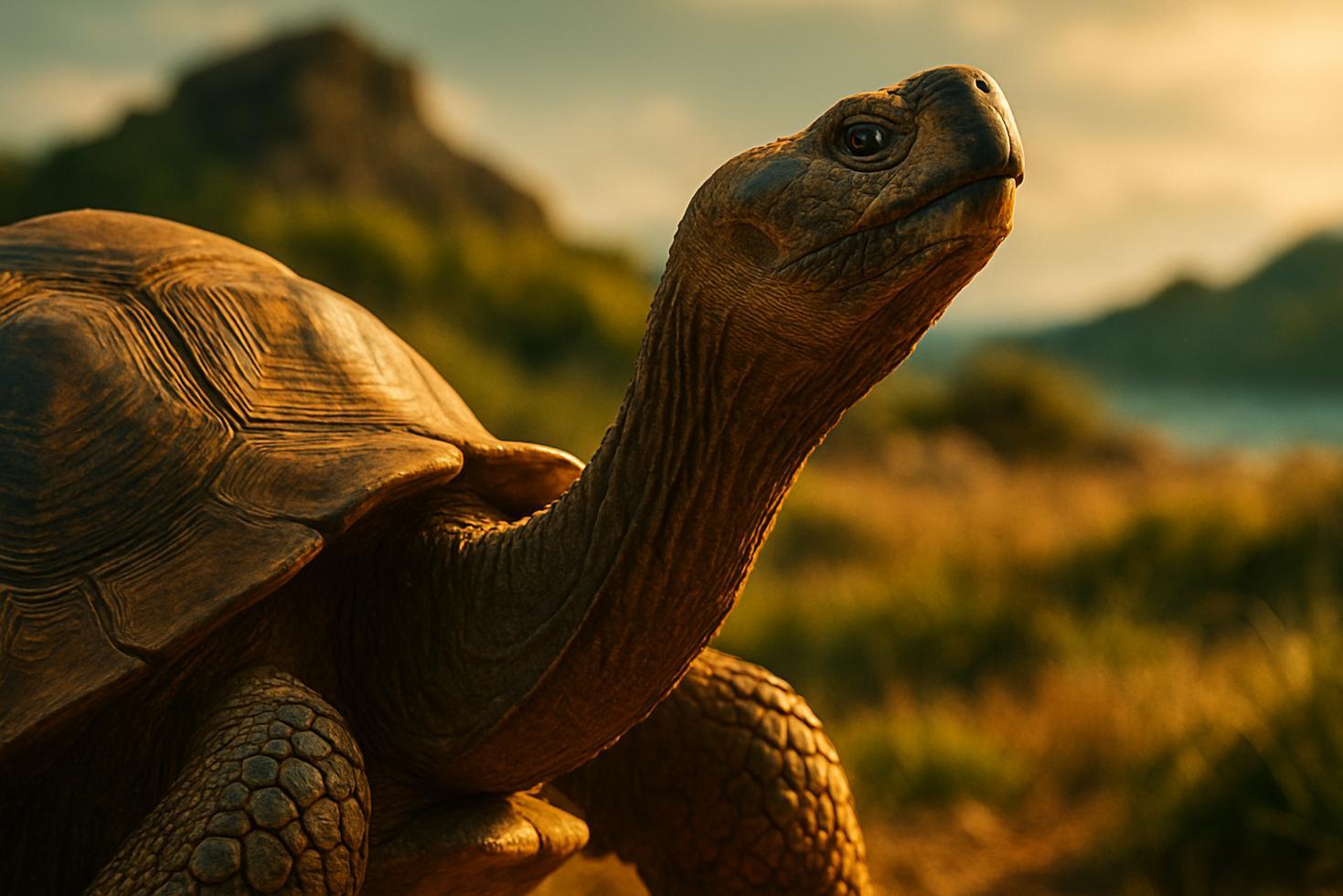
Jonathan the Seychelles giant tortoise hatched around 1832 — 43 years past his species’ average lifespan of 150 years. He’s still eating, sunbathing, and mating on Saint Helena today.
Jonathan the Seychelles giant tortoise, living at Plantation House on Saint Helena in the South Atlantic, is approximately 193 years old as of 2026 — making him the oldest known living land animal on record. He arrived on the island in 1882 already fully grown, and because giant tortoises of his type take roughly 50 years to reach full size, researchers estimate his hatch year at around 1832. No direct birth record exists, but Guinness World Records and Britannica both recognize the estimate as credible.
What makes the number remarkable is what Jonathan is still doing at that age. Despite cataracts and near-total loss of smell, he continues eating hand-fed vegetables and fruit, basking in the sun, and mating with other tortoises on the grounds.
Quick Facts
– Jonathan hatched around 1832 and arrived on Saint Helena in 1882 as a nearly full-grown adult.
– His species, Aldabrachelys gigantea hololissa, has an average lifespan of about 150 years.
– At 193, Jonathan is 43 years past that species average.
– He celebrated his 192nd birthday on December 4, 2024.
– He is the oldest verified chelonian in recorded history.
Why Giant Tortoises Like Jonathan Live So Long
Tortoise longevity comes down to life-history traits that reduce biological wear at the cellular level. Giant tortoises mature slowly, reproduce late, and run metabolisms that burn energy at a fraction of the rate seen in mammals of comparable size.
Slow metabolism means cells produce fewer oxidative byproducts — the damaging molecules that accumulate in tissue over time and drive age-related decline. Reduced oxidative stress over decades is the mechanism most often cited when researchers discuss why chelonians outlast most vertebrates by such wide margins.
Jonathan has been running that low-burn engine since before the telephone existed.
What Jonathan’s Daily Life Actually Looks Like at 193
The behaviors Jonathan still performs are not passive. He eats carrots, cabbage, bananas, and guavas — fed by hand by caretakers who accommodate his failing senses. He basks in the sun during daylight hours and continues mating with other tortoises on the property.
His vision is severely limited by cataracts. His sense of smell is largely gone. Yet his continued mating despite sensory decline is documented in current reporting from sources including BBC News and Smithsonian Magazine.
He was present on Saint Helena when George VI and the future Queen Elizabeth II visited in 1947. He has now outlived that entire era of British history and kept going.
Closing
Jonathan’s age is not just a curiosity — it is a working data point in the study of extreme longevity. A tortoise that hatched before the U.S. Civil War and is still biologically active in 2026 represents a natural experiment in how far a slow metabolism and low oxidative stress can actually carry a vertebrate body.
The answer, so far, is past 193 years and still counting.
Frequently Asked Questions
How old is Jonathan the tortoise in 2026?
Jonathan is approximately 193 years old, based on an estimated hatch year of circa 1832 and his arrival on Saint Helena in 1882 already nearly full-grown.
What is the average lifespan of a Seychelles giant tortoise?
Britannica cites the average lifespan for Jonathan’s species at about 150 years, meaning Jonathan has exceeded it by roughly 43 years.
Is Jonathan the tortoise still alive?
Yes. BBC News confirmed that a viral social media post claiming his death was fabricated; Jonathan remains alive at Plantation House on Saint Helena.
Why do giant tortoises live so long?
Giant tortoises have slow metabolisms and delayed maturity, which reduces the rate of cellular oxidative damage — the primary biological driver of aging in most animals.