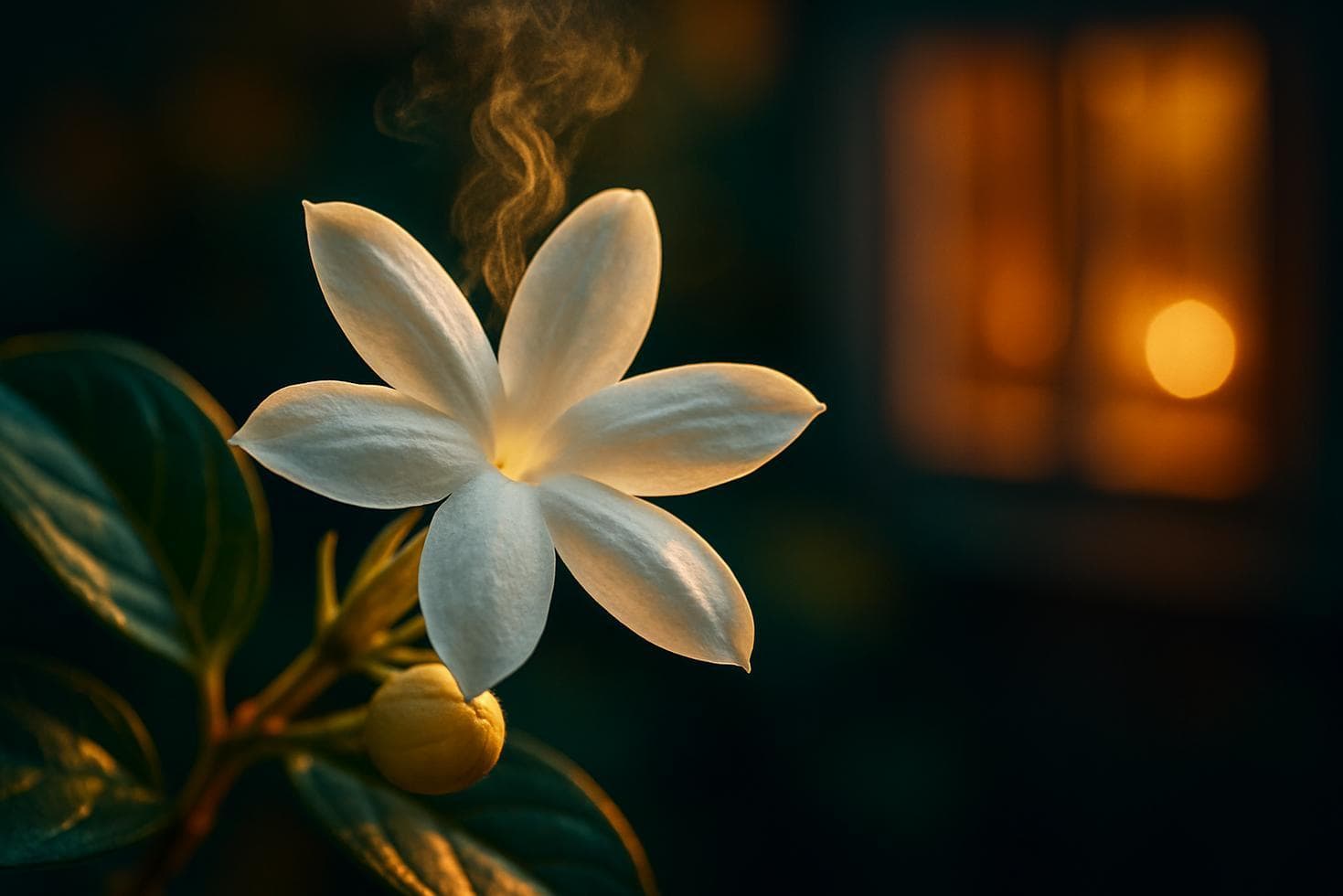
Rooms with flowering Jasminum sambac produced 12% deeper Stage N3 sleep than unscented control rooms — and a separate jasmine-pillow trial cut sleep latency by 15 minutes.
Jasmine (Jasminum sambac) releases volatile organic compounds — including linalool, benzyl acetate, and benzyl benzoate — that measurably shift the autonomic nervous system toward parasympathetic dominance. That shift is not a mood effect. It shows up in heart rate data and heart rate variability measurements. Research on jasmine tea odor found that (R)-(-)-linalool produced a statistically significant drop in heart rate alongside increased high-frequency heart rate variability — the physiological fingerprint of rest-and-digest activation.
What makes that finding interesting is where it leads. Parasympathetic dominance is the body’s on-ramp to sleep. When jasmine’s airborne compounds push the nervous system in that direction, the downstream effects appear in sleep architecture itself.
How Jasmine Volatiles Affect the Nervous System
The autonomic calming effect appears to run through olfactory input into limbic processing. The nose detects linalool; the signal travels to brain regions regulating emotional tone and arousal. Heart rate drops measurably with parasympathetic activation, and subjective anxiety scores fall alongside it. This is not sedation in the pharmacological sense — no compound in a living jasmine plant has been shown to bind benzodiazepine receptor sites with the same mechanism or potency as prescription sleep drugs. Some synthetic jasmine-like 1,3-dioxane compounds do modulate GABA-A receptors in animal models, but that finding does not extend directly to linalool from a living flower.
What Jasmine Scent Does to Sleep Architecture
The Stage N3 finding is the most structurally significant result. N3 is the deep slow-wave phase where the brain clears metabolic waste, consolidates memory, and repairs tissue. A 12% increase in N3 depth from a flowering plant — not a diffuser, not an oil — points to a real architectural effect rather than simply a relaxation response. Animal studies using oral jasmine essential oil also showed increased NREM sleep time and enhanced hippocampal delta-wave activity, consistent with that human-adjacent finding. Linalool alone, however, did not robustly prolong NREM sleep in at least one comparative study testing multiple plant VOCs in mice — suggesting the full volatile mixture matters more than any single compound.
Closing
Forty years of watching plants do unexpected things, and jasmine still earns a second look. The evidence does not support calling it a nightstand pharmacy. It supports calling it a genuine, modestly powerful nudge toward the nervous system state sleep requires. One small bloom, opening in the dark, shifting the body’s chemistry in a measurable direction. That is enough.
Frequently Asked Questions
Does a live jasmine plant actually improve sleep, or does it need to be an oil?
The 12% Stage N3 improvement was observed in rooms with flowering Jasminum sambac plants; most mechanistic research uses essential oil or synthetic compounds, so both forms show effects, but concentrations differ significantly.
Which jasmine compound is most responsible for the calming effect?
(R)-(-)-linalool showed statistically significant heart rate reduction and parasympathetic activation in humans; phytol showed stronger sedative effects in animal barbiturate models, suggesting multiple compounds contribute.
How much does jasmine reduce the time it takes to fall asleep?
A small 2020 clinical trial using jasmine-infused herbal pillows found an average 15-minute reduction in sleep latency; this is one small study, not a replicated large-trial result.
Is jasmine scent the same as prescription sleep medication?
No. Some synthetic jasmine-like compounds modulate GABA-A receptors in animals, but the receptor subtype, binding site, and effect magnitude differ substantially from benzodiazepines or Z-drugs.