One USDA study found that 0.05% hydrogen peroxide in irrigation water — a very low concentration — reduced nasturtium foliage dry weight and flower count compared to untreated plants. The oxygen burst doesn’t sort friends from pests.
Hydrogen peroxide kills fungus gnat larvae through oxidative damage to cell membranes, proteins, and DNA — the same mechanism that makes it bubble when it contacts a wound. That visible fizzing in potting soil is the decomposition reaction: 2 H₂O₂ → 2 H₂O + O₂, driven by catalase enzymes in organic matter, roots, and soil microbes. The oxygen release is real and measurable. What’s less obvious is everything else the reaction touches on the way out.
The trade-off is written into the chemistry itself. Hydrogen peroxide does not distinguish between a fungus gnat larva and a beneficial bacterium. Both are soft biological tissue, both carry catalase, and both take the same oxidative hit.
How Hydrogen Peroxide Destroys Fungus Gnat Larvae in Soil
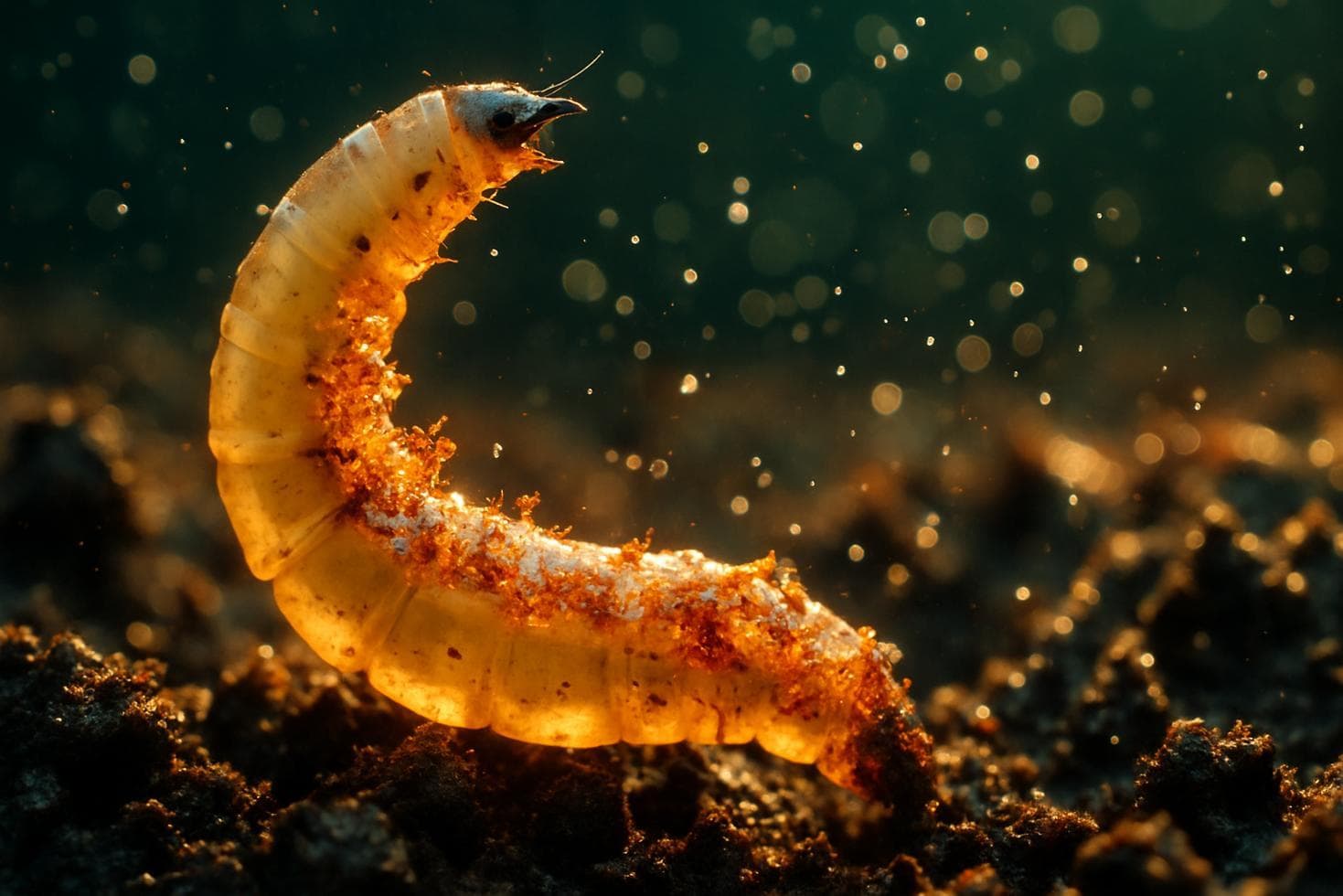
The reaction starts the moment diluted peroxide contacts organic matter. Catalase enzymes in the soil drive decomposition almost instantly, generating oxygen bubbles and releasing oxidative radicals. Those radicals disrupt lipid bilayers — the structural membranes holding larval cells together — causing cell lysis. The larvae are soft-bodied and have no protective barrier sufficient to resist the reaction at typical drench concentrations (roughly 1:4 dilution of 3% peroxide with water).
Complete elimination usually requires repeated applications. Adults can reinfest from outside, and eggs in untreated soil zones may survive a single pass.
Why the Oxygen Release Is a Trade-Off, Not a Bonus
The oxygen generated during decomposition does reach soil pores near root surfaces. Some gardeners report that dense or waterlogged soil feels less compacted after treatment, and the chemistry supports a modest, localized aeration effect. But the USDA nasturtium study showed no significant growth benefit at tested concentrations — and at 0.05% and 0.1%, plant growth and flowering actually declined compared to untreated controls.
The reason connects directly to the microbial side of the reaction. Hydrogen peroxide carries broad-spectrum microbicidal and sporicidal activity that reduces beneficial bacteria and fungi alongside pathogens. Soil biology — the organisms that cycle nutrients and support root uptake — takes the same oxidative hit as the larvae. The oxygen boost is real but short-lived. The microbial disruption can persist longer.
What the Research Actually Shows About Plant Growth Claims
Some studies do show hydrogen peroxide improving growth outcomes — but under specific disease-stress conditions, not as a general growth enhancer. Research on apple replant disease found improved root antioxidant enzyme activity in seedlings treated with peroxide, attributed to pathogen reduction rather than direct nutritional input. Hydrogen peroxide supplies no mineral nutrients. It does not feed plants in any nutritional sense.
The USDA nasturtium data is the clearest corrective to broad “supercharges growth” claims: lower concentrations reduced growth, not enhanced it. Results are species-specific, concentration-dependent, and context-dependent.
The chemistry behind a soil drench is genuinely interesting — one reaction doing several things at once, some useful, some costly. That complexity is exactly why the concentration dial matters so much.
Frequently Asked Questions
Does hydrogen peroxide actually kill fungus gnat larvae?
Yes. It kills larvae through oxidative damage to cell membranes, proteins, and DNA, but complete control typically requires repeat applications every 7–10 days for small pots.
What concentration of hydrogen peroxide is safe for plants?
USDA research found that even 0.05% solutions reduced nasturtium growth and flowering; some sources flag phytotoxic effects at concentrations as low as 0.0025% in sensitive or young plants.
Does hydrogen peroxide oxygenate soil and help roots?
The decomposition reaction does release oxygen locally, but the effect is transient and the USDA nasturtium study documented no significant growth benefit at tested application rates.
Does hydrogen peroxide harm beneficial soil microbes?
Yes. It has broad-spectrum microbicidal and sporicidal activity that reduces beneficial bacteria and fungi alongside pathogens, with no meaningful selectivity between the two.