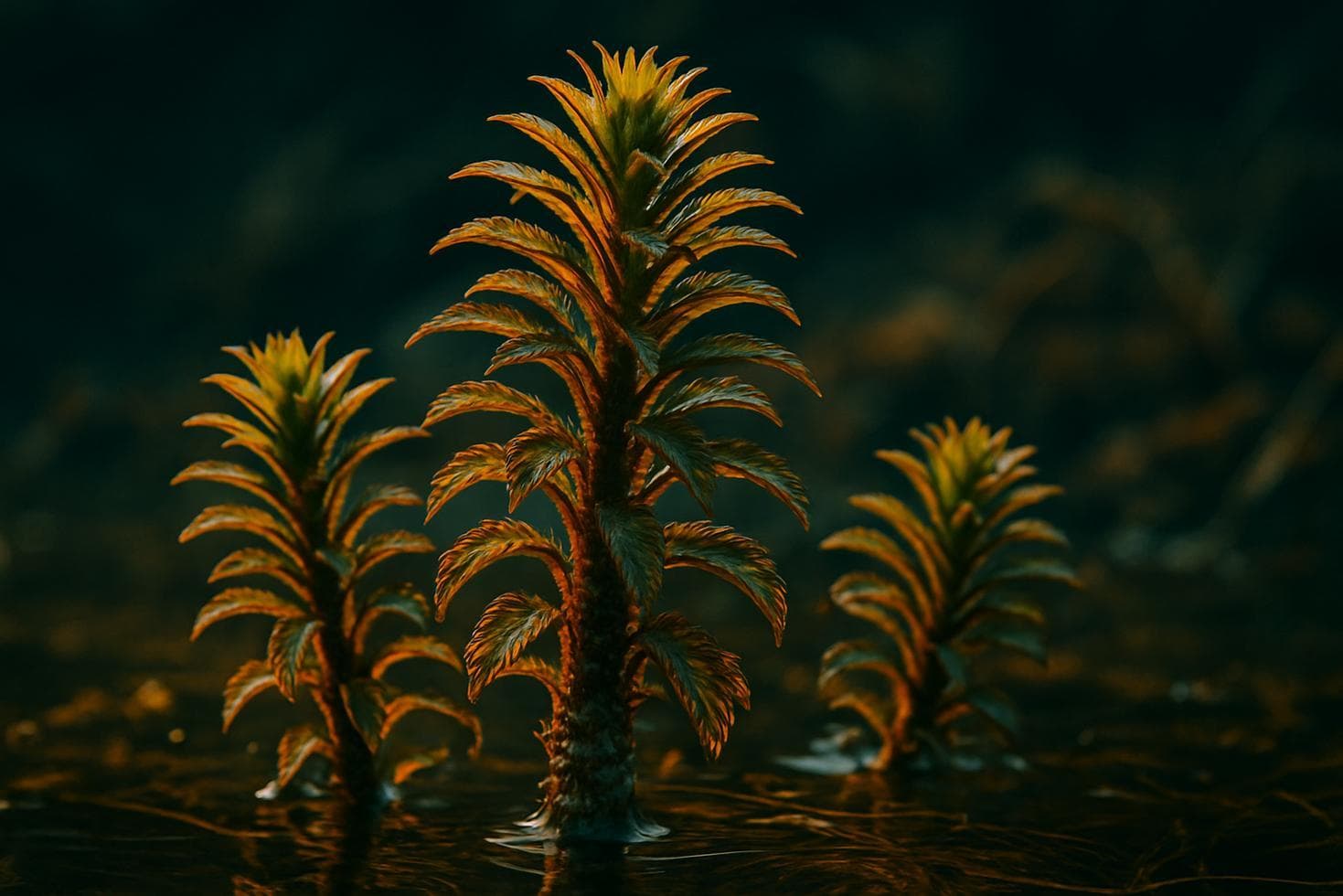
Hydrilla’s stem-boring weevil saw 300,000+ releases across four states — and established at zero locations. The reason comes down to genetics.
Hydrilla verticillata is not one plant in any practical biological sense. It exists in the U.S. as multiple genetically distinct subspecies, each introduced from a different part of Asia — and that distinction determines whether any given biocontrol agent will work against it at all. The USDA ARS Invasive Plant Research Laboratory in Fort Lauderdale has spent decades untangling this mismatch, using next-generation sequencing to trace each lineage back to its origin and identify the natural enemies that co-evolved with it.
The plant arrived through the aquarium trade, with invasive populations documented in U.S. waters by the 1960s and 1970s. By 1982, a monoecious biotype had already reached the Potomac River near Washington, D.C.
Why the Stem-Boring Weevil Failed Across Four States
Federal biocontrol work on hydrilla began formally around 1980 as a cooperative effort between USDA ARS and the U.S. Army Corps of Engineers. Four insect agents were eventually approved and released: two weevils (Bagous affinis and Bagous hydrillae) and two leaf-mining flies (Hydrellia pakistanae and Hydrellia balciunasi).
Bagous hydrillae — the stem-borer — saw the largest deployment: more than 300,000 individuals released across Florida, Alabama, Georgia, and Texas since 1991. No long-term population established at any release location. Bagous affinis, the tuber-feeding weevil, fared no better; over 11,000 individuals were introduced at 12 sites across more than 28 separate releases in Florida and Texas with similarly negligible results.
The leaf-mining flies performed better. H. pakistanae established in four southeastern states. Its larvae mine hydrilla leaves, reducing photosynthesis, which in turn cuts biomass, tuber production, and fragment viability. Still, ARS characterizes its suppression as limited — and confined to dioecious hydrilla in warmer regions.
How Genetic Sequencing Is Reshaping the Search for Matched Biocontrol Agents
The core problem is specificity mismatch. Agents developed against southern dioecious hydrilla do not persist through northern winters and do not effectively attack H. v. ssp. lithuanica, the newly described subspecies now spreading through tidal freshwater systems like the Connecticut River. This subspecies produces large numbers of underground turions, enhancing persistence under harsh conditions.
ARS surveys between 1996 and 2013 collected 425 hydrilla samples from seven countries across China, Southeast Asia, and Australia. Since 2013, USDA’s Australian Biological Control Laboratory has surveyed South Korea and China specifically targeting natural enemies adapted to monoecious hydrilla genotypes. Genetic sequencing matched Connecticut River hydrilla to likely origins in China or South Korea, pointing researchers toward candidate flies, weevils, and midges from those regions.
One Korean Hydrellia fly collected from monoecious hydrilla was imported and quarantine-tested in Brisbane — then rejected. It fed on two North American native aquatic plants, failing host-specificity requirements. Other candidates from northern China and Korea remain under evaluation.
The search has narrowed considerably because of molecular tools that earlier programs didn’t have. Every hydrilla biotype carries a record of where it came from. Scientists are now reading that record before releasing anything.
Frequently Asked Questions
What is the difference between monoecious and dioecious hydrilla?
They are genetically distinct biotypes likely introduced from different parts of Asia; monoecious hydrilla dominates northern U.S. waters and dioecious hydrilla dominates southern states, and current biocontrol agents act mainly on the dioecious form.
Why didn’t the weevils released against hydrilla establish?
Over 300,000 Bagous hydrillae were released across four states since 1991, but no long-term populations formed at any site; ARS has not identified a single confirmed cause, but climate, plant genotype compatibility, and host-finding failure are all under investigation.
Is any biocontrol agent actually working against hydrilla right now?
Hydrellia pakistanae has established in several southeastern states and produces measurable suppression of dioecious hydrilla, but ARS describes that suppression as limited and it does not function in cooler northern climates.
What is Hydrilla verticillata ssp. lithuanica?
It is a newly recognized hydrilla subspecies now invading northeastern U.S. freshwater systems, including the Connecticut River; it produces abundant underground turions and is not effectively controlled by any currently approved biocontrol agent.