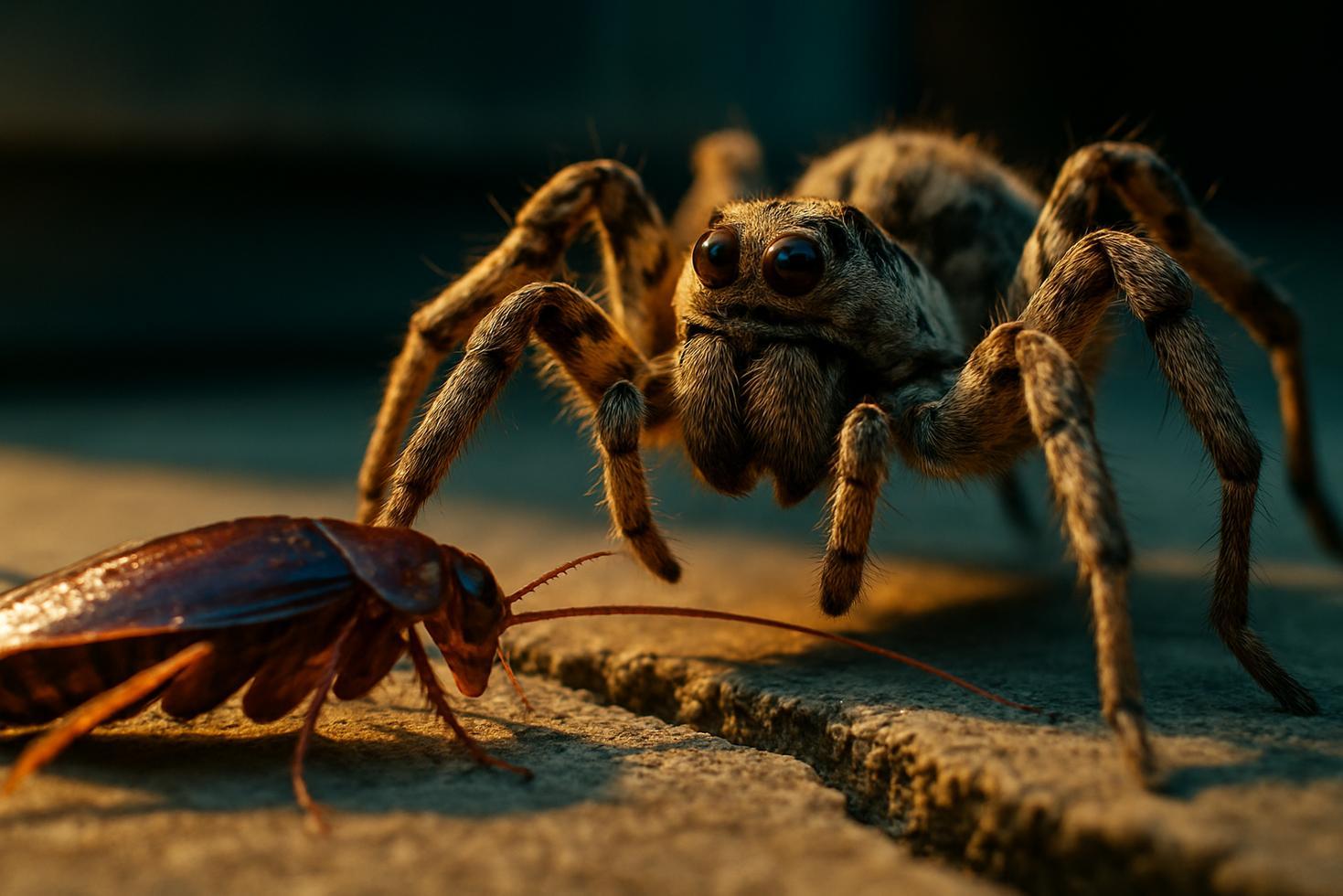
Eight eyes, zero silk — wolf spiders stalk cockroaches and crickets across the floor using vision alone, then close the gap in a split-second sprint.
Wolf spiders hunt entirely by sight, speed, and ambush — no web, no trap, no silk involved at any stage. That fact alone makes them unusual among spiders, but the mechanics behind it are what make them genuinely remarkable.
The eight eyes are arranged in three rows, giving wolf spiders a wide visual field with strong motion detection. When prey moves, the spider orients, calculates, and closes. Cockroaches and crickets are repeatedly confirmed prey. So are earwigs, ants, flies, and grasshoppers.
What Wolf Spiders Actually Eat and How They Catch It
The diet is broadly opportunistic. Verified prey includes cockroaches, crickets, grasshoppers, earwigs, ants, flies, and other spiders. Larger species extend that list to small amphibians and reptiles, taken by the same stalk-and-sprint method.
Hunting relies on vision, vibration sensitivity, and rapid pursuit — not silk. Some species ambush from burrow entrances at dusk. Others actively patrol. Either way, the spider reads movement and responds to it directly.
Wolf Spider Size Range and What It Means for Prey
Wolf spiders range from roughly rice-grain size up to as large as a human hand. That size range matters because prey size scales with body size.
A small species takes flies and small arthropods. Larger species shift to vertebrate prey — small frogs and lizards are documented targets. Same mechanism, bigger outcome.
Why Wolf Spiders Are Considered Beneficial Indoors
Wolf spiders consume verified insect pests, which is why sources from conservation agencies to pest-control companies describe them as beneficial. That said, their impact is local and opportunistic. They are not population-level biocontrol agents — just effective individual hunters working a small territory.
They also respond to chemical cues from other wolf spiders. Research on Pardosa milvina found that individuals reduced their activity in the presence of cues from larger predators — a size-structured risk response, not indiscriminate aggression.
The floor most people step across without a second glance is active hunting ground. Every corner with a wolf spider is one fewer cockroach that goes uncontested. No announcement, no trap. Just a predator that has been running this exact system for millions of years.
Frequently Asked Questions
How do wolf spiders hunt if they don’t spin webs?
Wolf spiders use keen eyesight, vibration sensitivity, and speed to locate and pursue prey, then pounce or ambush directly.
What do wolf spiders eat indoors?
Verified indoor prey includes cockroaches, crickets, earwigs, ants, and flies — all ground-dwelling insects they can stalk and seize.
Can large wolf spiders eat animals bigger than insects?
Yes. Larger wolf spider species have been documented taking small frogs and lizards using the same stalk-and-sprint hunting method.
Are wolf spiders harmful to have in a home?
Wolf spiders are not web-builders and consume pest insects. They are considered beneficial, though their pest-control effect is local rather than broad.