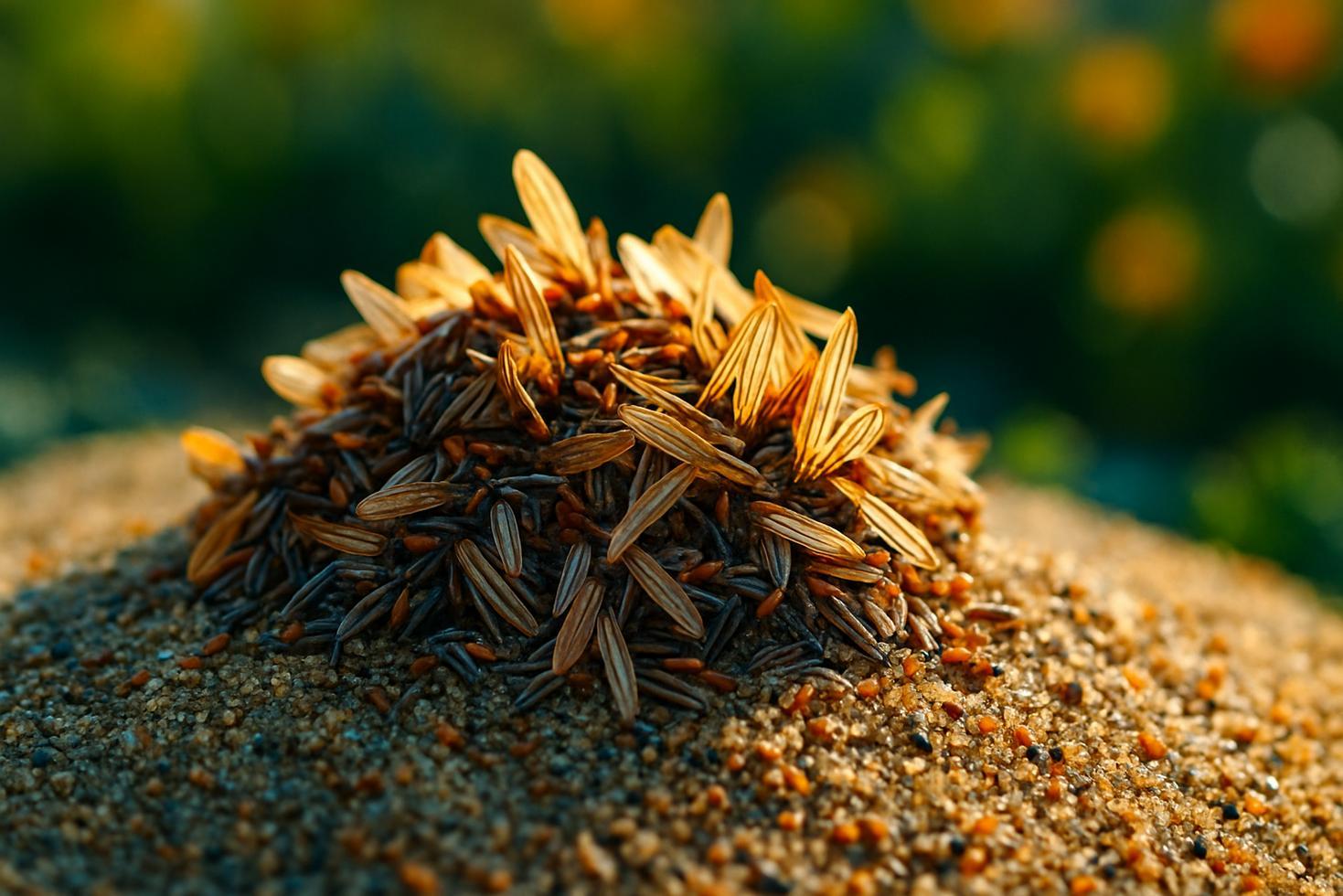
Wildflower seeds can number in the thousands per gram — mixing 1 part seed with up to 10 parts sand turns an uncontrollable trickle into a steady, visible stream.
Tiny wildflower seeds are so light that broadcasting them by hand naturally concentrates them in clumps rather than spreading them evenly. That’s not a technique failure — it’s physics. Seeds measuring fractions of a millimeter respond to air currents, hand warmth, and gravity in ways that chunky vegetable seeds never do.
The fix is a bulking carrier. Clean, dry sand added to the seed mix gives mass to something that barely has any, letting the hand dispense seeds at a controlled, diluted rate rather than dropping dense pockets.
Why Wildflower Seeds Behave Differently During Hand Sowing
Most wildflower seeds are genuinely tiny. At that scale, even the flow of air off an open palm can redirect where seeds land.
Clumping happens because small seeds shift together in the hand rather than flowing individually. Sand as a bulking carrier changes the handling physics entirely — the seeds ride within the sand rather than sticking to each other.
The Theodore Payne Foundation specifically recommends horticultural sand made from washed, lime-free quartzite. Sandbox sand is too fine to mix cleanly, and beach sand carries salts that can hinder germination.
What Seed-to-Sand Ratios Actually Work
Sources vary, which reflects genuine differences in seed size and site conditions rather than disagreement. Ratios found across horticultural guides range from 1 part seed to 3 parts sand up to 1 part seed to 10 parts sand.
A 1:8 or 1:10 ratio suits very fine seeds where dilution is the priority. A 1:3 or 1:5 ratio works for slightly larger wildflower seeds where visibility and flow are the main goals.
American Meadows recommends bagged sand specifically to avoid introducing weed seeds or moisture that causes clumping before sowing. Wildflower Farm also endorses lightweight inert carriers such as vermiculite or sawdust, lightly dampened so seeds adhere to the carrier rather than drifting free.
The Crosshatch Pass and Soil Contact After Sowing
One pass across a site leaves gaps. Perpendicular second pass coverage catches those gaps and distributes seed more evenly than any single careful toss could.
After sowing, compression matters. American Meadows notes that pressing seed into the soil improves seed-to-soil contact and reduces loss to wind and water movement.
Seeding depth is a real variable. Theodore Payne targets roughly 1/8 inch beneath the surface. Wildflower Farm suggests 1/8 to 1/4 inch. American Meadows notes that many tiny wildflower seeds require light to germinate and should remain near the surface rather than buried.
The whole system works because something almost weightless needed a partner just to reach the ground reliably. Sand doesn’t make the process precise — it makes it possible.
Frequently Asked Questions
Why do wildflower seeds clump when broadcast by hand?
They have very little mass, so they shift together rather than flowing individually from the hand.
What kind of sand should be mixed with wildflower seeds?
Horticultural sand made from washed, lime-free quartzite; avoid sandbox or beach sand.
How deep should wildflower seeds be planted after broadcasting?
Most sources recommend 1/8 to 1/4 inch deep; some species need light to germinate and should stay near the surface.
What is the crosshatch technique for sowing wildflowers?
Sowing in one direction, then making a second pass perpendicular to the first, to fill gaps left by the initial sweep.