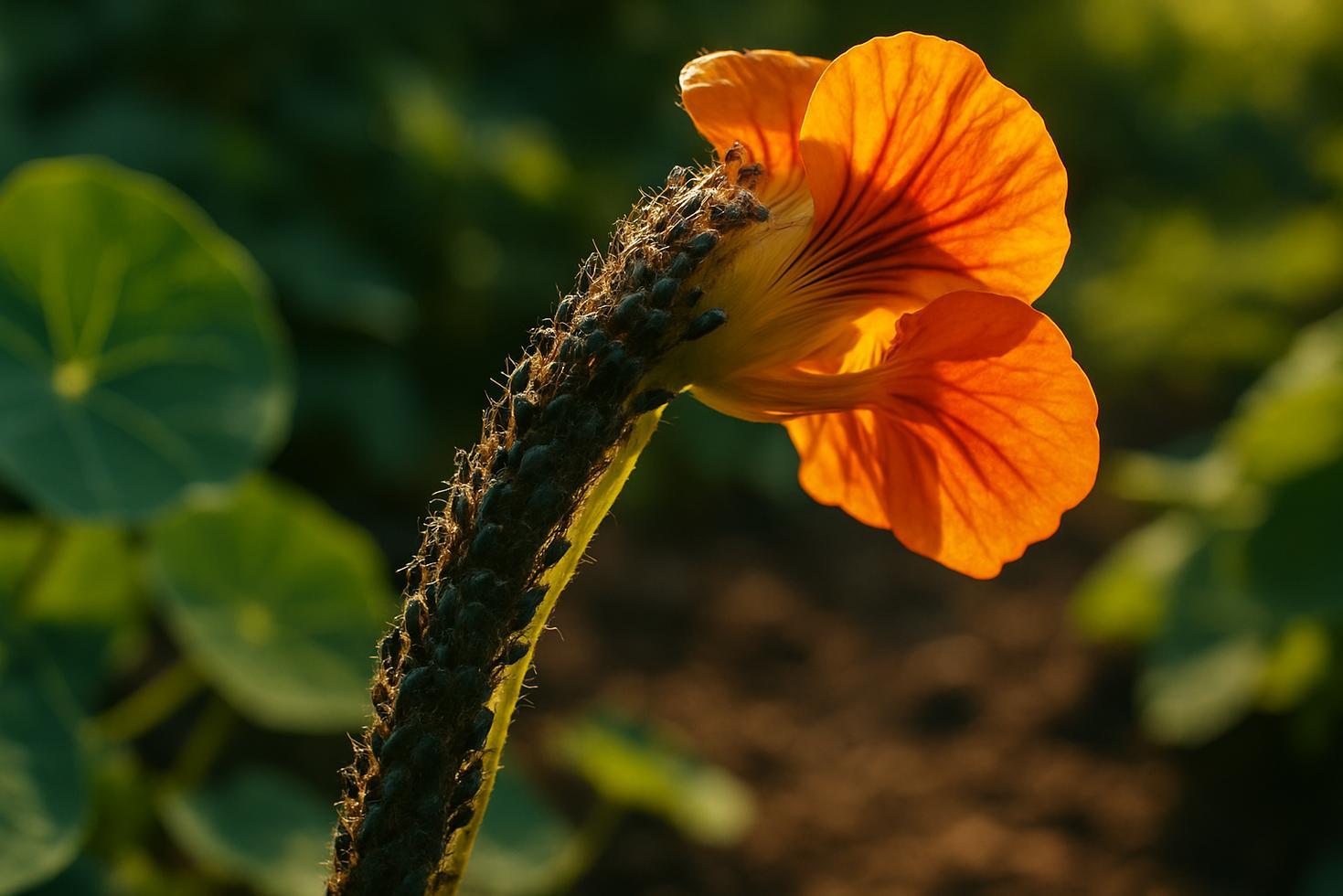
Aphids preferentially colonize nasturtiums over nearby crops — and the dense colonies they form pull in ladybirds, lacewings, and hoverflies. The trap fills before the vegetables ever get touched.
Nasturtiums (Tropaeolum majus) can function as a trap crop by concentrating aphids on themselves rather than on neighboring brassicas, beans, cucumbers, or squash. That preferential colonization is the mechanism — and what happens next is where it gets interesting. The aphid density that builds on a nasturtium essentially signals predators. Ladybirds, lacewings, and hoverflies move toward concentrated infestations, so the nasturtium draws both the pest and its enemies into the same spot.
This isn’t passive, season-long protection. It requires a gardener paying attention.
How Nasturtiums Pull Aphids Away from Other Crops
The mechanism is preferential host selection. When aphids have multiple plants available, nasturtiums’ chemical compounds and foliage appear to make them the more attractive landing site. The neighboring vegetables don’t disappear — they just become less appealing while the nasturtium absorbs the colonizers.
Gardening sources recommend placing nasturtiums roughly six feet from target crops, though this distance comes from horticultural advice rather than controlled trials. Preferential aphid colonization of nasturtiums is the most consistently described outcome across sources, framed as localized protection near specific plants rather than whole-bed coverage.
What Happens When Aphid Colonies Build on Nasturtiums
A concentrated aphid colony is a resource signal for predatory insects. Ladybirds, lacewings, and hoverflies are documented visitors to aphid-heavy nasturtiums, drawn by the density of prey already gathered in one place. The nasturtium, in this framing, concentrates both the problem and its natural solution.
This predator attraction is reported as gardener observation and general horticultural advice, not a measured ecological result. The pattern is plausible and repeatedly noted, but the supplied sources are gardening articles rather than primary research.
Active Management Required to Keep the Trap Working
Nasturtiums as trap crops demand attention. When infestation becomes heavy enough, the plant must be cut back or removed entirely — otherwise the aphid population can spread outward rather than stay concentrated. That reset allows a new cycle to begin.
Monitoring every two to three days is the standard recommendation. During peak pest pressure, daily checks become the practical threshold for catching the moment before a heavily colonized plant stops acting as a sink and starts acting as a source.
The strategy works with the gardener, not instead of one.
Watching a nasturtium take the full weight of an aphid wave while the kale beside it stays untouched is one of those garden moments that earns its own category. It’s a plant doing exactly what it was placed there to do — not by design, but because aphids, given a choice, keep making the same one.
Frequently Asked Questions
Do nasturtiums protect tomatoes and peppers from aphids?
The sources specifically name brassicas, beans, cucumbers, and squash as the crops most associated with nasturtium trap cropping. Tomatoes and peppers appear only in a general garden context and are not directly verified as protected crops.
How far should nasturtiums be planted from vegetables?
One gardening source recommends roughly six feet, though this figure comes from blog-level horticultural advice rather than a rigorously tested distance.
Does the trap crop method work all season without intervention?
No. Nasturtiums require active monitoring and must be cut back or removed when heavily infested to prevent aphids from spreading to nearby crops.