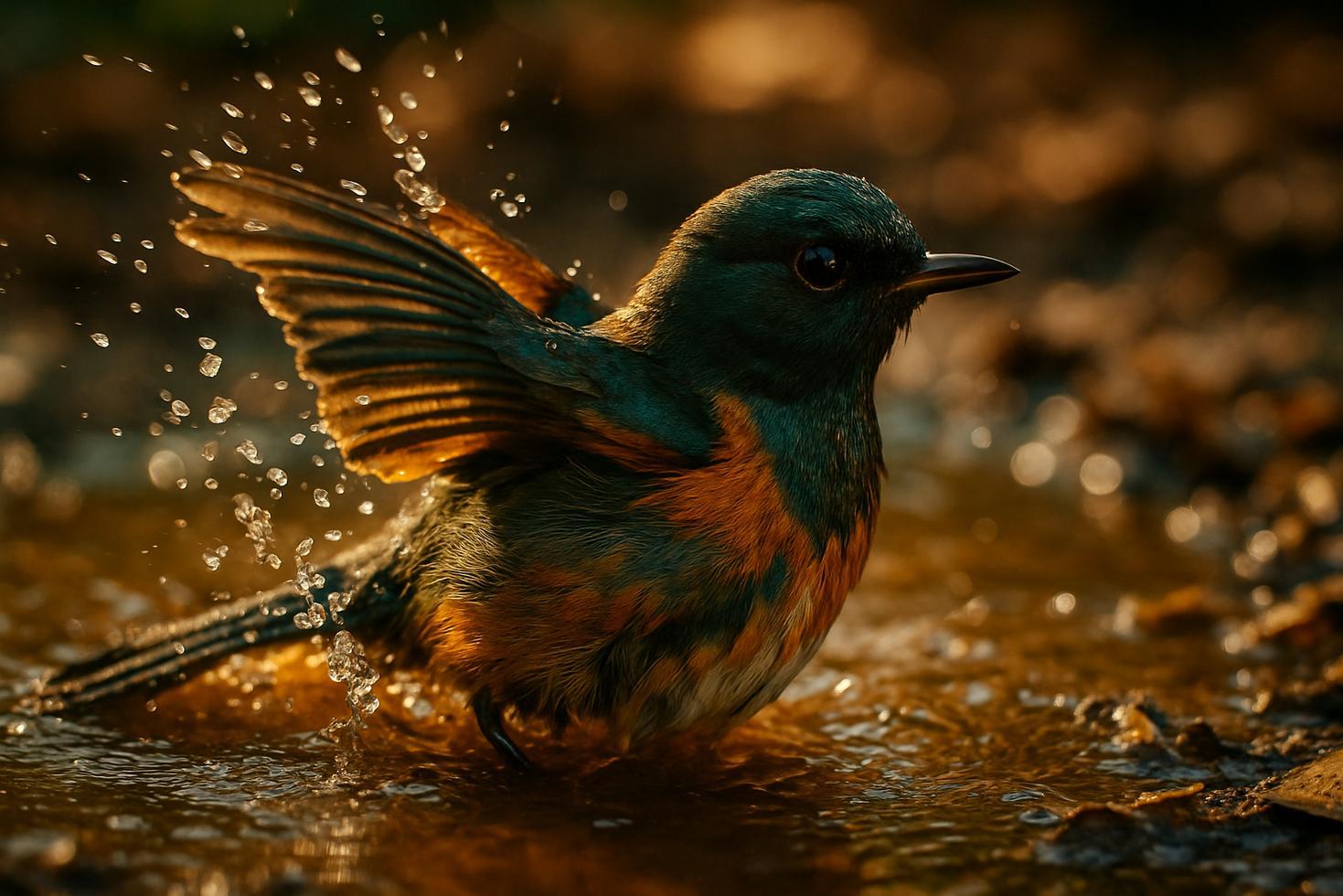
A tiny gland above the tail produces waxy oil — the bath just clears the canvas so every filament holds it evenly.
A bird’s waterproofing comes from oil, not water. The uropygial gland, tucked just above the tail, secretes a waxy, fatty oil that birds work through their feathers with their beak after bathing. The bath itself is preparation — loosening dirt and debris so that oil spreads cleanly across every feather surface.
That sequence matters more than it might look. A feather isn’t a single structure. Each one is a branching lattice of filaments held together by microscopic interlocking hooks. Preen oil seals those hooks, locking in body heat and causing water to bead and roll off rather than soak through.
How the Preen Gland and Feather Structure Work Together
Bathing and preening aren’t two separate habits — they are one continuous system. Water loosens grease, loose skin, and external parasites. Then the bird uses its beak to draw feathers through and re-engage those microscopic hooks, working oil from base to tip.
preen oil restoring feather hook alignment is the core structural repair happening during every grooming session. Skip enough sessions and insulation degrades gradually, feather by feather, rather than failing all at once.
Dust Bathing as a Parallel Waterproofing Mechanism
Owls and many ground-dwelling species use dry soil instead of water. Rolling in fine dust absorbs excess lipids from the feathers and disrupts parasites living at the feather base. The mechanism arrives at the same destination — clean, functional plumage — through the opposite material.
Research notes that ash may outperform regular dust because of its finer particle texture and possible additional effect on parasites. Some species dust bathe socially, suggesting it serves more than one function in daily life.
Why Birdbath Water Quality Directly Affects Feather Health
A birdbath that isn’t maintained undermines the very system it’s meant to support. Stagnant water can harbor avian botulism, trichomoniasis, salmonella, and avian cholera — all of which can be fatal if untreated.
Guidelines support changing the water every 24 hours and scrubbing the basin weekly with a 10% bleach solution (nine parts water to one part bleach). Depth should stay at 1–2 inches. Placement within 10 feet of cover lets birds retreat quickly after bathing, when their flight is briefly compromised.
A clean bath makes the whole downstream process — oil distribution, feather alignment, insulation — work as it should.
Frequently Asked Questions
What is the uropygial gland?
It is a small gland above a bird’s tail that produces the waxy oil used during preening to waterproof and condition feathers.
Does bathing actually waterproof feathers?
No. Bathing removes debris so the bird can spread preen oil evenly. The oil does the waterproofing; the bath is preparatory.
How often should a birdbath be cleaned?
Water should be changed every 24 hours and the basin scrubbed weekly with a 10% bleach solution.
Do all birds use water to bathe?
No. Owls and many ground-dwelling species dust bathe instead, using fine dry soil or ash to absorb excess oil and remove parasites.