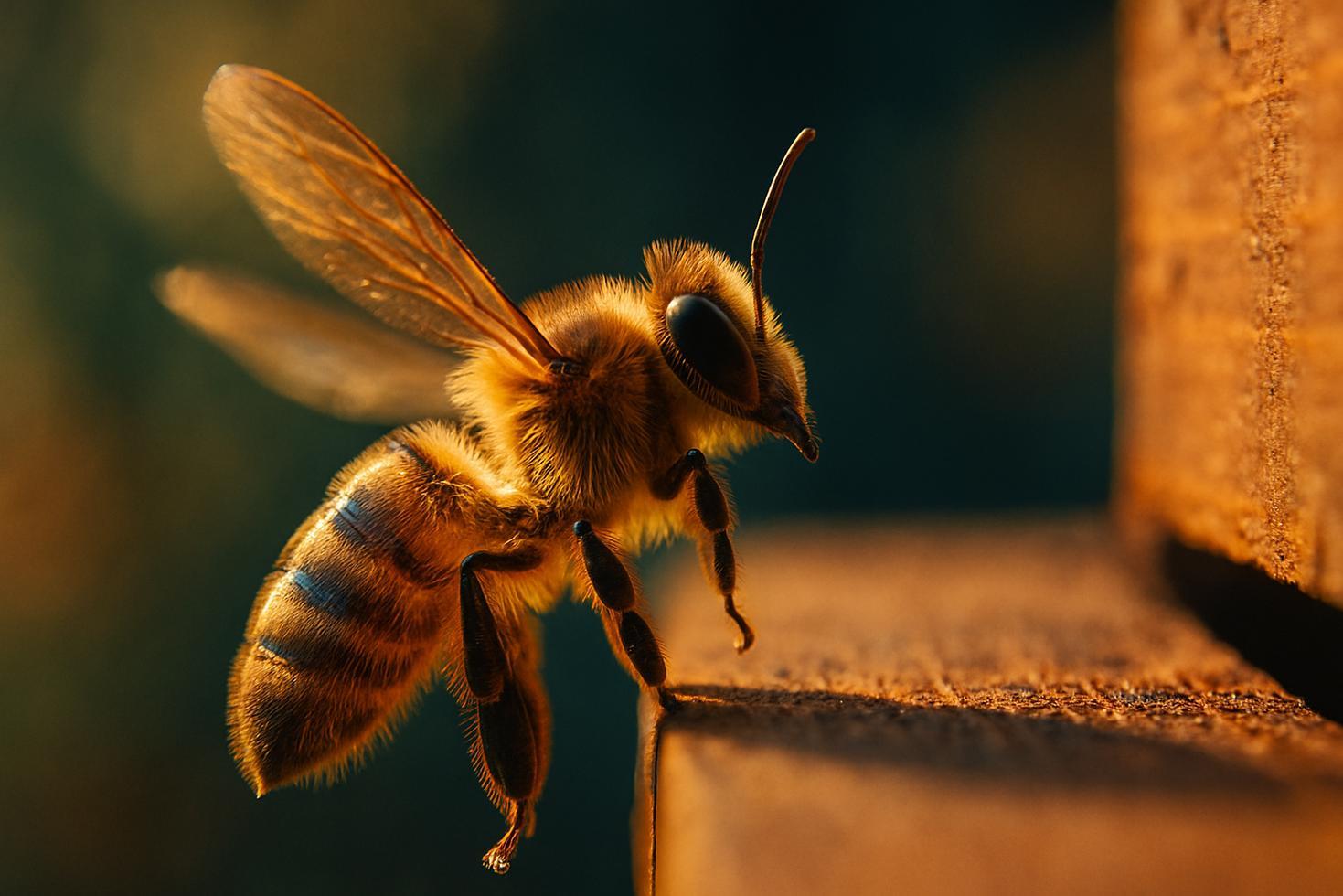
The brood nest holds at 93–95°F year-round. Developmental damage begins at 96.8°F — a margin of less than 2 degrees the colony defends all summer.
The honey bee colony runs one of the most tightly regulated thermal environments in the insect world. The brood nest stays near 93–95°F, and if ambient heat pushes that internal temperature above 96.8°F, developing pupae begin to deform.
That narrow window drives a dramatic reorganization. As outside temperatures climb — particularly above the 68–86°F optimal foraging range — colonies shift workers away from nectar collection and toward fanning and water hauling. It is not a stress response. It is a behavioral system switching modes.
Quick Facts
- Brood nest held at 93–95°F; developmental damage begins at 96.8°F
- Deformities or pupal death possible above 98.6°F
- Optimal foraging range: 68–86°F; field activity often declines above 95°F
- Heat-stressed colonies increase water foraging and fanning while reducing brood contact
- Desiccation, not overheating, is the primary risk limiting foragers in the hottest conditions
How Colony Behavior Reorganizes Under Heat Stress
When ambient temperatures rise, the hive interior changes fast. A 2024 study found that heat-stressed workers spend less time on brood areas, more time near honey stores, and some bees exit the nest entirely.
Fanning and water collection both increase. Workers line up at the entrance, moving air through the combs in coordinated waves. Water haulers activate as colony-level cooling escalates — water deposited on comb surfaces cools through evaporation, directly protecting the brood.
This is a shift in labor allocation, not a collapse of foraging. Nectar collection declines, but the colony redirects rather than shuts down.
What Actually Limits Foragers in Extreme Heat
A 2024 PNAS study by Glass et al. found that nectar-laden bees can fly safely across a 77–104°F range. At the high end, bees suppress metabolic heat production — lowering wingbeat frequency and raising stroke amplitude — to avoid overheating.
The real limiting factor at extreme temperatures is desiccation. Water loss, not flight overheating, caps foraging range in hot, dry conditions. At 46°C (115°F), bees without metabolic suppression can desiccate fatally in just over 30 minutes in dry air.
Nectar supply also shrinks in heat events, because flowers reduce secretion in warm, dry weather even when they remain open. Fewer profitable flowers mean fewer foraging trips, independent of any flight physiology.
The Brood Nest Temperature Window
The 93–95°F target is not approximate. It is the developmental sweet spot for capped pupae. Problems begin at 96.8°F. Above 98.6°F, deformities and pupal death become possible.
That is a margin of less than 4 degrees between normal development and serious damage. The bees fanning at the entrance will never encounter the pupae they are cooling — they are protecting a generation they won’t live to see emerge.
A colony in a heat event is not struggling. It is running a different operating mode, one built around a thermal margin most beekeepers never think about until summer arrives.
The brood nest doesn’t negotiate with the weather. The colony negotiates on its behalf.
Frequently Asked Questions
At what temperature do honey bees stop foraging?
There is no single cutoff. Optimal foraging runs from 68–86°F, and field observations note activity often declining above 95°F, but the exact point varies by colony condition, humidity, and available resources.
How do bees keep the hive cool in summer?
Workers fan coordinated airflows through the combs and haul water to deposit on comb surfaces, where evaporation lowers internal temperature.
What temperature kills honey bee pupae?
Developmental problems begin around 96.8°F. Deformities or pupal death are possible above 98.6°F.
Why do bees collect water during hot weather?
Evaporation of water deposited inside the hive is a primary cooling mechanism. Water foraging increases measurably as ambient temperatures rise.