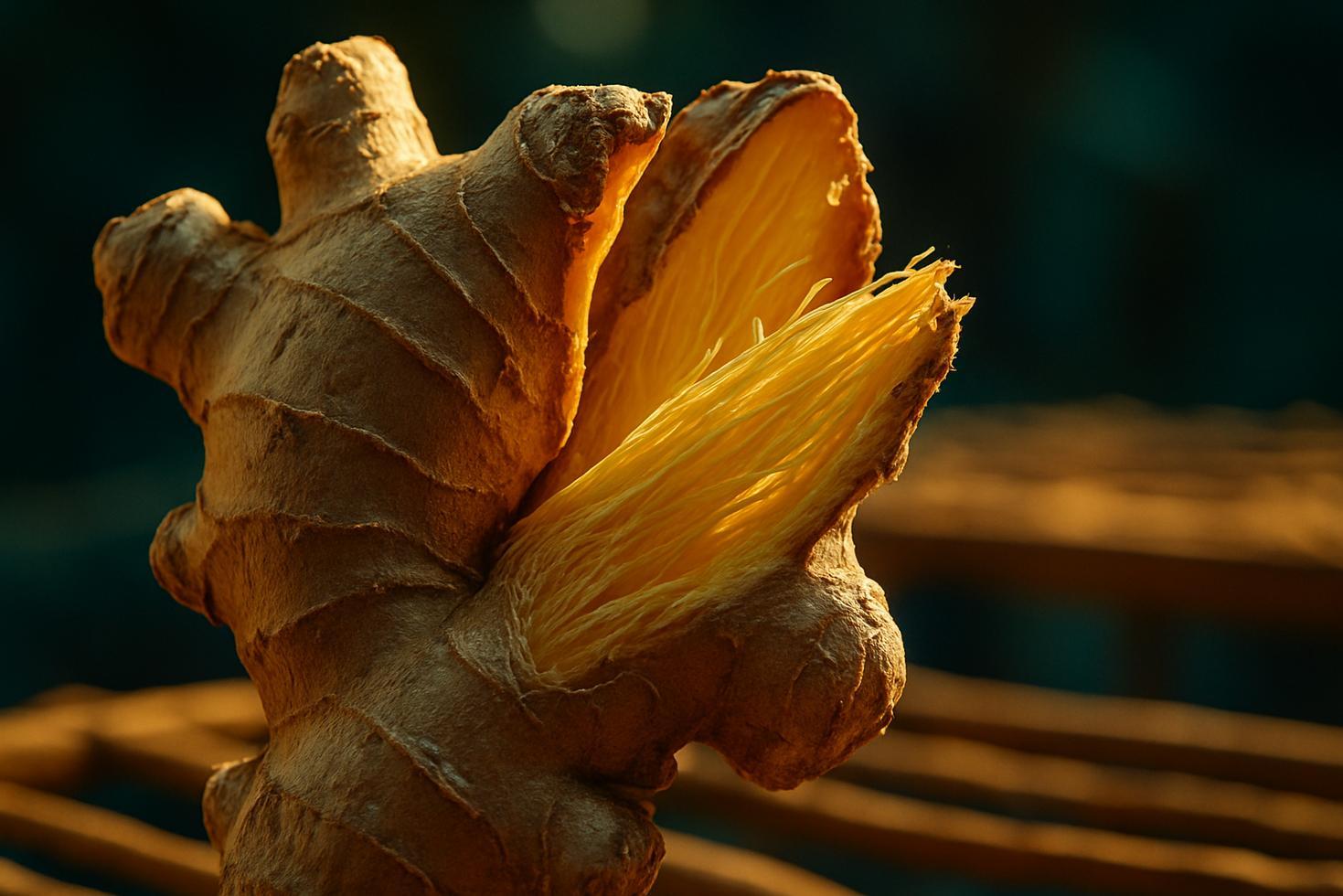
Shogaol clocks 151 Scoville heat units — fresh gingerol sits at 61 — because drying doesn’t concentrate the molecule. It replaces it entirely.
Fresh ginger and dried ginger are chemically different products, not the same root in two states. When a rhizome is harvested and dried, its primary pungent compound — 6-gingerol — undergoes a dehydration reaction that converts it into 6-shogaol, a structurally distinct molecule with measurably different heat.
That gap is not subtle. Shogaols measure 151 Scoville heat units against gingerol’s 61. The tongue already knew something had changed. Now the mechanism explains why.
The Gingerol-to-Shogaol Conversion Mechanism
Gingerols are abundant in fresh rhizomes. When heat or drying removes water from the tissue, a dehydration reaction eliminates a hydroxyl group from the gingerol backbone. The product is shogaol — same root, new molecule.
Gingerol’s structural transformation into shogaol is not the only possible outcome. Heating can also drive a retro-aldol reaction that converts gingerols into zingerone, a compound with a milder, more vanilla-adjacent character. Shogaols themselves can further transform into paradols through hydrogenation or microbial activity. The dried root is not a static archive. It is a system still mid-reaction.
Temperature is the dominant variable. Acidic environments, prolonged storage, light, and air all push gingerol toward degradation, but thermal processing is the most documented and quantified pathway in the reviewed literature.
How Harvest Stage Affects Ginger’s Total Phenolic Content
The conversion story during drying is only half the picture. Even before harvest, the rhizome’s phytochemical profile is already shifting with age.
Research tracking ginger from week 1 through week 16 of maturation found that total phenolic content falls roughly 50% by week 16 compared to week 1. Baby ginger at week 4 already registers only 10.9 mg GAE per gram dry powder. Mature ginger continues downward from there.
So the root arrives at the drying stage already diminished in total chemical complexity. Drying then sharpens what remains into something hotter but narrower. More intense pungency, less overall phenolic depth.
Frequently Asked Questions
What causes fresh ginger to taste different from dried ginger?
Drying triggers a dehydration reaction that converts 6-gingerol into 6-shogaol, a chemically distinct molecule. Shogaols register 151 SHU versus 61 SHU for gingerols.
Does drying make ginger more or less complex chemically?
Both. Drying increases shogaol concentration and pungency, but total phenolic content — the broader chemical complexity — declines with maturation and processing.
When does ginger have the highest phenolic content?
Week 1 baby ginger carries the highest total phenolics. By week 16, the same plant’s phenolic load is approximately 50% lower.
Can gingerols turn into anything other than shogaol during processing?
Yes. Heating can convert gingerols into zingerone via a retro-aldol reaction. Shogaols can further convert to paradols through hydrogenation or microbial metabolism.