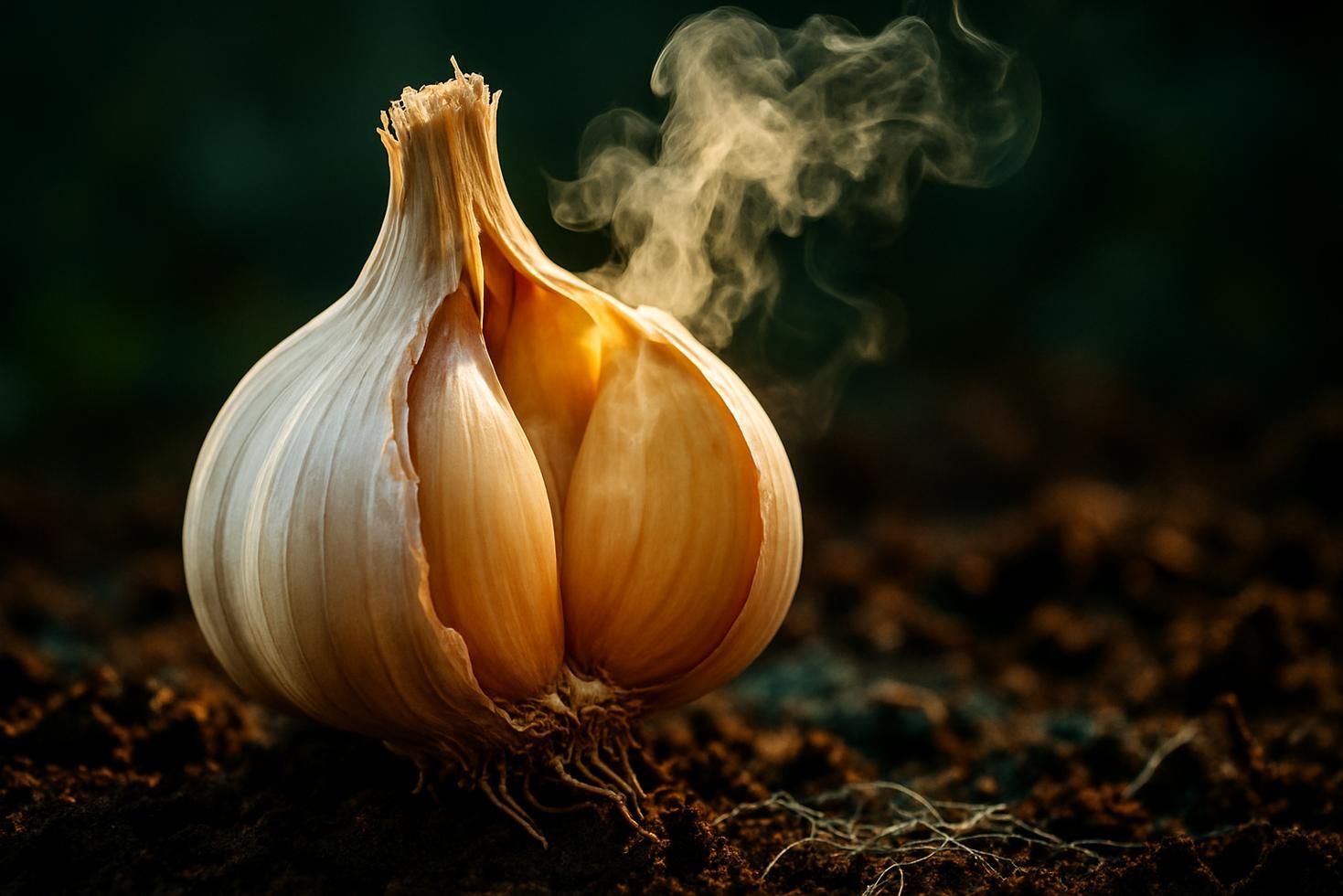
Garlic’s sulfur compounds repel soft-bodied insects like aphids and spider mites — but at high concentrations, they destroy the soil fungi roots genuinely depend on.
Garlic water does not stimulate root growth. That claim circulates widely online, but no peer-reviewed evidence supports it, and the strongest verified biological mechanism runs in the opposite direction. Garlic produces volatile sulfur compounds — most notably allicin — as a chemical defense. Those compounds can deter pests. At higher concentrations, they begin disrupting the underground biology that roots actually need.
Soil is not an inert medium. It holds living networks of bacteria and mycorrhizal fungi that wrap around root tips, exchanging water and minerals the plant cannot source alone. Garlic-derived compounds do not distinguish between a pest and a partner.
What Garlic Compounds Actually Do in Soil
The verified benefit is narrow: diluted garlic solutions used sparingly can deter soft-bodied insects like aphids, spider mites, and whiteflies through volatile sulfur chemistry. That is a pest-deterrent effect, not a growth effect.
Push the concentration higher and the same chemistry becomes damaging. High-concentration garlic applications have been linked to soil acidification, phytotoxicity, microbial imbalance, and harm to beneficial nematodes and mycorrhizae. Mycorrhizal networks do not recover quickly once disrupted.
Why the “Root Growth” Claim Doesn’t Hold Up
A University of Maine Extension associate, quoted by The Spruce, acknowledged that garlic contains trace nutrients plants need — but added that achieving any meaningful nutritional effect would require using garlic in quantities far beyond what home gardeners apply. Garlic water, used at practical concentrations, lacks the nutrient density to function as a fertilizer.
The viral claim that garlic water produces explosive root development within 48 hours traces back to anecdotal videos and commercial blog posts. One video references a 35% faster root establishment figure from “local-grower trials,” but no independent methodology or peer-reviewed source backs that number. Raw_Research flags it as unverified.
The chemistry is real. The pest-deterrent application — diluted, infrequent — has a legitimate basis. What doesn’t hold up is the leap from “repels aphids” to “supercharges roots.” Those are different biological processes, and garlic’s sulfur compounds participate in only one of them.
The underground network that makes root growth possible took time to establish. Treating it carelessly in pursuit of a growth shortcut risks dismantling exactly what was working.
Frequently Asked Questions
Does garlic water help plants grow faster?
No verified evidence supports this. Garlic water lacks the nutrient concentration to act as a fertilizer, and its active compounds are pest deterrents, not growth stimulants.
Can garlic harm soil microbes?
Yes. High concentrations of garlic-derived sulfur compounds can disrupt beneficial mycorrhizal fungi, bacteria, and nematodes that roots depend on for nutrient and water exchange.
Is there any legitimate use for garlic in the garden?
Diluted garlic solutions applied sparingly can deter soft-bodied insects like aphids, spider mites, and whiteflies through volatile sulfur chemistry — that is the verified use case.
Where does the “35% faster root growth” claim come from?
Anecdotal videos referencing informal grower trials. No peer-reviewed study or independent methodology has confirmed that figure.