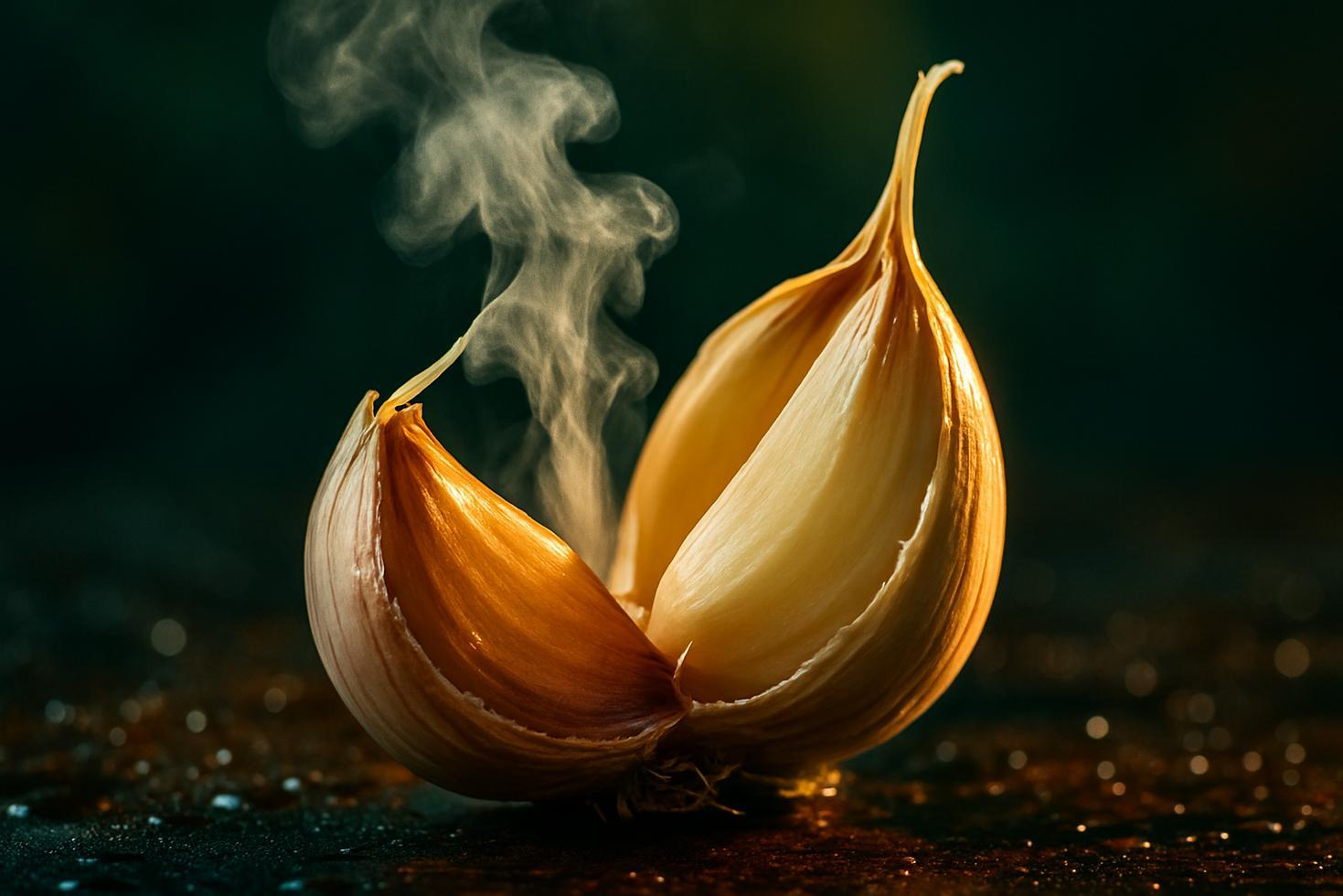
Alliin makes up roughly 80% of garlic’s cysteine sulfoxides — a defense compound, not a root signal. Field crops needed 30 kg of sulfur per hectare applied directly to soil to shift yield. That mason jar isn’t moving that needle.
Garlic-soak water contains real sulfur chemistry, but no verified research shows it functions as a fertilizer or root stimulant in soil. That gap between “contains interesting compounds” and “does something useful for plants” is exactly where the popular claim falls apart.
Garlic cloves hold roughly 2.3% organosulfur compounds by weight, and alliin alone accounts for about 80% of the cysteine sulfoxides inside them. Those compounds leach into water when cloves soak — but leaching out and acting on plant roots are two entirely different biological events.
What Garlic’s Sulfur Compounds Are Actually Built to Do
Alliin is the dominant sulfur molecule in a resting garlic clove. The moment tissue is crushed or cut, the enzyme alliinase converts alliin into allicin — the sharp-smelling compound that defines fresh garlic — within minutes. Allicin then breaks down further into ajoene, diallyl disulfide, diallyl trisulfide, and related polysulfides.
This cascade is garlic’s evolved chemical defense system, triggered by physical damage to repel pathogens and herbivores. It is a sophisticated mechanism. It is not a mechanism plants use to signal root development.
Soaking whole or crushed cloves in water does pull these compounds into solution. Extended soaking or aging can shift the profile toward water-soluble forms like S-allyl cysteine, a chemistry well-documented in aged garlic extract research — for human bioactivity, not agricultural use.
What Field Research Says About Sulfur and Plant Yield
Agricultural studies do confirm that sulfur nutrition affects garlic metabolism and bulb chemistry. Sulfur applications up to 30 kg per hectare improved yield and thiosulfinate levels in field trials. Higher rates — 60 to 75 kg per hectare — increased pyruvic acid and sulfur uptake, though one experiment found those higher rates could reduce yield-related measures in certain conditions.
One cultivar showed maximal bulb weight at 75 kg S per hectare. Another showed no clear optimum in the same trial. The mechanism throughout is direct soil nutrition, not a biological signaling effect from garlic-derived water.
A mason jar of soak water delivers a fraction of the sulfur involved, with no established pathway for that sulfur to trigger root growth even if it reached plant roots in meaningful concentration.
Frequently Asked Questions
Can garlic water act as a natural fertilizer?
No verified research supports garlic-soak water functioning as a fertilizer. Field sulfur fertilization studies show yield effects, but those require tens of kilograms of sulfur applied directly to soil.
Does allicin help plants grow roots?
Allicin is a defense compound produced when garlic tissue is damaged. No source in the peer-reviewed literature documents allicin triggering root growth in other plants.
What does garlic soak water actually contain?
It contains organosulfur compounds including alliin and related cysteine sulfoxides that leach from the cloves. The chemistry is real; the agronomic effect on other plants is not verified.
How much sulfur does garlic contain?
Fresh garlic contains roughly 0.35% sulfur by weight and approximately 2.3% organosulfur compounds overall.