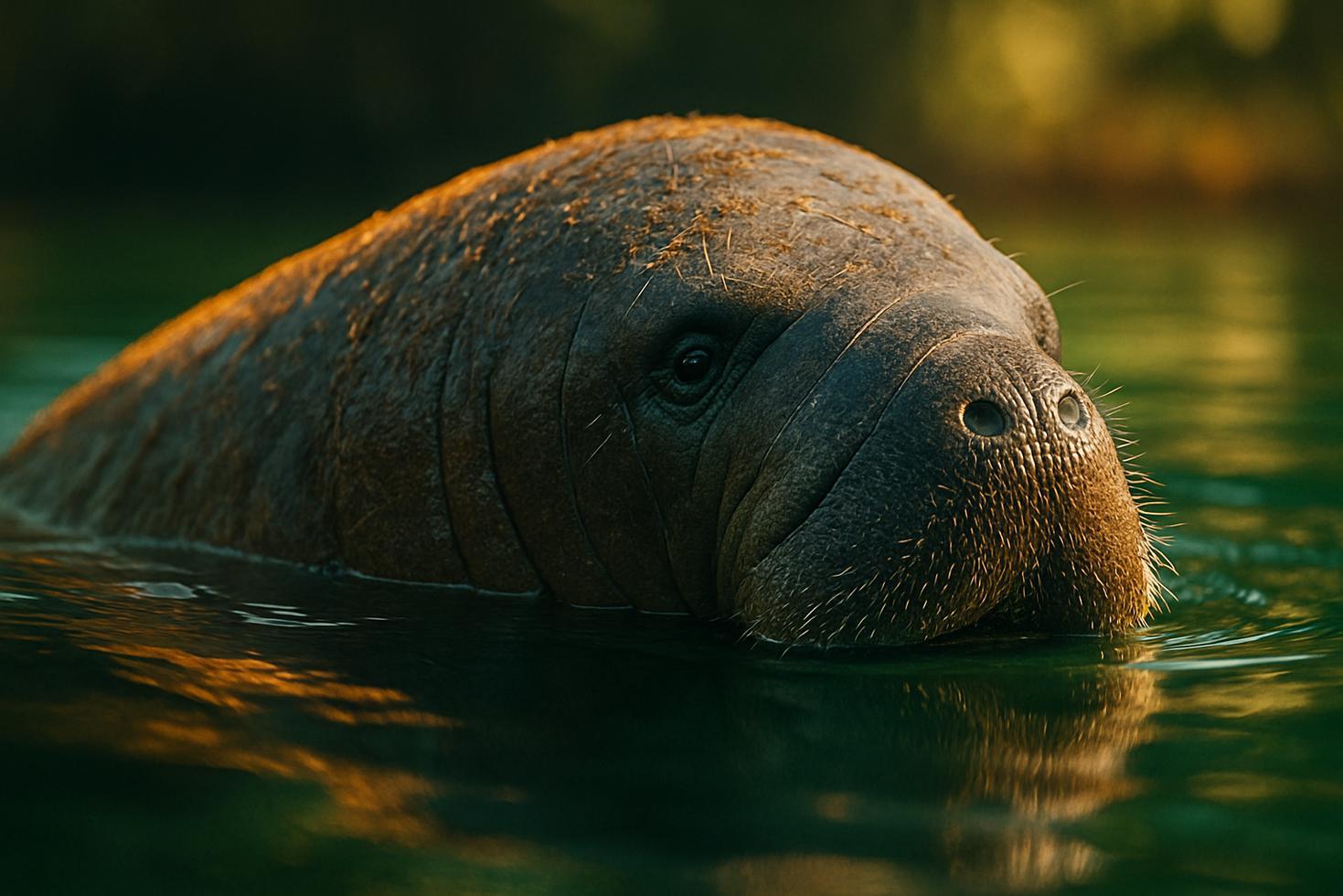
The U.S. Fish and Wildlife Service downlisted the West Indian manatee from endangered to threatened in April 2017 — the population had climbed from fewer than 1,000 animals in the 1970s to 7,520 counted in Florida waters in 2023. Slowing boats in the right places changed the math.
Florida manatees were downlisted from endangered to threatened on April 5, 2017, after federal regulators determined the species had met the benchmarks set out in the 2001 recovery plan. That decision was decades in the making. A species that could have quietly disappeared instead kept climbing — because the water around it was finally made slower.
Manatees surface to breathe roughly every three to five minutes. Every boat pass at full throttle is a potential lethal strike. The federal recovery framework recognized this early, identifying watercraft collisions as a primary mortality threat alongside entanglement in fishing gear and loss of warm-water habitat.
How Federal Boat Speed Zones Target Manatee Mortality
The 2001 recovery plan set a 90% or greater annual adult survival rate as a benchmark for recovery. Reaching that number required reducing lethal vessel strikes. A 2001 federal rule established three manatee protection areas across five Florida counties, requiring boats to operate at slow speed or no more than 40 km/h (25 mph) in those zones.
The warm springs and power plant discharge sites manatees cluster around in winter are not incidental gathering spots. Cold water below 68°F disrupts manatee digestion. mandatory slow-speed rules in thermal refuge habitats targeted exactly the locations where strike risk and biological vulnerability overlap.
What the 2017 Downlisting Actually Confirmed
The downlisting was not a declaration that the threat had ended. It was confirmation that the species had cleared the criteria the 2001 recovery plan required. The original plan, first written in 1980 and revised in 2001, described downlisting as a waypoint — with full delisting as the longer-term goal if benchmarks continued to be met.
The recovery framework also included satellite telemetry, photo-identification, carcass response, and rescue and rehabilitation programs. population monitoring spanning multiple decades gave regulators the data to make the downlisting call with documented evidence rather than estimation.
Florida Manatee Threats That Remain After Downlisting
Record manatee deaths in 2021 demonstrated that a downlisting does not equal a stable future. Red tide events, cold snaps, habitat loss, and continued vessel traffic all remain documented threats in the federal recovery framework. Entanglement in fishing gear and harassment are also listed as ongoing concerns.
The 7,520 count from the 2023 synoptic survey reflects real population growth. It does not reflect an animal that no longer needs protection.
The gap between fewer than 1,000 animals and 7,520 is not an accident of nature. It is the result of a specific policy applied to a specific mechanism of harm. The speed limit bought time. The question the 2023 count raises is what happens if that time is spent carelessly.
Frequently Asked Questions
When were Florida manatees downlisted from endangered to threatened?
The U.S. Fish and Wildlife Service downlisted the West Indian manatee from endangered to threatened on April 5, 2017, after the species met criteria in the 2001 recovery plan.
What is the current Florida manatee population?
The 2023 synoptic survey counted 7,520 manatees in Florida waters, up from fewer than 1,000 in the 1970s.
Why are boat speed zones important for manatee survival?
Manatees must surface frequently to breathe, making them vulnerable to vessel strikes. Federal slow-speed zones in warm-water habitats reduce lethal collisions at the sites where manatees concentrate in winter.
Are Florida manatees still at risk after the 2017 downlisting?
Yes. The federal recovery plan continues to identify vessel strikes, fishing gear entanglement, red tide, cold snaps, and habitat loss as documented threats.