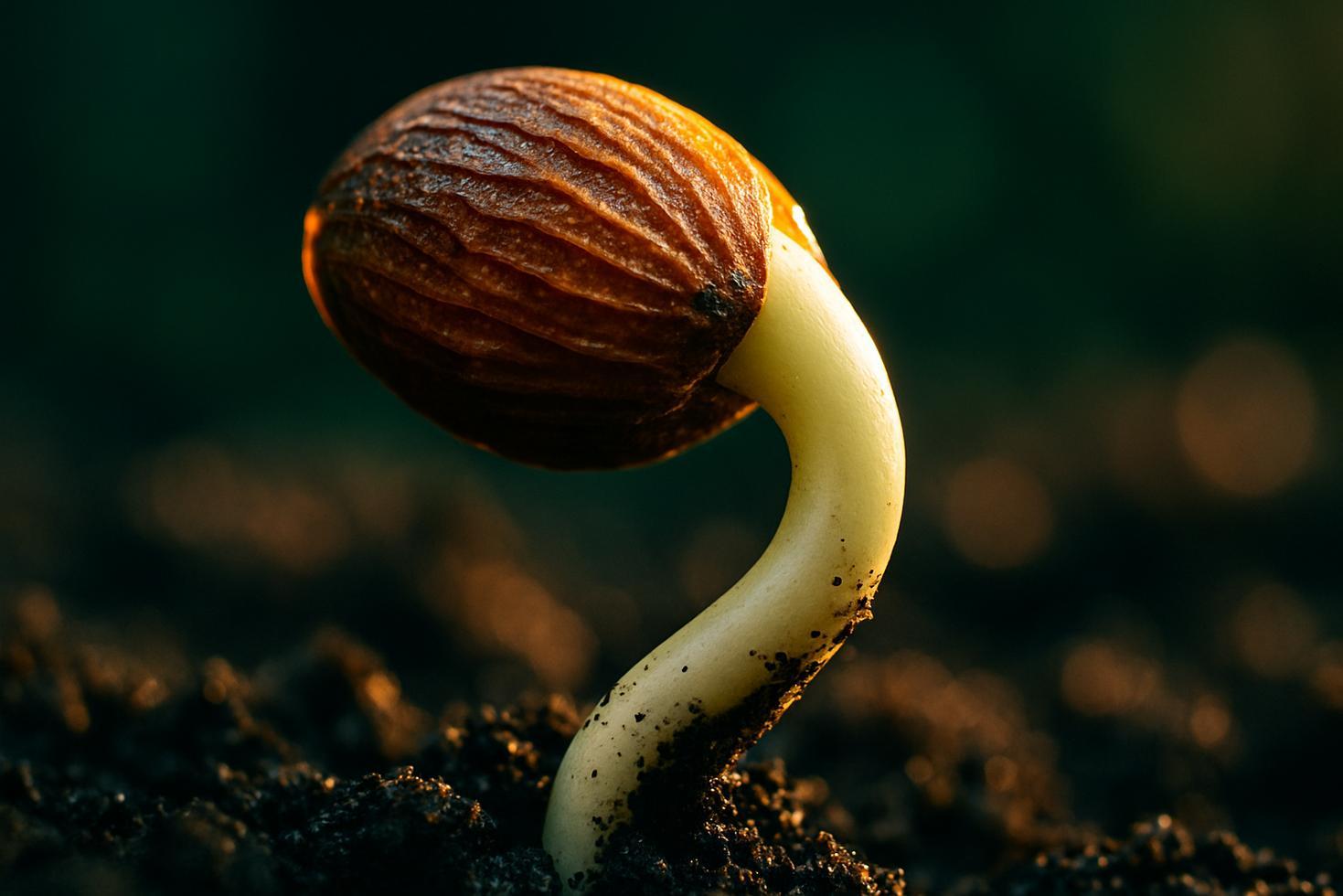
Magnesium sits at the center of every chlorophyll molecule a plant builds — and seeds activate root enzymes with it before one green leaf appears. No controlled trial confirms Epsom salt doubles germination rates.
Magnesium is structurally built into every chlorophyll molecule a plant produces, and seeds begin drawing on it before any green tissue forms. That fact alone is genuinely striking. What happens next in the retelling, though, is where the science quietly parts ways with the garden advice.
The claim that dissolving Epsom salt into water doubles germination success has circulated long enough to feel like settled fact. The available sources — gardening articles and video demonstrations — repeat the enzyme-activation mechanism but present no controlled trial data, no before-and-after germination percentages, and no peer-reviewed confirmation of that doubling figure.
What Magnesium Actually Does During Seed Germination
Seeds activate enzyme systems in complete darkness, before photosynthesis is even possible. Magnesium is part of that activation process, supporting early root development and nutrient uptake from the start.
magnesium’s role in root enzyme activation is the mechanism gardening sources consistently cite. The chemistry is real. The leap from “magnesium matters” to “adding more speeds germination” is where the evidence runs out.
Why the Epsom Salt Claim Doesn’t Hold Up
Gardening articles recommend doses that vary widely — 1 tablespoon per 4 liters in one source, 1–2 tablespoons per planting hole in another, 1 tablespoon per gallon as a pre-soak in a third. That inconsistency alone signals these are not research-derived figures.
The sources also don’t establish that typical garden soil is magnesium-deficient. soil deficiency as the necessary starting condition is never confirmed. Without deficiency, adding more magnesium has no demonstrated mechanism for improving results.
Closing
A seed firing its root engines in total darkness, using a mineral locked at the center of every future chlorophyll molecule, is already a remarkable story. It doesn’t need a doubling claim to make it worth paying attention to. The mechanism is real. The exaggeration isn’t.
Frequently Asked Questions
Does magnesium help seeds germinate?
Magnesium is involved in enzyme activation and early root development in germinating seeds, but whether supplementing it improves germination depends on whether the soil is actually deficient.
Does Epsom salt double seed germination rates?
No controlled study in the available research confirms this. The claim appears in gardening advice content but is not supported by trial data, replication, or peer-reviewed evidence.
How much Epsom salt do gardening sources recommend for seeds?
Recommendations vary from 1 tablespoon per 4 liters of water to 1–2 tablespoons per planting hole, with no consistent research-backed standard across sources.
Is magnesium deficiency common in garden soil?
The available sources do not confirm that most garden soils are magnesium-deficient, and none quantify how frequently deficiency occurs.