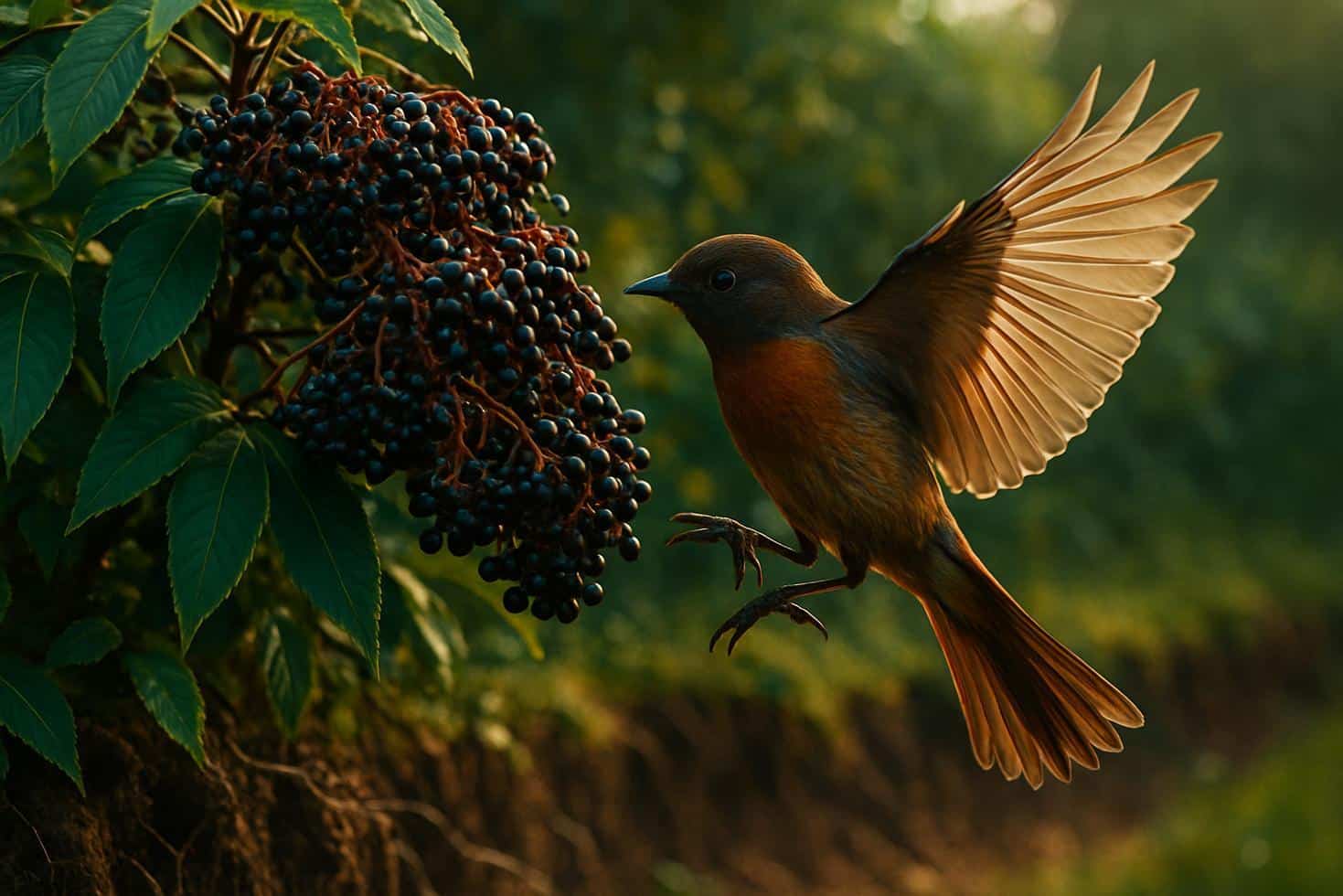
A single planting strip delivers bird habitat, deep soil stabilization, and two separate harvests — elderberries in late summer, hazelnuts in fall. That boundary is doing structural work.
A boundary planted with elderberry and hazelnut functions simultaneously as wildlife habitat, an erosion-control system, and a food-producing strip — three documented roles from one linear planting. The USDA National Agroforestry Center and FAO agroforestry research both describe this class of plantings — hedgerows, shelterbelts, living fences — as genuinely multifunctional, not just decorative. A fence post holds a line. These plants hold the ground and keep working long after the post rots.
What makes this pairing worth examining is how the two plants divide the labor differently, above ground and below it.
How Elderberry’s Dense Structure Creates Bird Hunting Habitat
Elderberry grows a thick tangle of stems that gives birds more than a resting spot. Dense branching as a perch-and-hunt structure means birds stationed in those stems actively work the surrounding ground for insects, extending their foraging radius outward into the yard. That activity redistributes insect pressure across a wider area rather than concentrating it at one point.
How Hazelnut Roots Stabilize Soil From the Inside Out
Hazelnut roots do not just anchor the surface layer. They thread downward through the loose, shifting soil layers that a fence post never reaches. Over time, that root network binds those layers together and slows the gradual downhill creep that quietly removes topsoil from sloped or disturbed ground. The root mass also holds soil moisture longer between rain events, changing the texture and behavior of the ground itself rather than just sitting in it.
The Harvest Dimension: Two Crops, One Strip
Neither plant is purely structural. Elderberries ripen in late summer; hazelnuts follow in fall. The same strip performing erosion control underground is producing food above it across two separate seasons. USDA National Agroforestry Center documentation describes this kind of stacked output — food or biomass production alongside habitat and erosion benefits — as a defining feature of hedgerow and shelterbelt systems, not an incidental bonus.
The boundary that most yards treat as dead space becomes a functioning system: roots gripping soil, birds working insects, and two harvests cycling through the growing season. Infrastructure dressed as a hedge.
Frequently Asked Questions
What is an elderberry and hazelnut hedgerow?
A linear planting of elderberry and hazelnut shrubs along a property boundary, designed to function simultaneously as habitat, erosion control, and a food source.
Do hazelnut roots actually prevent erosion?
Hazelnut roots penetrate through loose and shifting soil layers, binding them from the inside and slowing the gradual downhill movement of topsoil — particularly on sloped or disturbed ground.
When do elderberries and hazelnuts produce food?
Elderberries typically ripen in late summer; hazelnuts follow in fall, giving the same planting strip two distinct harvest windows.
Are these hedgerow benefits scientifically documented?
Yes. The USDA National Agroforestry Center and FAO agroforestry research both classify hedgerow systems as multifunctional plantings with recognized habitat, erosion, and food-production roles.