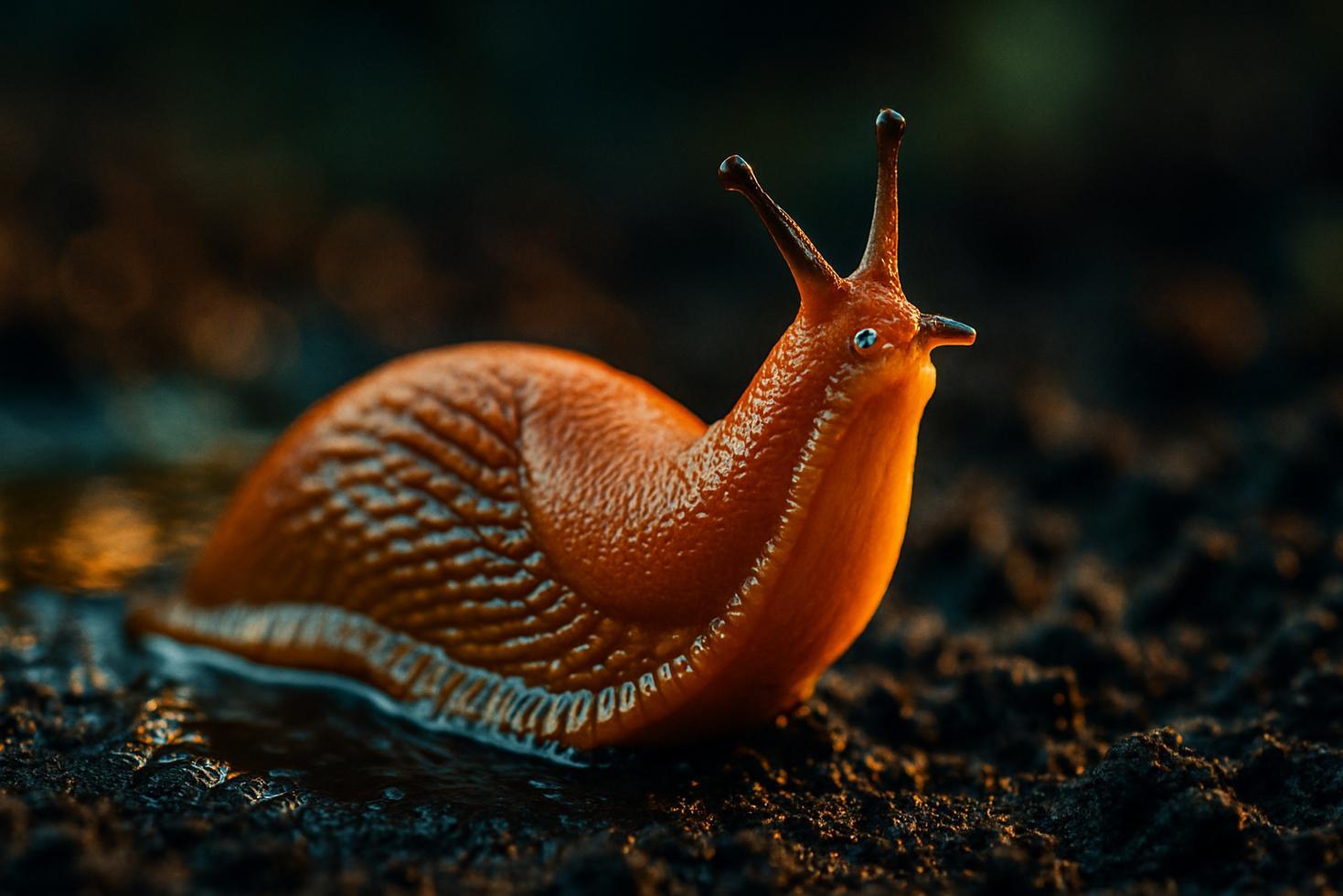
Slugs crossed eggshells and coffee grounds without pausing — but a 2% caffeine soil drench killed 95% of orchid snails. The texture was never the weapon. The dissolved molecule was.
Eggshells and coffee grounds do not reliably stop slugs. That conclusion comes not from casual observation but from extension research at Washington State University, the University of Minnesota, and controlled testing at Oregon State University. The popular garden advice turns out to rest on a misidentified mechanism — and the real one is far more interesting.
Slugs in myth-busting observations crossed both eggshells and coffee grounds without any hesitation. Eggshells also lose surface roughness quickly once wet, which eliminates even the theoretical friction argument.
Why Caffeine Kills Slugs at the Right Concentration
Caffeine is toxic to slugs at sufficiently high dissolved concentrations. USDA researchers in Hawaii were originally testing caffeine sprays on frogs when they noticed slugs and snails were also affected. That observation redirected attention toward caffeine as a potential molluscicide.
The mechanism is caffeine disrupting slug nervous system and muscle control. The slug doesn’t sense the treated soil and retreat. Its body begins failing while it’s still in contact with the solution, and it exits the area as a consequence of that physiological breakdown — not as a warning response.
At a 1–2% concentration applied as a soil drench, every slug in treated soil left and subsequently died of caffeine poisoning. Oregon State University’s testing confirmed that a 2% solution applied to orchid growing media killed 95% of orchid snails and outperformed liquid metaldehyde in that specific trial.
What Spent Coffee Grounds Actually Do
Spent coffee grounds in the garden do contribute organic matter to soil. That part is real. But organic matter and slug control are entirely separate outcomes.
The confusion likely stems from the fact that coffee and caffeine share a name and a source. Soluble caffeine concentration drives the toxicity effect, not the physical presence of grounds. Brewed or spent grounds don’t deliver caffeine at anywhere near the 1–2% threshold shown to be lethal in controlled trials. Washington State University’s extension material is direct on this: there is no published evidence that coffee grounds repel or kill garden pests.
The grit on the surface, whether eggshell or coffee ground, was never the active ingredient.
Closing
There’s something genuinely surprising about this reversal. The barrier that looks imposing — sharp, crunchy, visible — does nothing. The dissolved molecule, invisible in damp soil, is the one that actually ends the slug’s activity. USDA and Oregon State University research didn’t set out to debunk a garden myth. They were chasing a different question entirely and found the real mechanism along the way. That’s usually how the more durable answers arrive.
Frequently Asked Questions
Do coffee grounds kill slugs?
Spent coffee grounds are not a proven slug killer. Toxicity depends on soluble caffeine reaching 1–2% concentration, which grounds alone don’t achieve.
Do eggshells deter slugs?
No. University of Minnesota extension research found eggshells don’t meaningfully deter slugs, and the surface texture degrades quickly when wet.
What caffeine concentration kills slugs?
A 1–2% caffeine soil drench caused 100% slug mortality in USDA-linked research. Oregon State University confirmed 95% orchid snail mortality at 2%.
How does caffeine kill slugs?
Caffeine disrupts the slug’s nervous system and muscle control. The slug leaves treated soil because its body is already failing, not because it detects danger.