
By: Plant Care Today Team
A dragonfly spends most of its life underwater, not in the air. For nearly all of that time, it’s already a predator.
The aquatic stage — called a naiad or nymph — can last anywhere from about a month to several years, depending on the species and the water temperature. Only after that does the insect take its first flight.
Life Underwater: What the Naiad Actually Does
The naiad hunts other aquatic invertebrates, tadpoles, small fish, and even other dragonfly naiads. It uses a hinged lower jaw called the labium, which snaps forward in a fraction of a second to snatch prey before it can react.
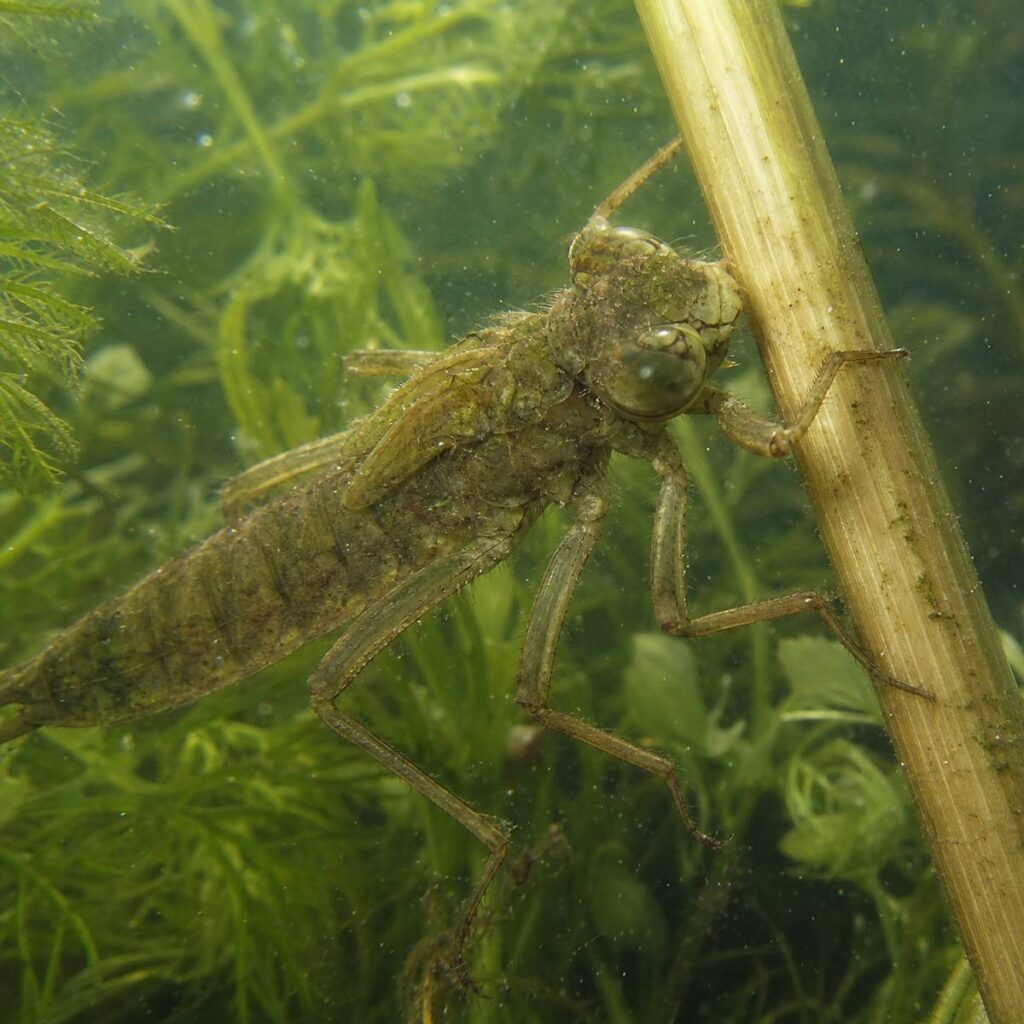
For breathing and movement, it does double duty with the same body part. Gills inside the rectum handle gas exchange, and forcefully expelling that water gives the naiad a form of jet propulsion it can use to dart away from danger or ambush prey (Missouri Department of Conservation).
To grow, the naiad has to molt — shedding its rigid outer skeleton to make room for a larger one underneath. How many times this happens varies by species and by how early stages are counted.
University of Florida’s IFAS Extension gives a range of 9 to 17 molts; the British Dragonfly Society counts roughly 6 to 15. There’s no single “typical” number across all dragonflies, and no credible source gives one.
Treat any single figure you see — including “12” — as one source’s estimate, not a fixed rule.
The whole naiad stage can be surprisingly short or surprisingly long. The Wandering Glider can finish in about four weeks in warm conditions.
Most species take roughly one to three years. Some, like the Golden-ringed Dragonfly in cooler climates, take five years or more.
A few species elsewhere are documented taking up to eight. Colder water and a shorter growing season stretch the timeline out; warm, food-rich water speeds it up.
Emergence: Leaving the Water for Good
When a naiad is finally ready for its last molt, it climbs out of the water entirely — up a reed, a rock, a dock post, or any vertical surface — and grips on tight. The old exoskeleton splits open along the back of the thorax.
The adult dragonfly works its way out head- and legs-first. It pauses for roughly 30 minutes while the newly exposed legs harden enough to support the insect’s weight.

Only then can it finish pulling its abdomen free of the old skin. The entire process, start to finish, typically takes one to three hours.
What comes out at this stage is called a teneral — a pale, soft-bodied adult with small, compressed wings that can’t yet fly. Over the next stretch of hours, the dragonfly pumps hemolymph (its circulatory fluid) into the wing veins, expanding them to full size.
The process is similar to how a butterfly inflates its wings after leaving the chrysalis. The wings then have to dry and harden before the first flight is possible. Full adult coloration can take several more days to develop.
A Short Adult Life After a Long Wait
Here’s the real contrast in a dragonfly’s life. After spending a month to several years underwater as a predator, the adult flying stage is often surprisingly brief.
Typical adult lifespan is just a week or two, occasionally stretching to six to eight weeks for some species (British Dragonfly Society). The naiad you might spot patrolling a pond bottom this spring could easily outlive the adult it eventually becomes, many times over.

That’s also why you’ll rarely see a dragonfly naiad up close. Most of its life happens hidden underwater, doing exactly what it will keep doing once it grows wings: hunting.
Frequently Asked Questions
How long does a dragonfly live underwater before it becomes an adult?
It depends on the species and the water temperature. The Wandering Glider can finish in about four weeks in warm conditions, most species take roughly one to three years, and some, like the Golden-ringed Dragonfly in cooler climates, take five years or more. Colder water and a shorter growing season stretch the timeline out; warm, food-rich water speeds it up.
How does a dragonfly nymph breathe underwater?
It breathes through gills located inside its rectum, which handle gas exchange. Forcefully expelling that water also gives the naiad a form of jet propulsion, which it can use to dart away from danger or ambush prey. So the same body part does double duty for breathing and movement.
How many times does a dragonfly nymph molt?
There’s no single number, because the count varies by species and by how early stages are counted. University of Florida’s IFAS Extension gives a range of 9 to 17 molts, while the British Dragonfly Society counts roughly 6 to 15. Treat any single figure you see as one source’s estimate, not a fixed rule.
How does a dragonfly come out of its nymph skin?
The naiad climbs out of the water onto a reed, rock or other vertical surface and grips on tight. The old skin splits open along the back of the thorax, and the adult works its way out. There’s a pause of roughly 30 minutes while the legs harden, and the whole process typically takes one to three hours.
How long does an adult dragonfly live?
Not long. Typical adult lifespan is a week or two, occasionally stretching to six to eight weeks for some species, according to the British Dragonfly Society. That makes the flying stage a brief chapter compared with the month to several years many dragonflies spend underwater as predators.