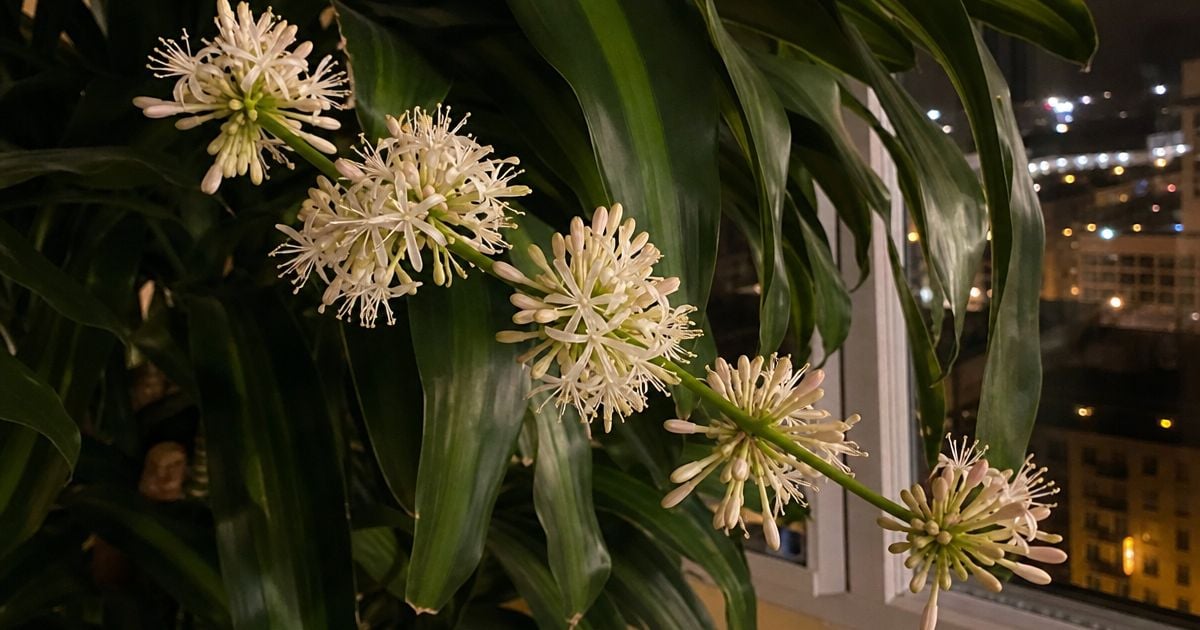
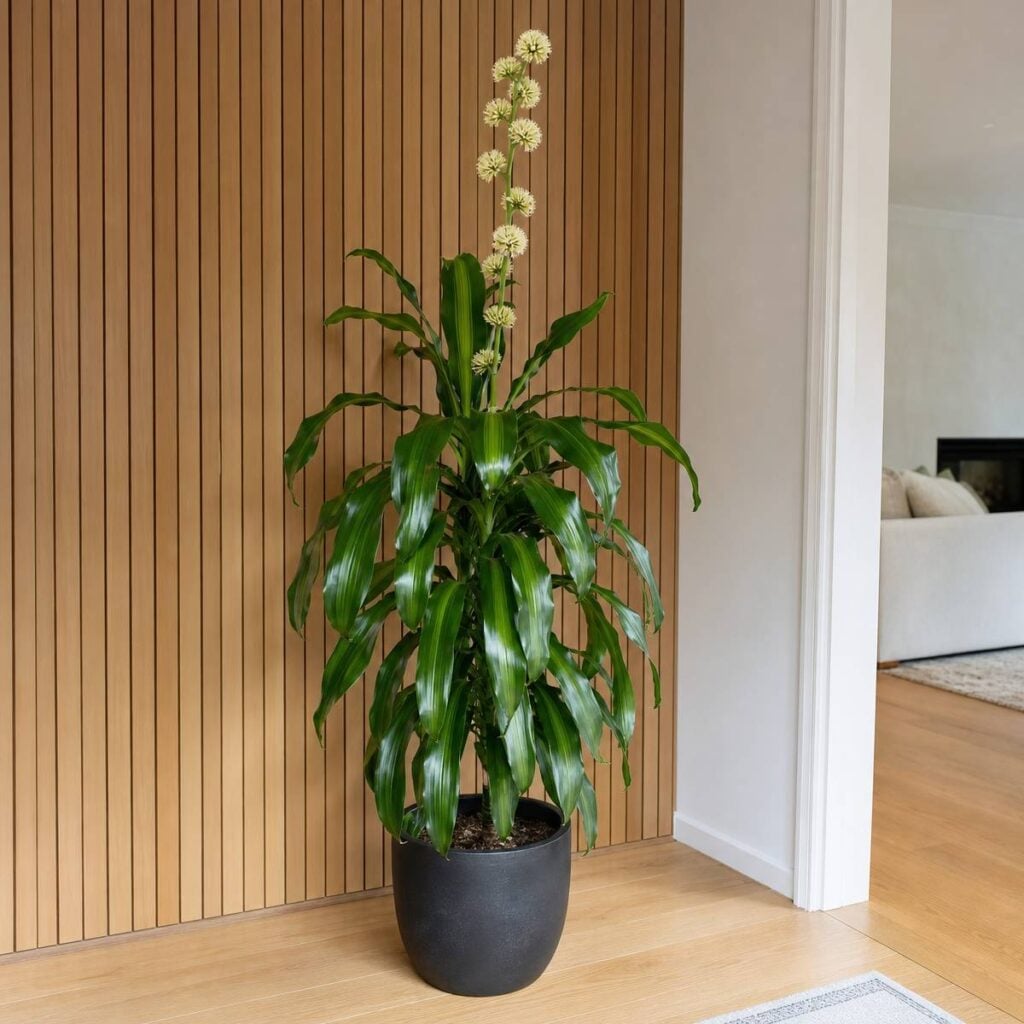
Do corn plants flower? They do, though not often indoors. And when a Dracaena fragrans finally sends up a flower stalk, the first thing you may notice isn’t the flowers. It’s the smell.
That scent is the whole story behind the plant’s name. Let’s look at where the name came from, what the flowers are like, whether a bloom means trouble, and how to keep a corn plant healthy afterward.
How Dracaena Fragrans Got Its Name
Both halves of the botanical name have a meaning. Missouri Botanical Garden says the genus name comes from the Greek word drakaina, a female dragon, and that the species name, fragrans, refers to the sweetly fragrant flowers. “Fragrant dracaena” is even listed as a common name.
The everyday name is simpler. It is called a corn plant because the tall, unbranched stem with its broad, strap-like leaves looks like a stalk of corn.
You may also see older names on plant tags. Dracaena deremensis and Dracaena massangeana are names the plant was previously known by. Popular cultivars such as ‘Massangeana’ (mass cane), ‘Janet Craig’, ‘Lemon Lime’ and ‘Warneckii’ all belong to Dracaena fragrans, and the New York Botanical Garden notes that ‘Janet Craig’, ‘Warneckii’ and ‘Lemon Lime’ are often labeled Dracaena deremensis. So if your Janet Craig dracaena blooms, it’s the same species doing the same thing. The red-edge Dracaena marginata is a different species, but it can bloom too. I’ve seen red-edge marginata flower a few times, and the all-green ‘Janet Craig’ as well, but nothing like Dracaena fragrans.
What Corn Plant Flowers Look Like and Smell Like
Corn plant flowers are not common on a houseplant. The plant rarely blooms or fruits indoors, and flowers and berries rarely appear on indoor plants. The extremely fragrant flowers are only occasionally produced. Views vary a little, though: the corn plant is also named as one of the few houseplants frequently seen in bloom.
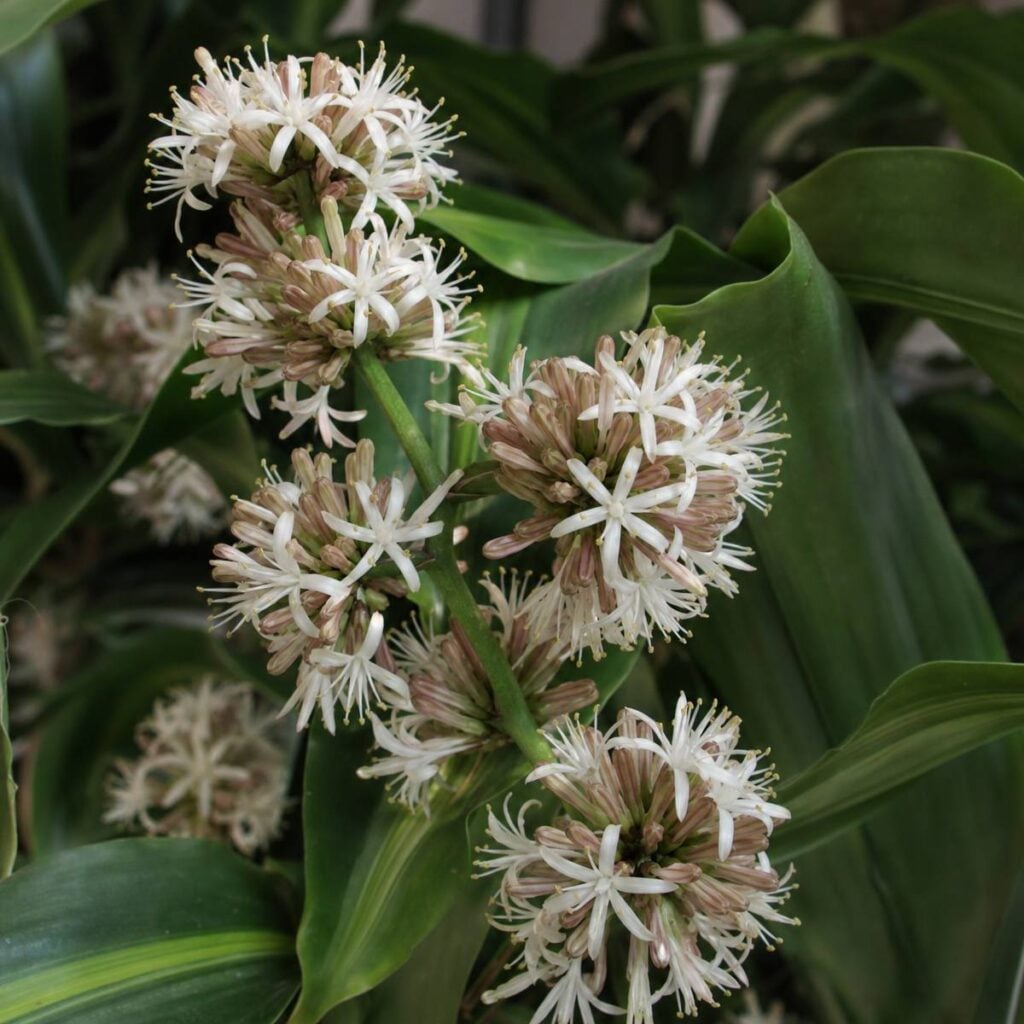
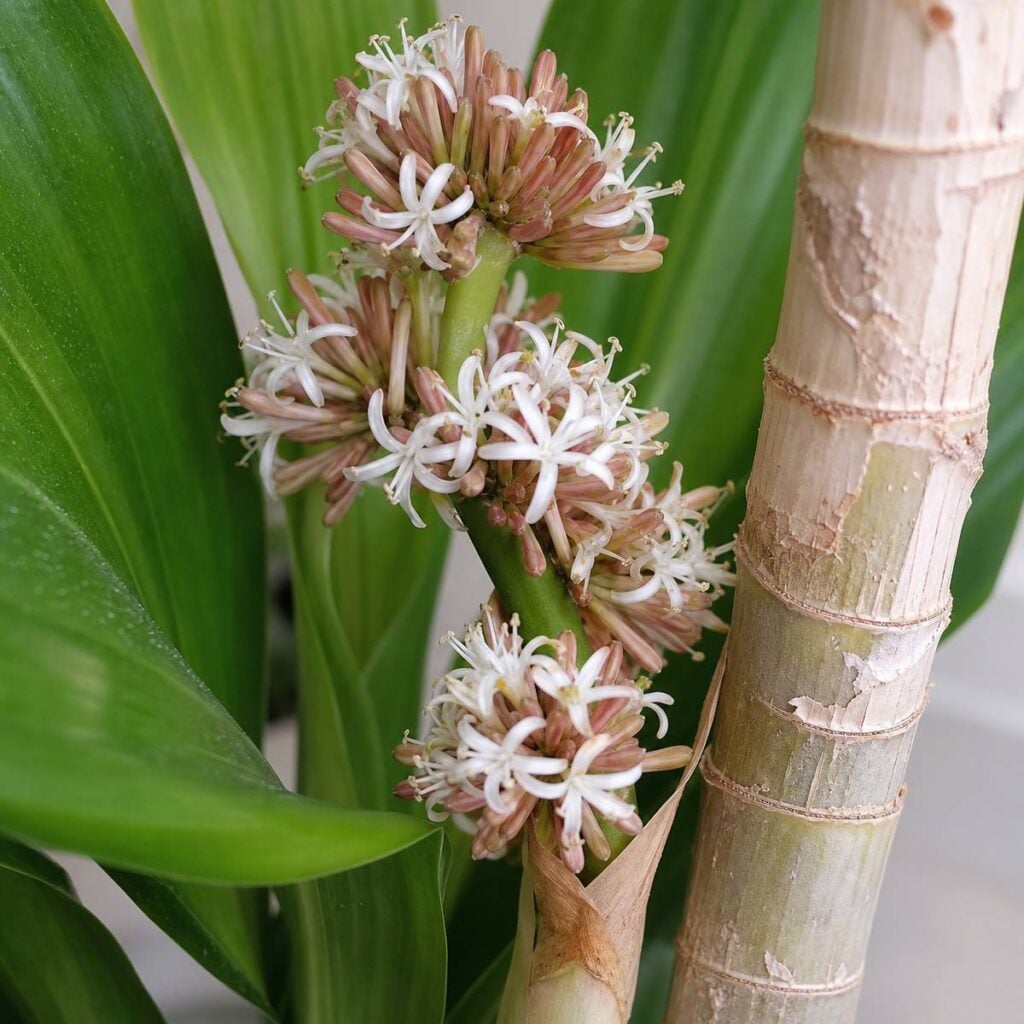
When they do show up, the flower clusters (panicles) run 6 to 60 inches long. The buds start out pink and open white, with a fine red or purple line down the center of each lobe. The flowers are also described as tiny and white-yellow, held in round heads, and may be followed by red berries.
Then there’s the sweet fragrance. The flowers are highly fragrant at night, and they open during the night. The University of Arkansas Cooperative Extension Service calls the scent quite sweet, says it can be a bit cloying in a very small space, and notes it tends to be more intense at night. I’ve had a blooming corn plant in an office where the scent got so strong in the evening that we had to open the office doors.
One practical heads-up: the owner of a large corn plant in a lobby once described the flower petals dropping to the floor and things getting quite sticky. A towel or tray under the plant while it flowers can save some cleanup.
Will the Plant Die After It Flowers?
No. A flower stalk is good news. A blooming corn plant means you have some really good growing conditions for it, and once these plants begin to bloom, they often do so every year.
So enjoy it. Keep caring for the plant the same way you did before it bloomed.
Can I Cut Off the Flower Stalk?
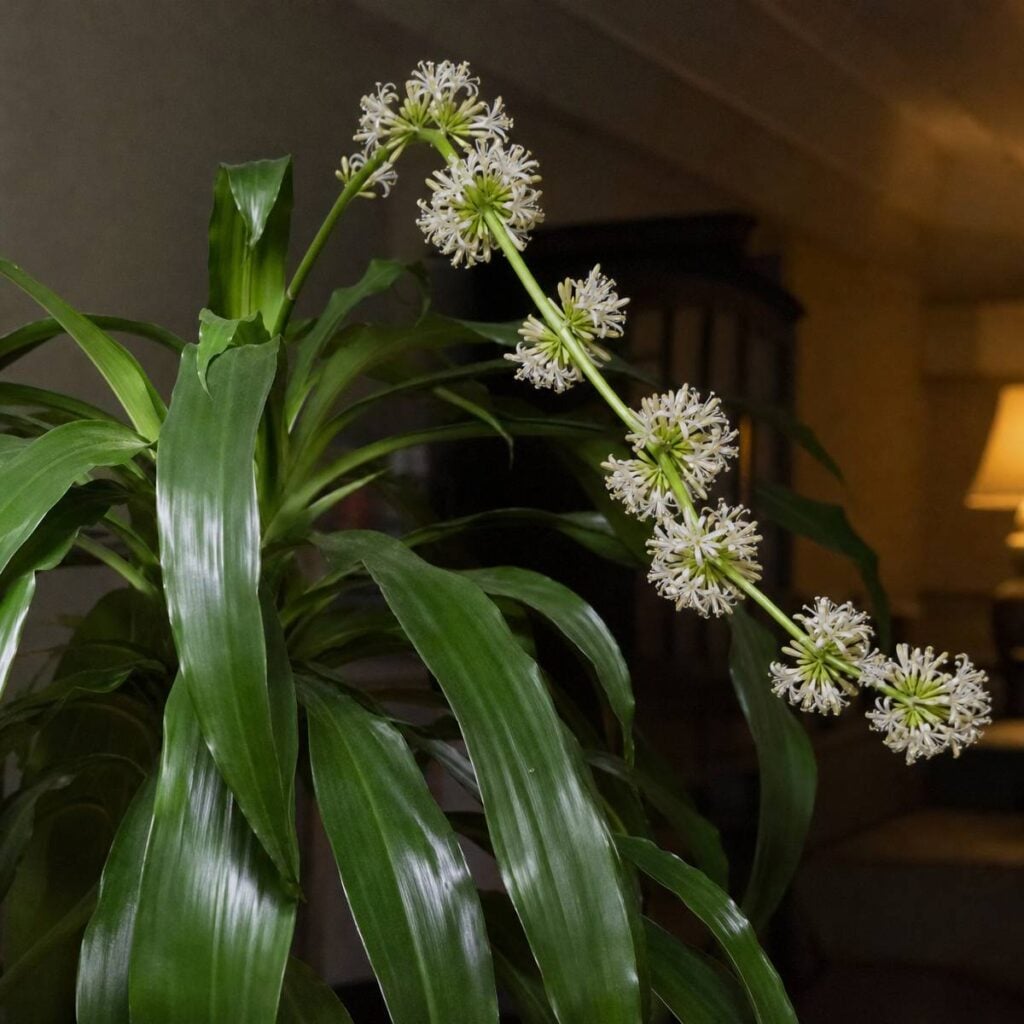
Yes, and it’s really your call. The corn plant is grown for its leaves, so the flowers are a bonus. If the fragrance is too strong in a small room or an office, or the dropping petals are making a mess, cut the stalk off near where it emerges from the leaves using clean, sharp pruners. If you love the scent, leave it and remove the stalk once the flowers fade.
Corn Plant Care in Brief
This page is about the flowers and the name. For full care, see our corn plant care guide. The short version, so a blooming plant keeps doing well:
- Light: Bright to moderate filtered light. Direct sun can burn the foliage, and light that is too low makes the leaves narrow.
- Water: Let the top inch of soil dry, the rule NC State Extension gives for dracaenas, then water thoroughly, and water less in winter. Use a pot with drainage holes; overwatering can cause root rot that kills the plant.
- Water quality: Use distilled, rain or filtered water. Corn plants are sensitive to fluorides and built-up salts, so non-fluoridated water and a monthly flush help. Brown tips are also linked to dry soil, low humidity and water additives such as chlorine, and filtered water or rain water may help. Boron is on the list too, and damaged leaves will not recover, so judge your fixes by the new leaves.
- Humidity: A humidifier or a bed of wet pebbles under the pot helps against brown tips, especially in winter.
- Temperature: Keep it above 60°F, as UF/IFAS advises for dracaenas. The corn plant tolerates a little less: keep it above 50°F if possible, and it thrives at 70 to 80°F.
- Feeding: The New York Botanical Garden suggests fertilizer at half strength from spring to fall, without over-fertilizing.
- Pests: Mealybugs and scale occasionally attack dracaenas, so check leaf undersides and stems now and then.
Is the Corn Plant Toxic to Pets?
Yes. Its poison severity is rated low, but it is toxic if ingested by cats, dogs and people, with symptoms such as mouth and stomach irritation, vomiting, loss of appetite, depression, drooling and difficulty breathing. The sap may also cause skin irritation.
The ASPCA lists corn plant as toxic to dogs, cats and horses, names saponins as the toxic principle, and lists vomiting (occasionally with blood), depression, anorexia, hypersalivation and dilated pupils (in cats). Keep it out of reach of pets and kids, and call your veterinarian or the ASPCA Animal Poison Control Center if you think your pet has eaten some.
How about you? Has your corn plant ever bloomed? Tell us how strong the scent was.
Frequently Asked Questions
Do corn plants flower indoors?
Yes, but not often. Dracaena fragrans rarely blooms as a houseplant, and flowers and berries rarely appear on indoor plants, though it is also counted among the few houseplants frequently seen in bloom. When it does flower, it carries clusters (panicles) 6 to 60 inches long, with flowers that start out pink, open white and are highly fragrant at night.
What do corn plant flowers smell like?
Sweet and strong, especially after dark. The flowers are highly fragrant at night. The scent is quite sweet, can be a bit cloying in a very small space, and tends to be more intense at night. Those fragrant flowers are what the species name, fragrans, refers to.
Will my corn plant die after it flowers?
No. A blooming corn plant means you have some really good growing conditions for it, and once corn plants begin to bloom, they often do so every year. Keep caring for the plant the same way you did before it bloomed: bright filtered light, let the top inch of soil dry before watering, and water less in winter.
Why are the leaf tips on my corn plant turning brown?
Water quality and dry air are common causes. Corn plants are sensitive to fluorides and built-up salts, so non-fluoridated water and a monthly flush help. Brown tips are also linked to dry soil, low humidity and water additives such as chlorine. Boron is on the list too, and damaged leaves will not recover, so watch the new growth.
Is the corn plant toxic to cats and dogs?
Yes. Corn plant is toxic to dogs, cats and horses because of saponins, with signs such as vomiting, depression, anorexia, hypersalivation and dilated pupils in cats. Its poison severity is rated low, but the plant is toxic if ingested by cats, dogs and people. Keep it out of reach and call your veterinarian if a pet eats it.