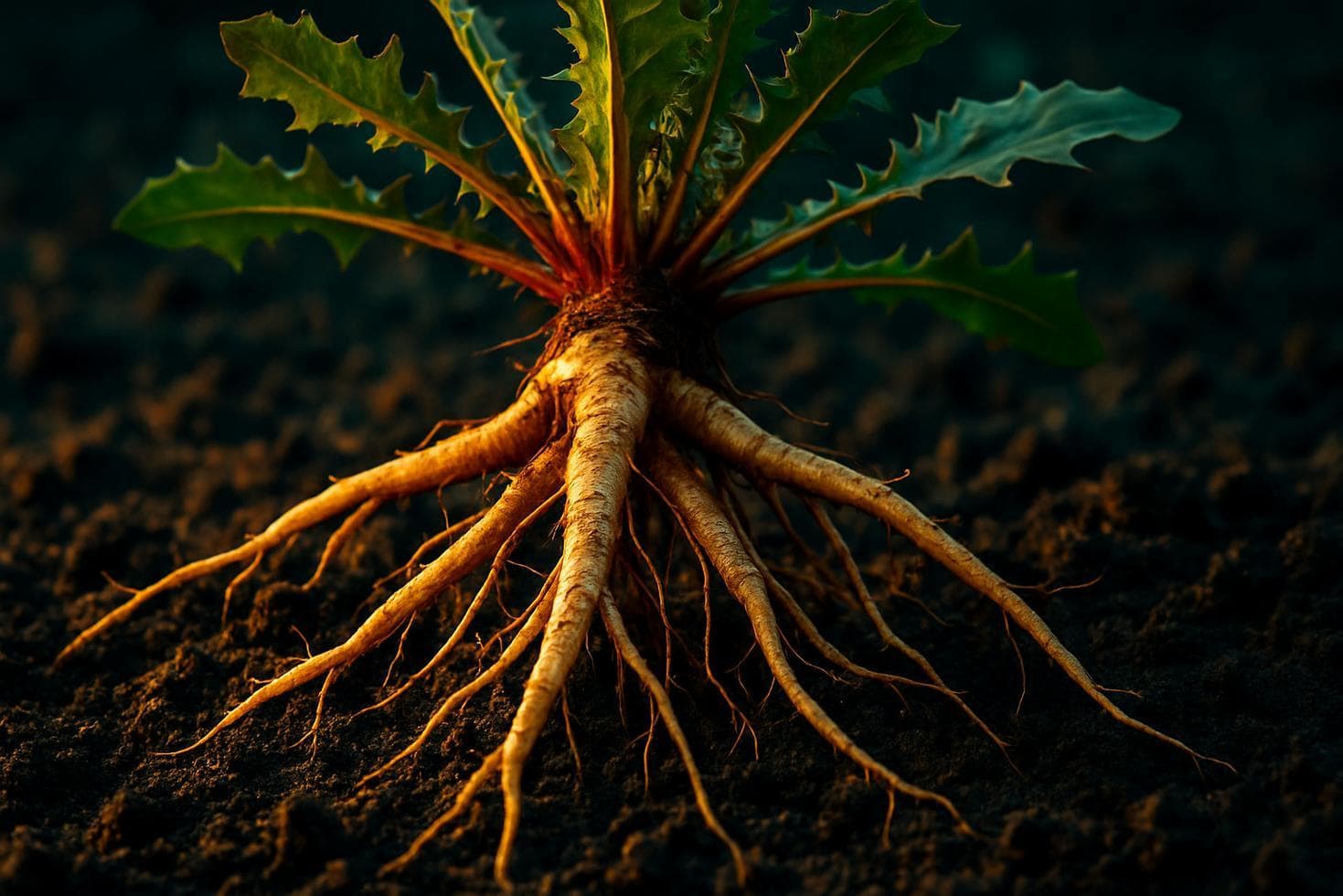
Dandelion root raised bile flow measurably in controlled animal studies — and a 2006 human study confirmed the pattern holds in people, within 30 minutes of ingestion.
Taraxacum officinale root stimulates the liver to produce more bile, functioning as a cholagogue — a substance that increases bile secretion and flow. Most people pulling this plant from their driveways have no idea they’re discarding something with a documented effect on liver function. That gap between the weed’s reputation and its actual biology is what keeps researchers coming back to it.
Bile does two jobs at once. It breaks down dietary fats, and it carries liver-filtered waste out of the body toward the gut for elimination. A root that measurably moves more of that fluid through the system is doing something the liver notices.
How Dandelion Root Triggers Increased Bile Secretion
The root contains bitter compounds — sesquiterpene lactones — that activate digestive reflexes in the liver and gallbladder. This bitter-triggered response is a well-understood physiological pathway, not unique to dandelion, but dandelion root produces it reliably.
Bile secretion volume rising up to 40% is the figure that appears consistently across multiple animal model summaries. That number comes from controlled animal studies and is reported widely in herbal pharmacology literature, though the precise experimental protocols behind each cited instance vary.
What the 2006 Human Study (Rau et al.) Actually Showed
Rau et al. 2006 is the most frequently cited human-model evidence for dandelion root’s cholagogue effect. The study documented measurable increases in bile flow within 30 minutes of administration. This is a small study, and the research landscape here is still preliminary — but it’s the study that moved dandelion root from purely traditional use into a category with at least some controlled human data behind it.
The ESCOP and EMA, two European regulatory bodies that evaluate herbal medicines, have both published monographs supporting dandelion root’s traditional use for liver and biliary function. That institutional recognition reflects decades of accumulated evidence, not a single study.
What More Bile Flow Means for Digestion and Waste Clearance
Bile carries more than digestive enzymes. When the liver filters waste compounds from blood, it packages them into bile for gut removal. Increased bile flow means more of that packaged waste actually completes the exit route.
Fat digestion also depends directly on bile volume. Fat emulsification requires adequate bile salt concentration — without enough bile reaching the small intestine, dietary fats aren’t broken down efficiently. A root that durably raises bile output is affecting both of those processes simultaneously.
The plant that gets sprayed on Saturday morning is running a measurable effect on liver output. That’s not a poetic claim. It’s the mechanism.
Frequently Asked Questions
What does dandelion root do to bile production?
Dandelion root stimulates the liver and gallbladder to secrete more bile, a function classified pharmacologically as a cholagogue effect.
How fast does dandelion root affect bile flow?
The Rau et al. 2006 human study recorded increased bile flow within 30 minutes of ingestion.
How much dandelion root is used in studies?
Typical dried root dosage is 2–8 g per day, divided into 2–3 doses; standardized extract doses run 500–1000 mg per day.
Is there official support for dandelion root’s effect on bile?
Yes — both ESCOP and EMA have published monographs supporting its traditional use for liver and biliary function.