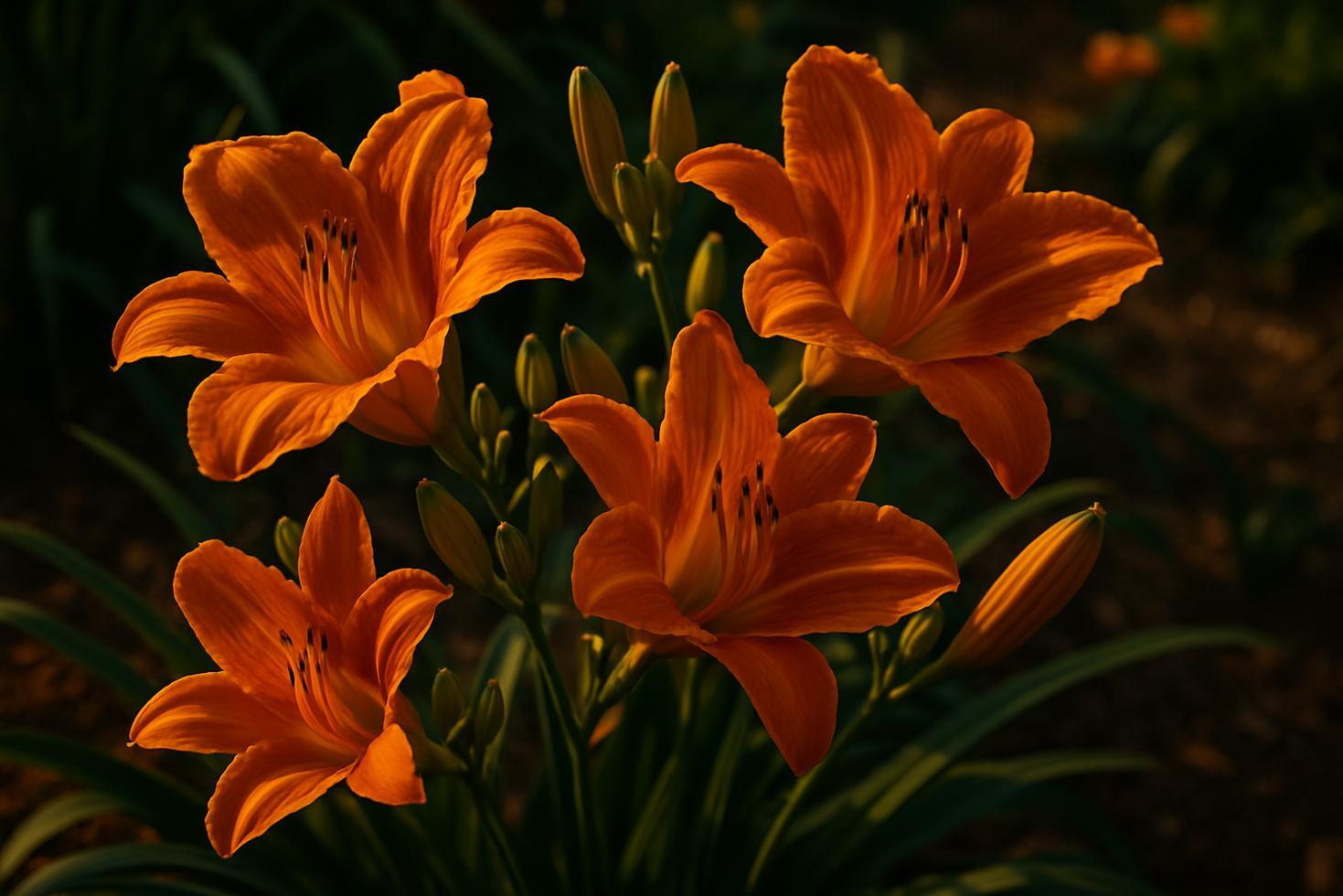
One daylily flower lives exactly one day — but an established clump cycles through 200 to 400 of them across a 30-to-40-day season. Stack extra-early through very late varieties side by side, and the relay runs from late May to September.
A single established daylily clump can produce 200 to 400 individual flowers across a 30-to-40-day bloom season. Each flower truly lasts one day, opening at dawn and closing at dusk, while the next bud on the same scape is already queued to replace it. That quiet, mechanical handoff is what makes daylilies feel like a continuous display rather than a single event.
Breeders sorted cultivars into bloom classes — extra-early, early, mid-season, late, and very late — each firing at a different point in the calendar. Extra-early varieties open in late May through June. Early types follow in mid-June to early July. Peak bloom in northern gardens like Minnesota typically lands in July to early August. Late and very late cultivars carry the sequence into late August and September.
What Daylily Bloom Classes Mean for a Succession Planting Plan
Planting two or three classes in the same bed turns separate flowering windows into one long relay. The gap between an extra-early and a very late variety spans roughly three months. Overlapping bloom classes extend display without additional species. Reblooming cultivars add another layer, with some varieties producing a second flush into fall after the primary season closes.
How Established Clumps Sustain 200 to 400 Flowers Per Season
Each daylily scape carries multiple buds arranged in sequence. As one flower closes, the next opens the following morning. An established clump multiplies that process across all of its scapes simultaneously. The 200-to-400-flower figure cited by UMN Extension reflects what a mature, well-established clump produces — not a young first-year plant. Climate plays a role too. Southern gardens can see bloom start as early as March or April. Northern gardens typically wait until May or June for the first flowers.
Pollinators and the Daylily Schedule
Bees and butterflies are not visiting a single flower. They are returning to a clump that keeps a consistent daily offering across weeks. That predictable, repeating resource is what makes an established daylily bed more valuable to pollinators than a species with a single compressed bloom event. Stack bloom classes across a bed and the offering extends across the full summer — from late May through September — without interruption.
The garden doesn’t stop. The clump just keeps its count.
Frequently Asked Questions
How long does a single daylily flower last?
One day. Each individual flower opens at dawn and closes at dusk, then a new bud on the same scape opens the following morning.
How many flowers does one daylily clump produce in a season?
An established clump produces 200 to 400 flowers across a bloom season of roughly 30 to 40 days, according to UMN Extension.
What are the daylily bloom class timing windows?
Extra-early varieties bloom late May through June; early types mid-June to early July; peak season falls in July to early August in northern climates; late and very late cultivars bloom in late August through September.
Can daylilies bloom more than once per season?
Yes. Reblooming cultivars produce a second flowering after the primary season, with some continuing into fall.