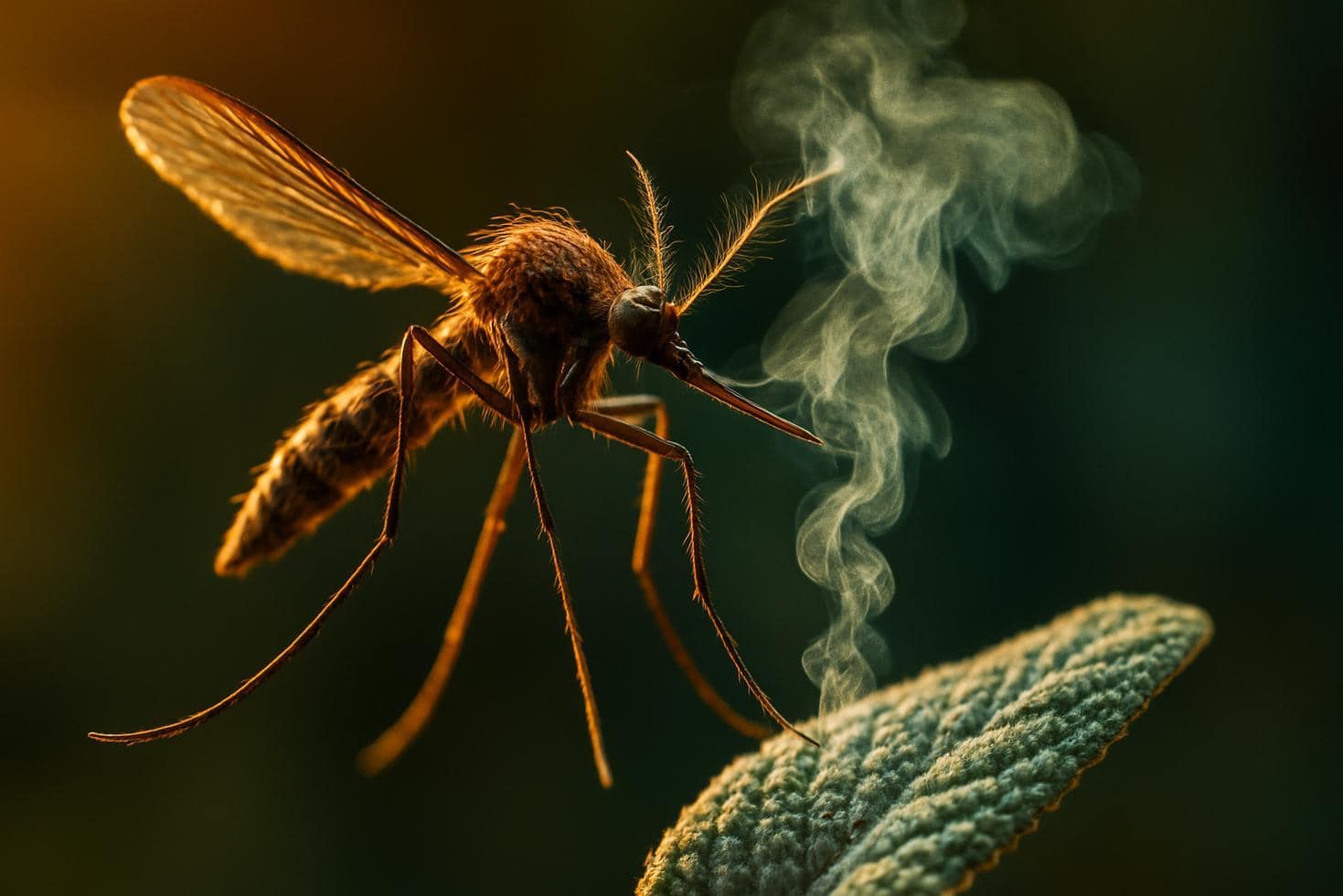
Sage and patchouli oil together blocked Aedes dirus bites for a median of 270 minutes in controlled testing — nearly 4.5 hours. The intact leaf sitting in the garden offers none of that.
Sage stores volatile secondary metabolites inside glandular structures in its leaves, and those compounds stay largely contained until the tissue is physically damaged. That single mechanical fact explains why a sage plant growing in a garden does little to mosquitoes nearby, while a crushed leaf releases a burst of active compounds into the air.
The shift isn’t subtle. Research confirms that volatile plant compounds act on mosquito chemoreceptors — located in the antennae, maxillary palps, labella, and tarsi — and disrupt host-seeking behavior at those sensory organs directly.
How Sage Leaf Glands Store and Release Volatile Compounds
Aromatic herbs like sage produce volatile terpenoids as secondary metabolites — chemical byproducts with no role in the plant’s basic metabolism but significant effects on insects. These compounds accumulate inside specialized glandular structures on the leaf surface.
Intact leaves release only trace amounts. Physical damage ruptures those glands, flooding the surrounding air with compounds that the plant’s undamaged surface would have held back. This is why rubbing or crushing a leaf produces an immediate, sharp aromatic release that an intact plant next to a chair simply doesn’t.
What Sage Volatiles Actually Do to Mosquito Sensory Systems
Mosquitoes locate hosts using chemoreceptors that detect carbon dioxide, skin warmth, and other chemical cues. Volatile repellent compounds — including those from sage — interact with receptors in the antennae and maxillary palps, which are the primary olfactory organs.
The result isn’t that mosquitoes smell something unpleasant and leave. Chemoreceptor interference disrupts host-detection signals before the mosquito can orient toward a target. Sage’s essential oil contains several constituents that may contribute to this effect, including camphor, thujone, eucalyptol, linalool, and linalyl acetate — no single compound accounts for the full activity.
What Controlled Testing Shows About Duration and Species Specificity
The 270-minute median complete-protection figure comes from a peer-reviewed study pairing sage and patchouli oil against Aedes dirus, a species common in Southeast Asia. The same study recorded 150 minutes of median protection for a basil/sage combination against Aedes aegypti, the species responsible for dengue and yellow fever transmission.
These results reflect essential oil formulations, not crushed fresh leaves, so they establish what sage volatiles can do at documented concentrations rather than what a backyard plant passively emits.
The line between an herb and a chemical defense system is a question of physical state. Crushed changes everything that intact withholds.
Frequently Asked Questions
Does a sage plant repel mosquitoes just by growing nearby?
No. Intact sage leaves release only trace volatile compounds. Effective repellency requires crushed tissue or extracted essential oil, not proximity to a living plant.
Which mosquito species does sage oil work against?
Controlled studies document protection against Aedes dirus and Aedes aegypti. Results vary by species, oil concentration, and formulation.
Is one compound in sage responsible for repelling mosquitoes?
No. Sage essential oils contain multiple active terpenoids — camphor, thujone, eucalyptol, linalool — and the research does not isolate a single compound as solely responsible.
Does drying sage reduce its mosquito-repelling properties?
Volatile oils can be lost or altered during drying, making fresh crushed leaves more likely to release active compounds, though no peer-reviewed source directly quantifies the potency difference.