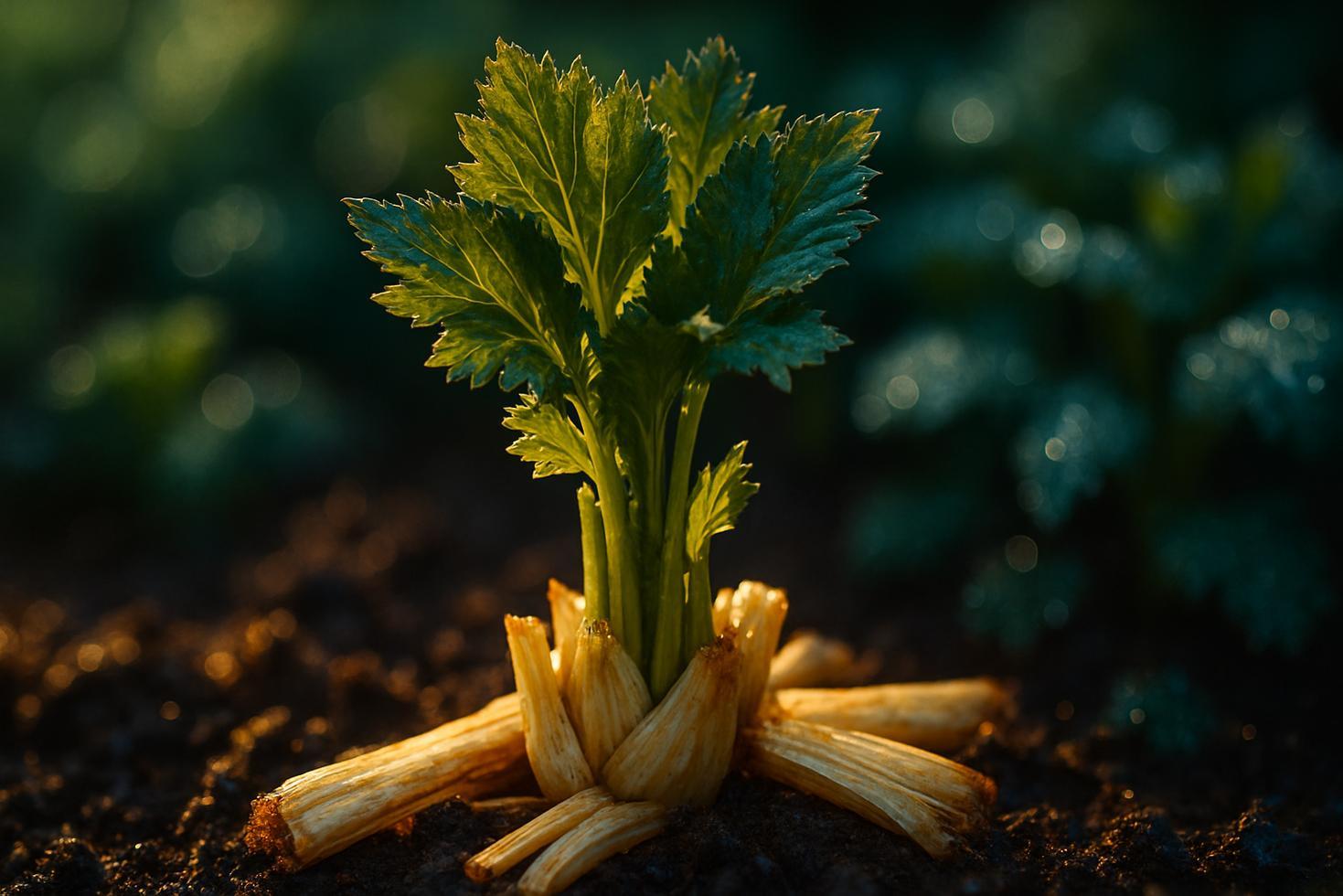
Leaf polyphenols measured at 13.3–17.2 mg per gram dry weight. The stalk didn’t come close. Most people snap the leaves off before the groceries hit the counter.
Celery leaves contain higher concentrations of polyphenols, calcium, potassium, and vitamin C than the pale petioles below them — and most people discard them without a second thought. That gap exists for a straightforward biological reason. Leaves are where photosynthesis happens, so they accumulate the flavonoids, vitamins, and protective compounds the plant synthesizes to sustain and defend that process.
The stalks, by contrast, do structural work. They move water and nutrients upward, and they store fiber and a small amount of carbohydrate. At roughly 95% water by weight, the petiole is more pipeline than pantry.
Why Celery Leaves Accumulate More Polyphenols and Vitamins
Photosynthesis generates oxidative stress as a byproduct. The leaf tissue responds by producing flavonoids like apigenin and luteolin, which absorb damaging wavelengths and neutralize reactive oxygen species. Vitamin C concentrates in the same tissue for the same reason — it is a frontline antioxidant where oxidative pressure runs highest.
Polyphenols accumulate where photosynthesis is most active — and that is always in the leaf, not the petiole. A peer-reviewed PMC study measured leaf polyphenols at 13.3 to 17.2 mg GAE per gram dry weight, with petiole values measurably lower across the same cultivars. The leaves are darker and more bitter precisely because of this chemistry.
What the Stalks Actually Contribute Nutritionally
Petioles are not nutritionally empty. The same PMC study found ascorbic acid in petioles ranging from 28.1 to 47.8 mg per 100 g fresh weight depending on genotype. Two hundred grams of petioles also deliver 1.17 to 1.44 mg of vitamin K — roughly 59% to 72% of the adequate intake level cited in that paper.
Vitamin K concentration in petioles varies significantly by cultivar. Root celery genotypes also accumulate 2 to 3 times more iron in their leaves and petioles than leafy or stalk types, which means the specific variety grown matters for mineral density.
Frequently Asked Questions
Are celery leaves safe to eat?
Yes. Multiple nutrition sources, including Healthline and Mayo Clinic Health System, confirm celery leaves are edible and nutritionally valuable.
How long do celery leaves keep after purchase?
Celery leaves deteriorate faster than the stalks and should be consumed within 1 to 2 days of purchase, according to Healthline.
Do celery leaves really have more calcium than the stalks?
Healthline specifically identifies calcium, potassium, and vitamin C as more concentrated in the leaves than the petioles, though exact milligram comparisons depend on cultivar and growing conditions.
What polyphenols are found in celery leaves?
The primary flavonoids are apigenin and luteolin, both measured at higher levels in leaf tissue than in petioles in peer-reviewed analysis.