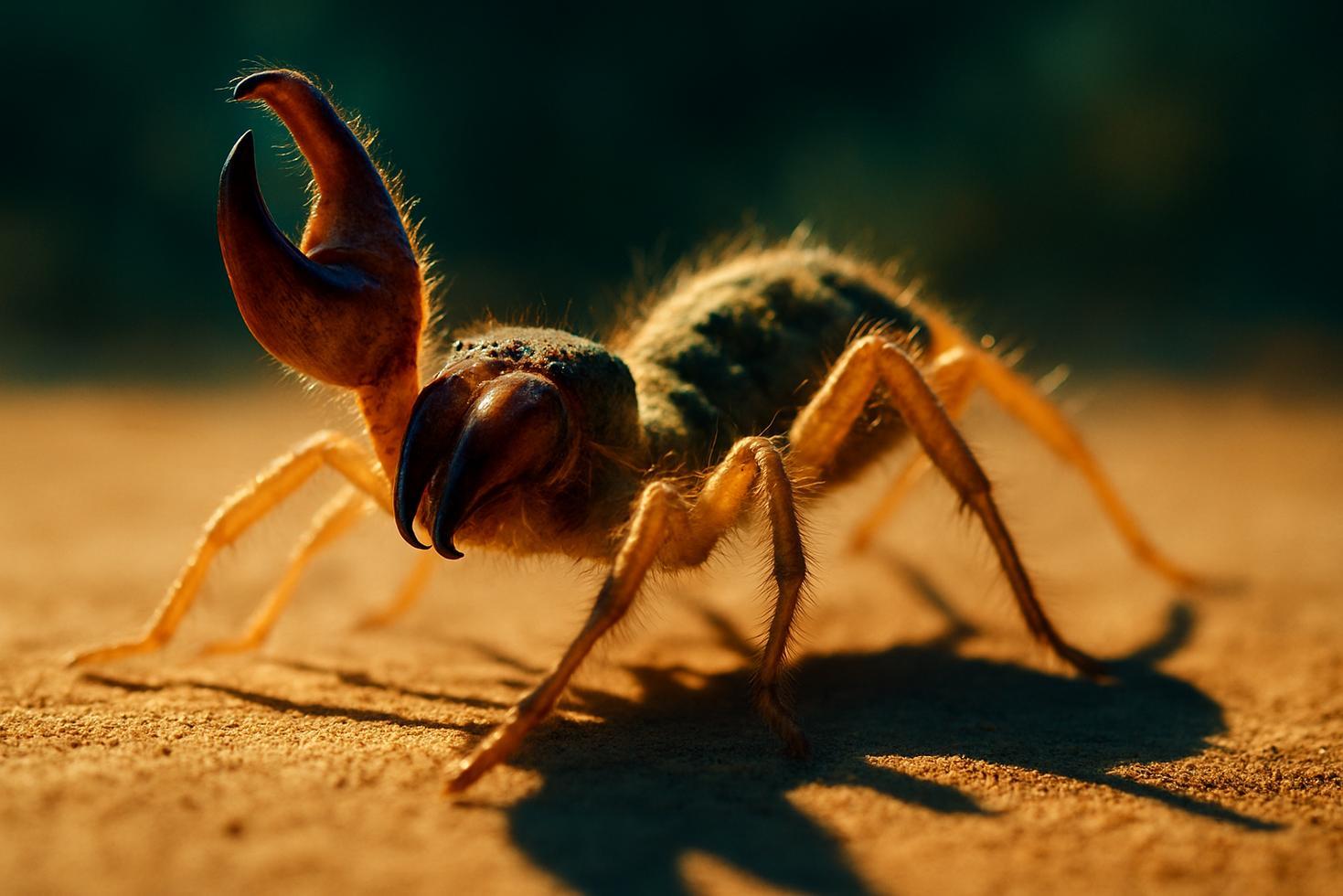
Camel spiders can reach 6 inches wide — and carry zero venom. The most feared arachnid of desert warfare couldn’t chemically harm a human if it tried.
Camel spiders are not chasing soldiers. They are chasing shadows. These arachnids — order Solifugae, not true spiders — lack venom glands entirely and rely on shade-seeking behavior to avoid overheating in direct desert sun.
That distinction rewrites every war story told about them. A soldier sprinting across hot sand casts a moving shadow. The camel spider runs after the dark patch, not the person. The moment the soldier stops, the shadow stops, and so does the chase.
Why Camel Spiders Chase Shadows Instead of Prey
Direct desert sun is lethal for solifuges. They have no internal cooling system to manage that heat load, so shade is a survival resource, not a preference.
Any moving shade patch qualifies — a rock’s edge, a wall, a running human. shade-seeking as a thermoregulation mechanism explains every filmed “chase” that circulated during the Iraq War. The animal was never tracking the person.
It tracks the dark patch the person happens to produce.
What a Camel Spider’s Bite Actually Does
The chelicerae — paired jaw structures — are built to crush and tear mechanically. They subdue small arthropods, lizards, rodents, and occasionally small birds this way.
A defensive bite on a human opens skin the same way: mechanical tearing, no toxin injected. mechanical wounds that open skin to bacteria are the documented medical risk, not systemic venom effects. The creature that generated a decade of terrified photographs carries no chemical threat at all.
How the Battlefield Myth Formed and What the Biology Actually Shows
Wartime photographs showed camel spiders appearing enormous — a photographic perspective trick using forced depth-of-field. The animals were closer to the camera than the soldiers holding them.
The confirmed size is approximately 6 inches in width for larger specimens. Formidable for an arthropod, but not the half-human-sized predator the images suggested. One biological fact does hold up: they are fast. Their speed combined with apparent pursuit behavior was enough to build a legend on misread panic.
The animal bites defensively when cornered, handled, or stepped on — not because a human registers as prey.
The camel spider’s reputation was built on three misreads: a perspective trick, a thermoregulation behavior that looks like pursuit, and the assumption that something fast and alarming must be venomous.
None of those held up. The animal chasing a shadow to survive the next minute was never the predator in that story.
Frequently Asked Questions
Are camel spiders venomous?
No. Camel spiders have no venom glands or venom apparatus; bites are mechanical injuries from their chelicerae, not envenomation.
Why does a camel spider run toward a person?
It is following the person’s shadow, not pursuing the person. Solifuges are strongly shade-seeking to avoid overheating in direct sun.
Can a camel spider bite hurt a human?
Larger species can puncture and tear skin. The medical risk is secondary bacterial infection from the open wound, not venom.
How big do camel spiders actually get?
Larger specimens reach approximately 6 inches in width — notable for an arachnid, but not the exaggerated sizes shown in forced-perspective wartime photos.