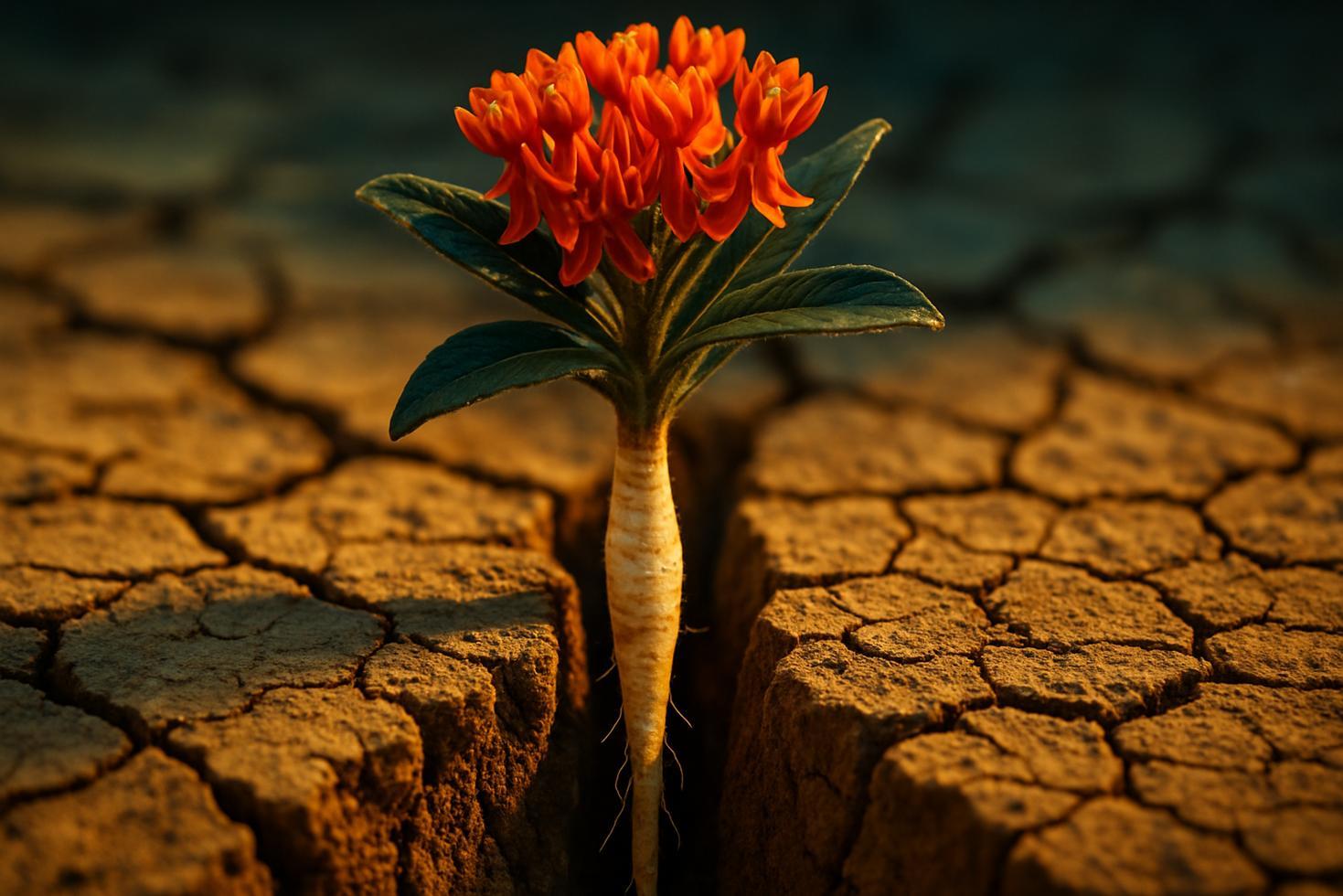
One taproot, many feet down, built over 18–24 months — and excess water during that window is more likely to rot the plant than save it.
Butterfly weed (Asclepias tuberosa) survives drought by growing a deep taproot that reaches moisture far below the surface layer that dry spells ever affect. That single structural fact explains nearly everything unusual about how this plant behaves in the garden. It looks fragile during its first two seasons. It isn’t. It’s building something underground.
Extension sources and native plant databases consistently describe the taproot as extending “many feet” into the soil. That depth puts the root tip in contact with moisture that surface evaporation and weeks of rainless heat simply cannot reach.
What the Butterfly Weed Taproot Actually Does Underground
The taproot is not storage in the conventional sense. It is access. By driving straight down through dry surface soil, the root reaches layers where moisture persists long after the top foot of ground turns to dust.
This is consistent with how taprooted perennials as a group behave: they invest in root depth rather than dense, shallow branching. Deep root investment over surface branching is the core trade-off that makes butterfly weed genuinely drought-adapted rather than merely drought-tolerant in a loose sense.
Sandy or gravelly soils help, not because they hold water, but because they drain fast and force the root downward. Heavy, consistently moist soil removes the incentive for that downward growth.
The 18–24 Month Establishment Window and Why More Water Backfires
Butterfly weed is slow to establish. Sources consistently cite 18–24 months before the root system reaches full maturity. During that window, the plant can look underwhelming — sparse, slow, sometimes barely present above ground.
The instinct is to water more. That instinct works against the plant. Multiple sources note that butterfly weed dislikes consistently moist soil and that soggy conditions trigger rot at the root. The establishment phase requires patience and well-drained ground, not supplemental irrigation beyond what the site naturally provides.
Once the taproot locks in at full depth, the plant’s drought performance changes sharply. Compiled native plant data puts the threshold at roughly 6–8 weeks without water before an established plant shows significant stress.
Frequently Asked Questions
How deep does butterfly weed’s taproot actually grow?
Horticulture and native plant sources describe it as extending “many feet” deep; no peer-reviewed source in available research confirms a specific measurement like 15 feet.
Why does butterfly weed take so long to establish?
The plant prioritizes root development over above-ground growth during its first 18–24 months, building the deep taproot structure that enables long-term drought survival.
Can butterfly weed grow in clay or wet soil?
It is poorly suited to both. Multiple sources flag consistently moist or poorly drained soil as a rot risk, making well-drained sandy or gravelly ground the correct site.
How often should established butterfly weed be watered?
Once fully established, it needs little to no supplemental irrigation. Watering deeply but infrequently during the establishment phase is the approach supported by native plant and extension sources.