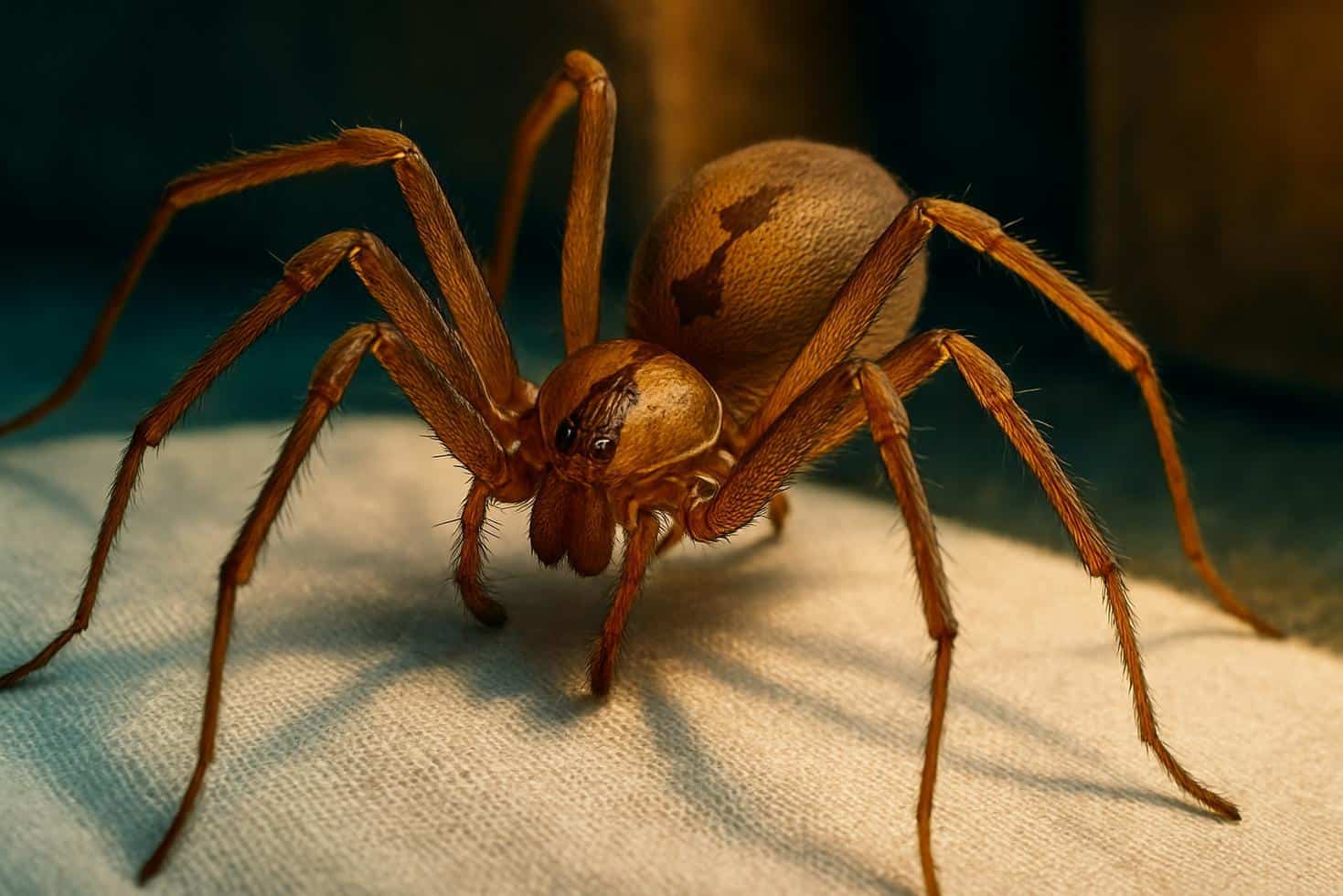
A brown recluse spends 88% of its nocturnal activity frozen on a small silk platform — web maintenance takes 8% — and active prey pursuit was recorded at zero observed instances.
Brown recluse spiders are sit-and-wait predators, not roaming nocturnal hunters. That distinction, documented in the Journal of Arachnology, changes nearly everything assumed about why these spiders end up in contact with people. The spider behind the storage boxes is not patrolling. It is parked on the same small patch of silk it occupied the night before, waiting for something small to stumble close.
The silk itself is not a capture web. It functions as a vibration-sensing platform — a few irregular strands that transmit movement from the surrounding floor. The spider reads the signal and reacts. The prey does all the traveling.
What the Behavioral Data Actually Shows About Brown Recluse Hunting
The Journal of Arachnology study is the clearest window into recluse behavior at night. Researchers found recluses motionless 88–92% of observed nocturnal time, with the remaining fraction split between web maintenance and rare feeding events. Zero instances of active prey searching were recorded.
UC IPM describes their silk as a “trigger system” — not a trap, but a detection tool. When vibrations signal something nearby, the spider responds. When nothing moves close enough, the spider stays still.
This matters for understanding what these animals actually are inside a home: passive sensors, not active searchers.
Why Brown Recluse Bites Are Almost Always Accidental
Adult females rarely move far from their retreat. Males and older juveniles roam more, and that mobility brings them into human spaces — shoes left on the floor, clothing folded near a baseboard, bedding disturbed at the edge of a mattress.
As dawn approaches, UC IPM notes, recluses seek dark shelter. That behavioral shift is the primary mechanism behind accidental bites. A spider settling into a shoe for the day, then compressed against a foot hours later, bites in response to pressure — not aggression.
University of Arkansas, University of Kentucky, and the Illinois Department of Public Health all describe the same sequence: contact, compression, defensive bite. Every authoritative source on record agrees the spider is not aggressive and prefers to run.
Closing
The brown recluse earns its name behaviorally, not just by reputation. It hides in dark, undisturbed spaces — closets, attics, cardboard boxes, wall voids — emerges nocturnally, sits motionless for the overwhelming majority of the night, and retreats before daylight. The spider that bites was almost always a spider that got trapped.
The most dangerous thing about it is not what it does. It’s where it stops moving.
Frequently Asked Questions
Do brown recluse spiders actively hunt at night?
No. Behavioral research found zero instances of active prey searching; they wait motionless on silk retreats for prey to move within striking range.
Why do brown recluse spiders bite people if they’re not aggressive?
Bites occur when the spider is accidentally compressed against skin — typically inside clothing, shoes, or bedding — not during any intentional approach toward a person.
Where do brown recluses hide inside a house?
They prefer dark, undisturbed areas: closets, attics, basements, cardboard boxes, stored papers, clothing folds, wall voids, and spaces behind furniture.
How long can a brown recluse survive without food or water?
University of Arkansas reports individuals can survive six months or more without food or water, contributing to their persistence in seldom-used indoor spaces.